Dental Nation
Treatment comparison

Conserve vs cap

A crown covers a tooth, while inlays and onlays repair damaged areas with comparable reported survival.

[1][2]

The short answer

Crowns cover the tooth, whereas inlays and onlays restore damaged areas and have shown comparable survival in reported studies.

[1][2]
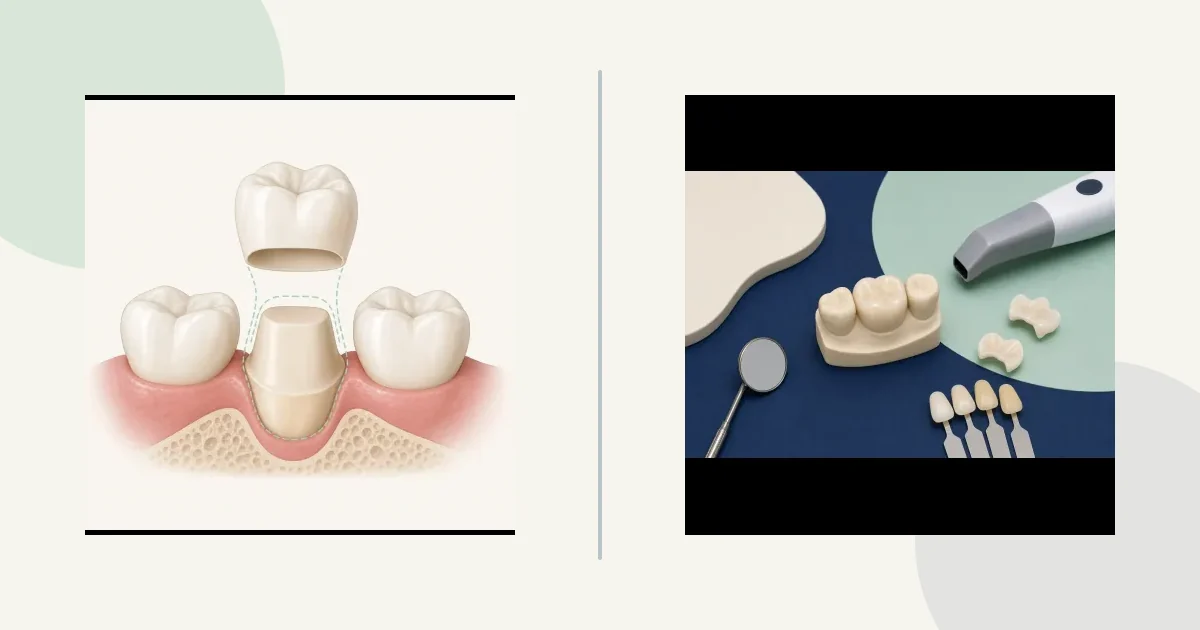
Conserve vs cap comparison graphic

The two options, side by side

Illustrative diagram: crowns vs inlays onlays
Illustration — a representative diagram, not a patient photo.
The DN First Look799 AED
Book The DN First Look

Which restoration fits the damage?

What the two approaches repair
OptionPractical distinction
CrownThe tooth is reshaped and covered with a laboratory-made crown.[1][2]
Inlay or onlayIt is a partial-coverage restoration used to restore a damaged tooth.[1][2]

[1][2]

When can an inlay or onlay make sense?

An inlay or onlay is a partial-coverage option for a damaged tooth. In the reviewed studies, its survival was similar to complete-coverage restorations.

[1][2]

When can a crown make sense?

A crown treatment usually takes two visits. The first appointment reshapes the tooth, takes an impression and places a temporary crown for protection.

[1][2]

What changes the treatment work?

The crown pathway includes tooth reshaping, an impression, laboratory work and a temporary crown before the final crown is cemented.

[1][2]

How long can they last?

Published five-year results included 97.4% survival for crowns and 98.9% for both onlays and inlays. Reported ten-year survival varied across restoration types and studies.

[1][2]
Examples of reported five-year survival
RestorationReported survival
Crowns97.4% in one five-year study.[1][2]
Inlays and onlays98.9% in the same five-year report.[1][2]

[1][2]

What can go wrong?

Both partial and complete coverage restorations can fail through fracture or chipping, recurrent decay, loss of retention and, with all-ceramic restorations, severe marginal staining.

[1][2]

When might neither be needed?

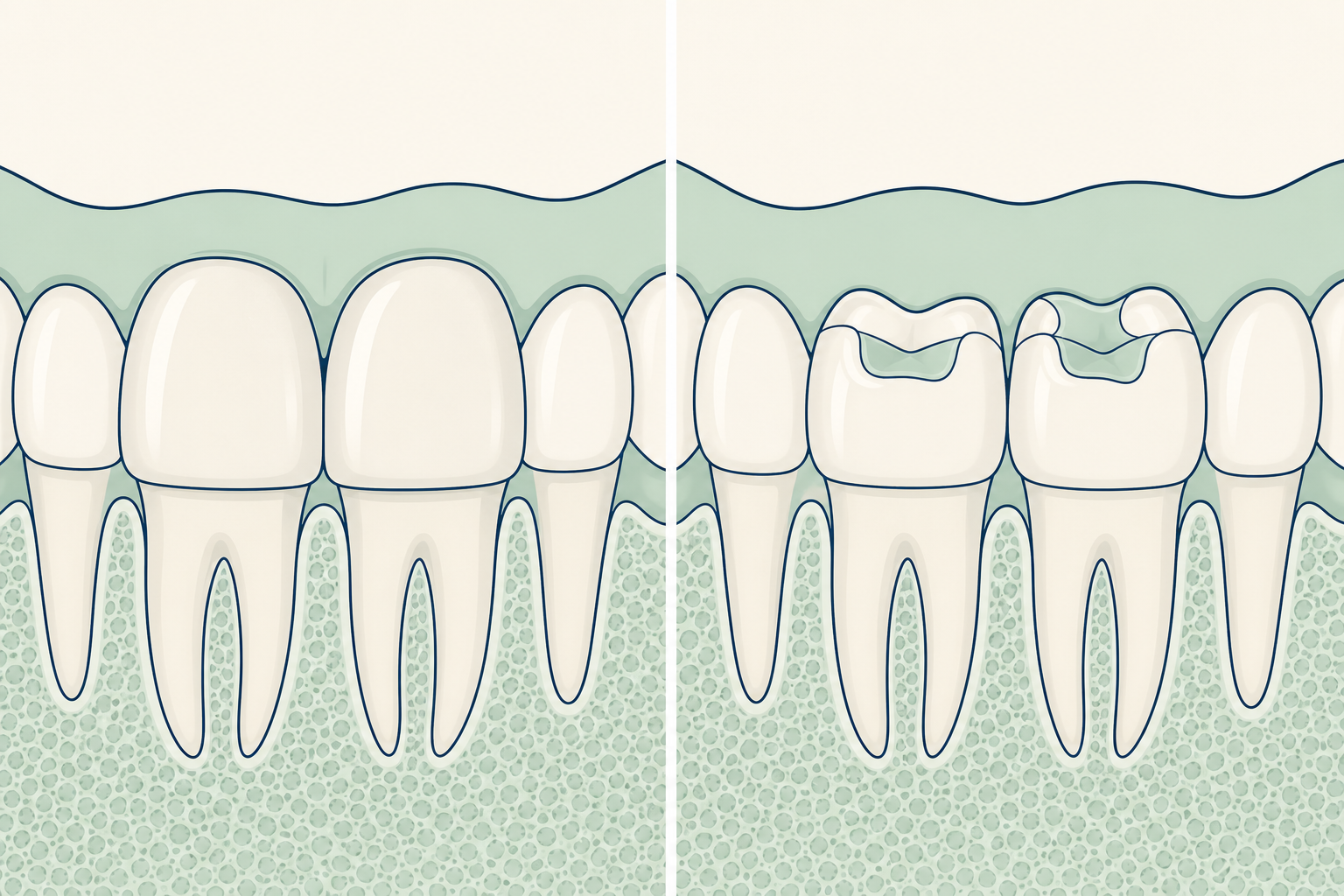
A tooth can sometimes be rebuilt with a white filling material that bonds to enamel. A porcelain veneer may be considered for a front tooth when the bite is not heavy.

[1][2]

What guides the choice?

Tooth position, tooth history, treatment frequency and periodontal indices can affect restoration survival. Anterior teeth showed higher survival than posterior teeth in the review.
[1][2]

Frequently asked questions

Can a filling be used instead of a crown?

Some teeth can be rebuilt with a white filling material that bonds to enamel; a crown is not always the best option.

[1][2]
