Dental Nation
Treatment comparison

Minor chips: AED 500 fix vs AED 2,500 fix

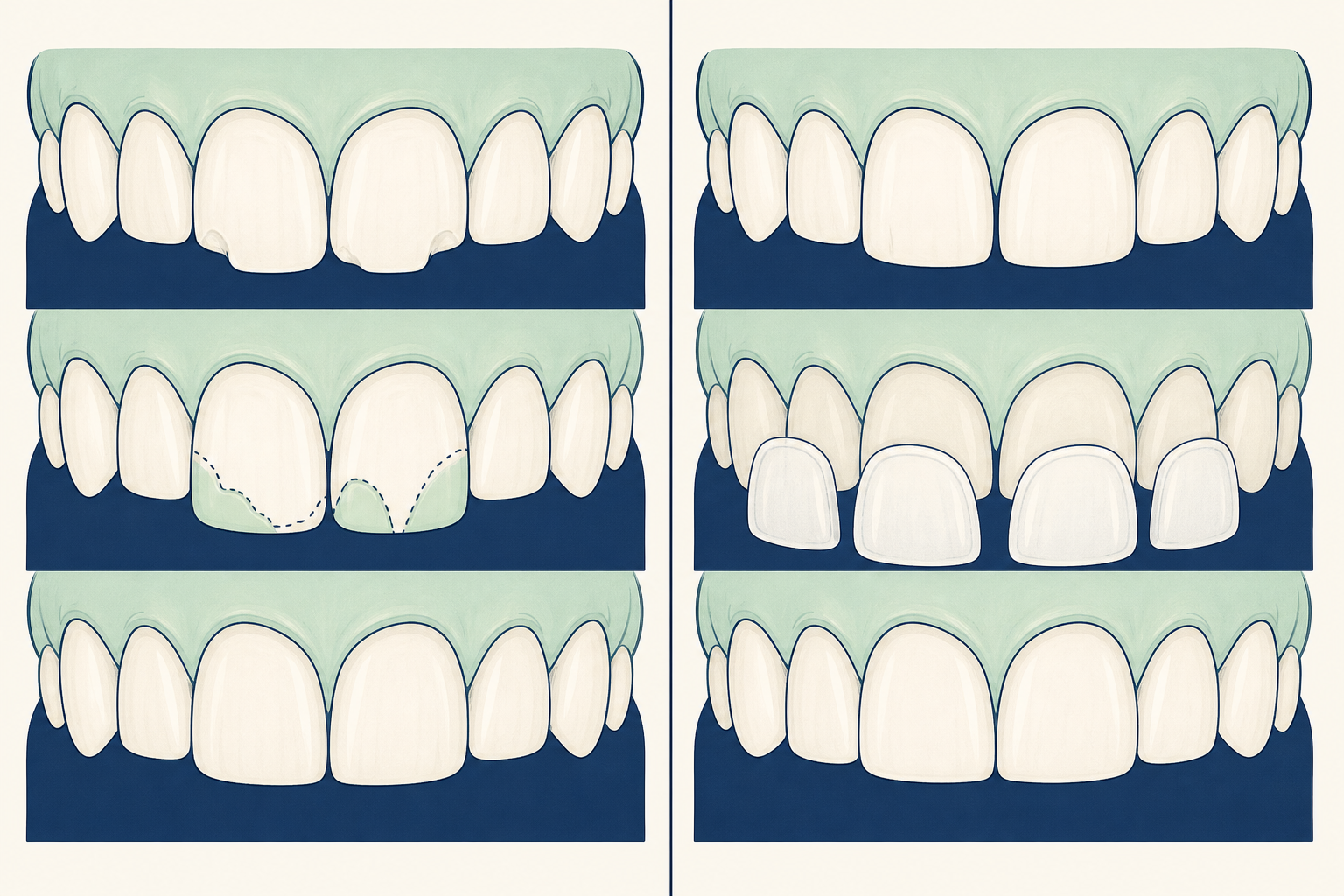
Bonding can repair a small chip in one visit without enamel removal; veneers offer a more durable front surface but are irreversible.

[1][2]

The short answer

Dental bonding changes a tooth with resin in one visit and usually preserves enamel, while veneers use a bonded shell after enamel removal.

[1][2]
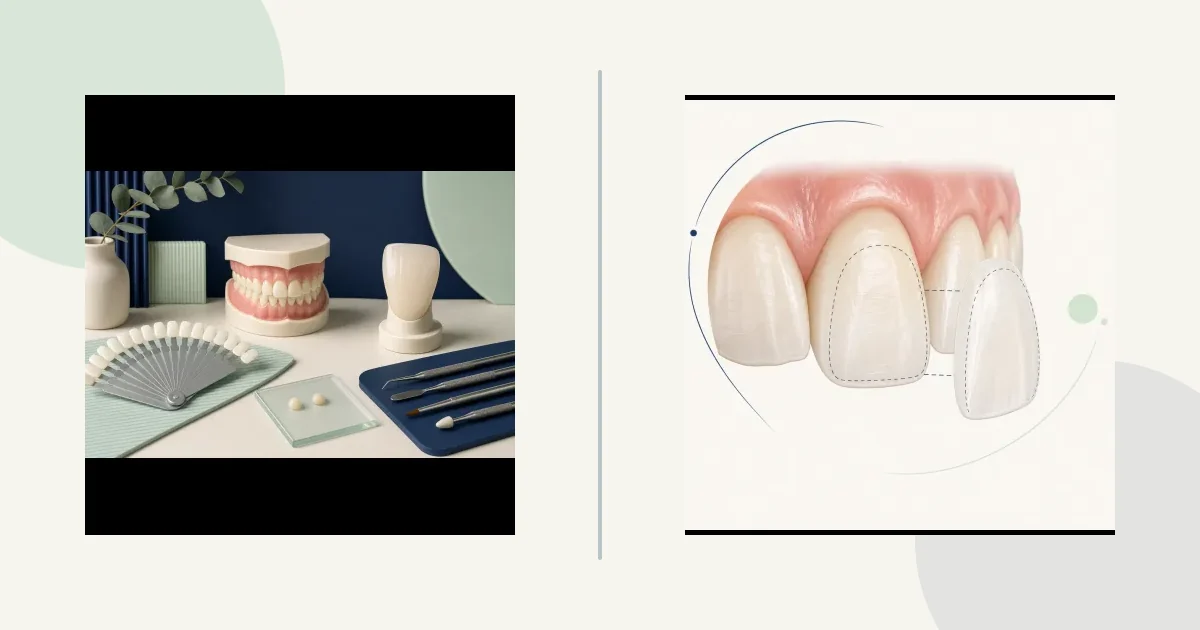
Minor chips: AED 500 fix vs AED 2,500 fix comparison graphic

The two options, side by side

Illustrative diagram: dental bonding vs veneers
Illustration — a representative diagram, not a patient photo.
The DN Glow Up1,699 AED
Book The DN Glow Up

How do bonding and veneers differ?

The central differences
TreatmentWhat happens
Dental bondingTooth-coloured composite resin changes tooth shape, size or colour and commonly takes one office visit.[1][2]
VeneerA porcelain veneer needs enamel removal, an impression or scan, laboratory work, fit checks and bonding.[1][2]

[1][2]

When is bonding the more direct repair?

Bonding is used to conceal chips or minor cracks, change tooth shape, close gaps, hide discolouration and make teeth look longer. It is painless and typically takes a single visit.

[1][2]

When does a veneer make the stronger change?

Porcelain veneers are strong, long-lasting shells custom-made for the tooth front. They can be the more durable option when a larger cosmetic change is needed.

[1][2]

Which treatment is usually less expensive?

Dental bonding is among the least expensive cosmetic dental procedures. Porcelain veneers tend to cost more because they require enamel preparation and a custom-made laboratory restoration.

[1][2]

Which option needs earlier touch-ups?

Bonding material typically lasts three to 10 years before touch-up or replacement. It can chip and is less stain-resistant than porcelain; normal activity can resume immediately after treatment.

[1][2]
Durability and repair points
OptionMaintenance point
BondingComposite can chip over time and does not last as long as veneers or crowns.[1][2]
VeneersA veneer can chip, crack, wear down or loosen, then need re-bonding, repair or replacement.[1][2]

[1][2]

What are the limits and risks?

Bonding can cause short-term sensitivity. Veneers are irreversible because enamel is removed, and placing them over decay or gum disease can worsen existing problems.

[1][2]

When does neither cosmetic repair come first?

Decay needs treatment before dental bonding, and veneers should not cover unhealthy teeth. A crown can strengthen a weak tooth or restore one that is already broken.

[1][2]

What does the tooth need assessed?

A small chip, crack, gap, shape change or discolouration can be addressed with bonding. A veneer decision also needs assessment of enamel removal, tooth health, grinding and deep overbite.

[1][2]

Frequently asked questions

Does dental bonding need recovery time?

Bonding usually needs no downtime, although short-term sensitivity can occur after the procedure.

[1][2]