
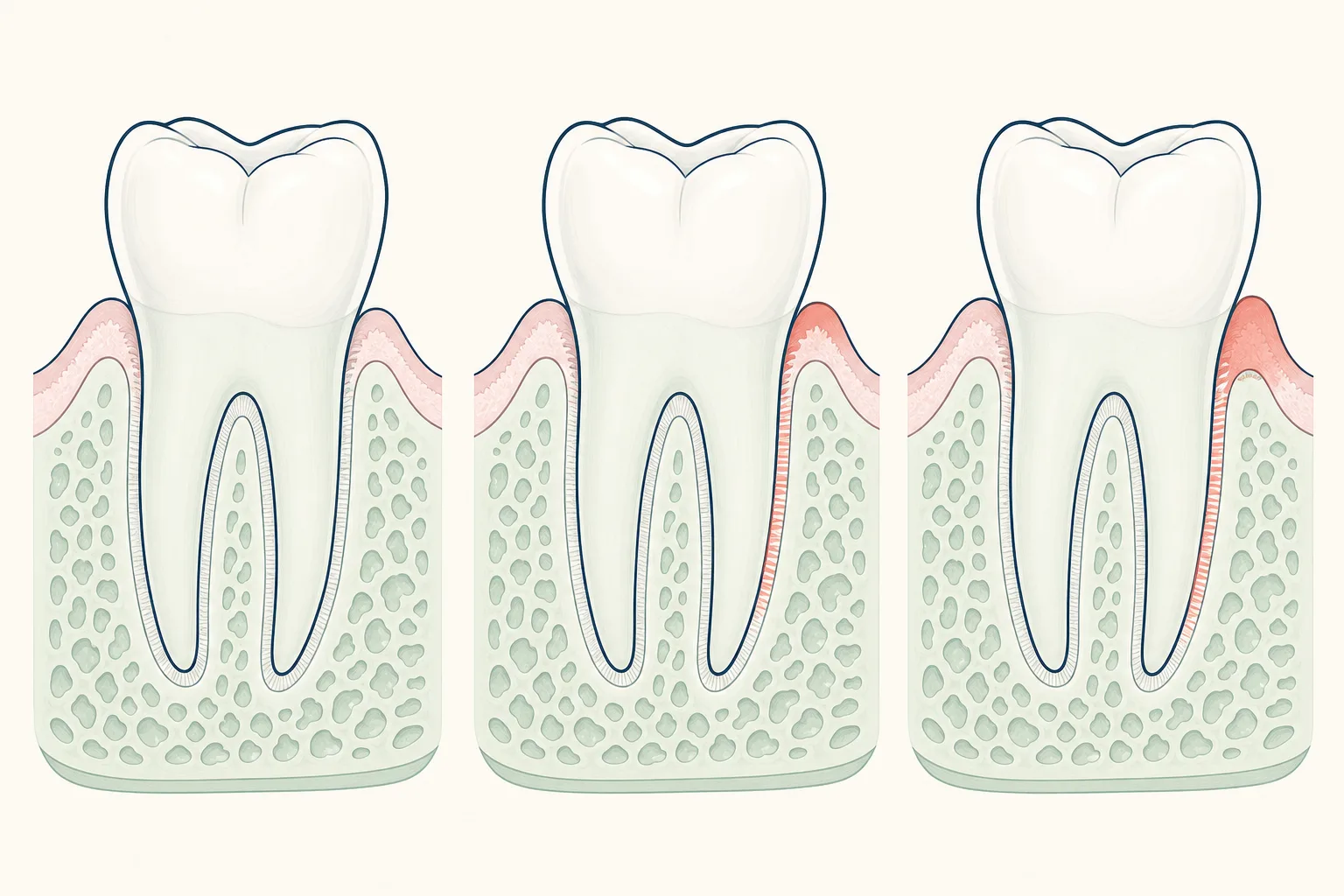
What the change looks like
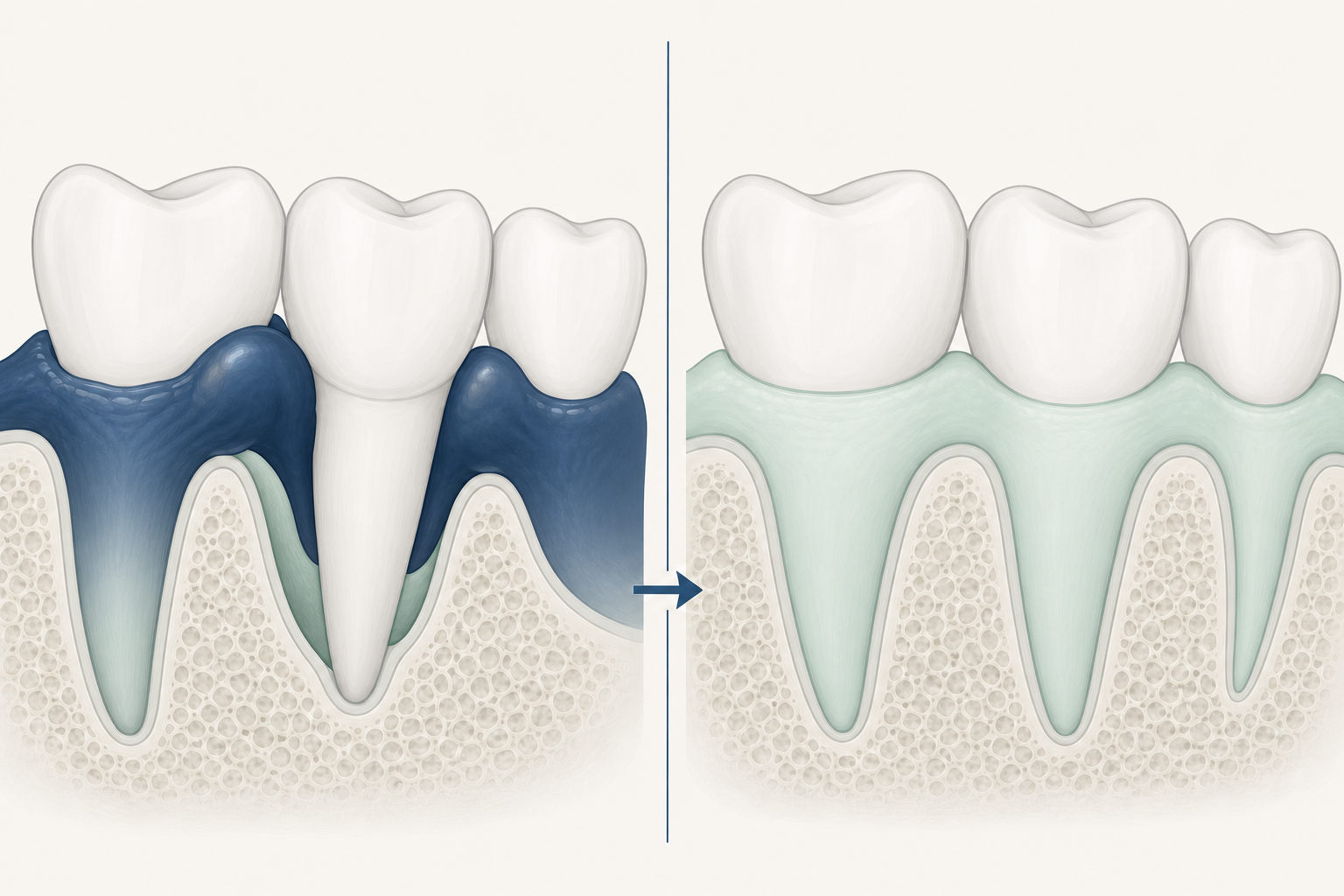
What might you notice first?
What can trigger it?
Periodontal abscesses form as pus accumulates within the gingival wall of a periodontal pocket or sulcus. Endodontic-periodontal lesions arise when pulpal and periodontal tissues communicate pathologically.
[2]How can the condition change over time?
Staging reflects disease severity at presentation and the complexity of managing it. Grading adds information about biological features, progression risk and possible treatment outcomes.
[2]What can raise concern?
Risk is higher when disease has features associated with further progression, poor treatment outcomes or a possible negative effect on general health.
[2]How does a dentist check it?
Diagnosis separates acute or chronic endodontic-periodontal lesions by the signs and symptoms that affect prognosis and treatment.
[2]What treatment may be used?
Treatment follows the disease presentation and its management complexity. Periodontal treatment may address the affected pocket, while an endodontic-periodontal lesion requires attention to the communicating pulpal and periodontal tissues.
[1]What should you ask about cost?
The treatment plan is shaped by disease severity and management complexity, so the scope of periodontal care is a major cost factor.
[1]What if it is left untreated?
A periodontal abscess can destroy tissue rapidly and is associated with the possibility of systemic dissemination. Periodontitis also carries risks of further progression and poor treatment outcomes.
[2]How can you reduce recurrence?
Periodontal care includes controlling gum disease and maintaining treatment over time, because periodontal treatment is designed to manage disease rather than erase the need for ongoing oral care.
[1]Frequently asked questions
Why can an acute periodontal abscess be urgent?
It can destroy periodontal tissue rapidly and may be associated with systemic dissemination.
[2]