
Dental Nation
Condition guide

Alveolar Ridge Atrophy

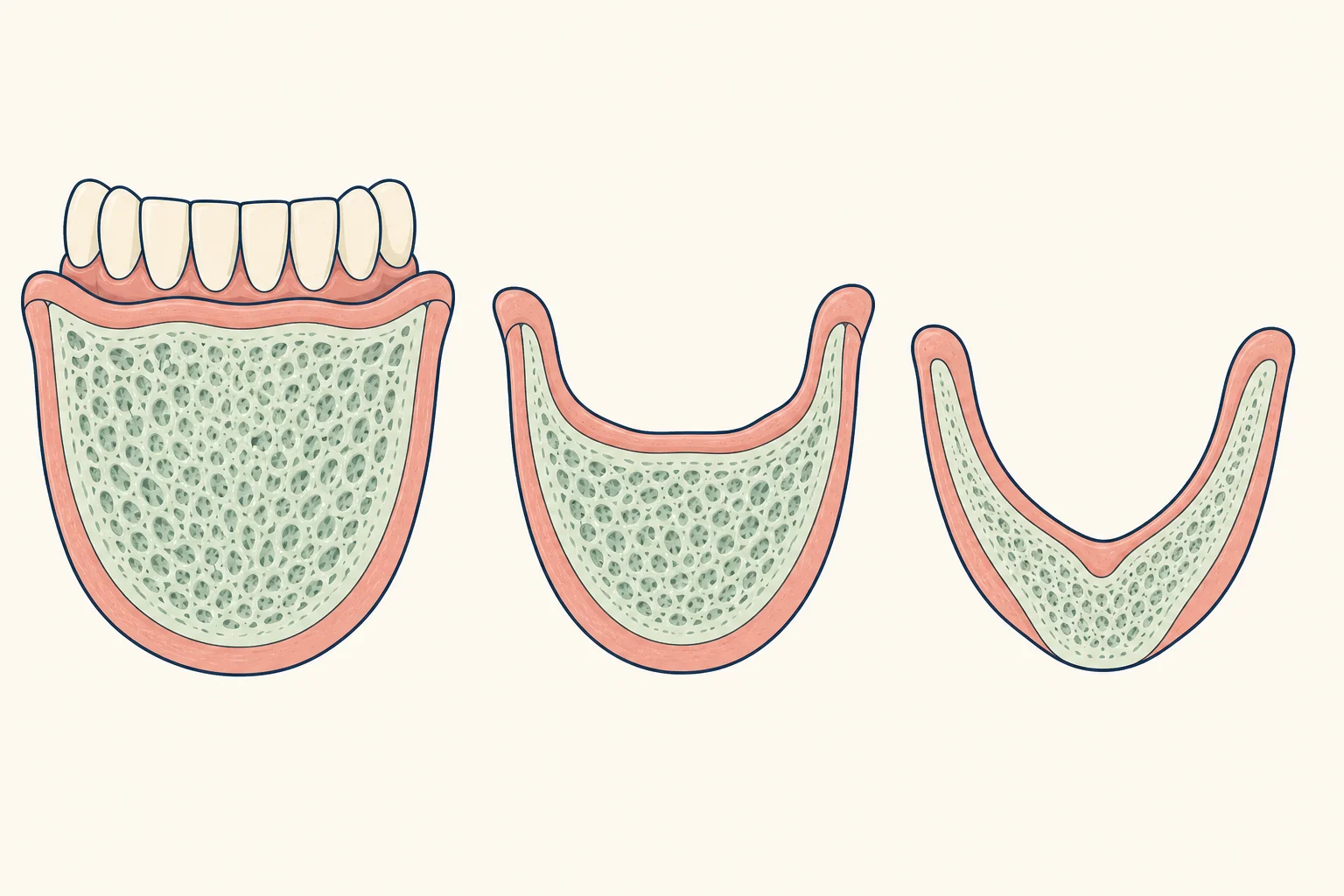
After tooth loss, ridge resorption can leave less jawbone for a denture or an implant plan.

[4]

The short answer

Alveolar ridge atrophy is loss of the tooth-bearing jaw ridge that can complicate replacement of missing teeth.

[4]
Alveolar Ridge Atrophy dental educational illustration

What the change looks like
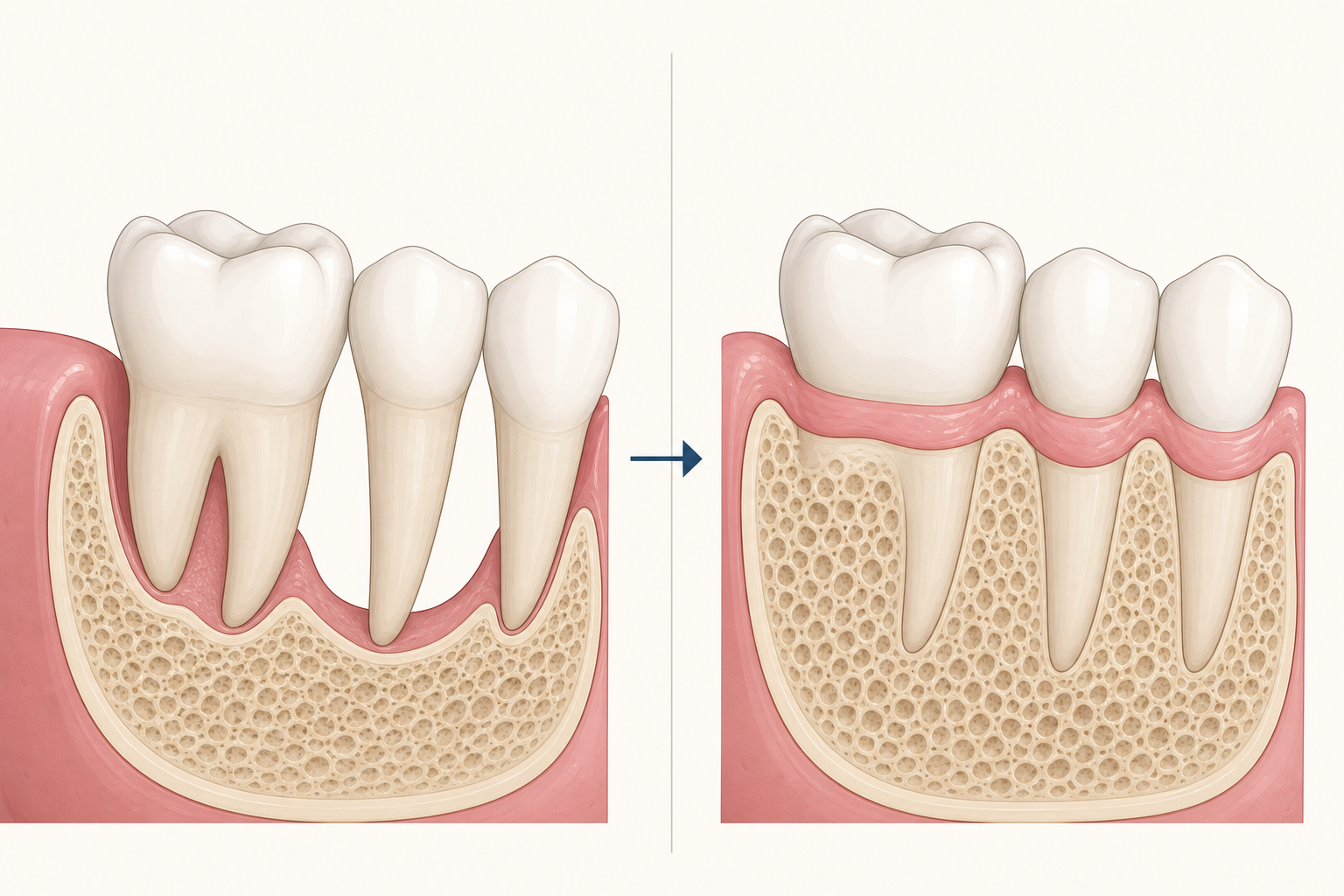
Illustrative diagram: Alveolar Ridge Atrophy
Illustration — a representative diagram, not a patient photo.
The DN First Look799 AED
Book The DN First Look

What does alveolar ridge atrophy feel like?

Changes that may accompany ridge loss
FindingWhat it indicates
Progressive bone lossLess bone may be available at an implant site[4]
Pain on tapping or uncontrolled dischargeThese are signs reported with implant failure[4]

[4]

Why does the ridge shrink?

The ridge can resorb after teeth are lost. Age, traumatic damage, disease, osteoporosis, mineral-metabolism disorders and hormone imbalance are among the factors linked with the amount of resorption.

[4]

How is ridge loss classified?

Ridge assessment records the bone structure that remains after teeth are lost. Standardised radiographs can detect changes in the upper and lower jaw early.

[1][3][4]
A practical view of ridge change
Stage focusPatient-relevant meaning
Upper and lower jaw bone structureCan be assessed on a standardised radiograph[1][3][4]
Degree of resorptive changeMay differ between parts of the skeleton[1][3][4]

[1][3][4]

What increases the chance of ridge loss?

Full or partial dentures supported by mucosa, or by mucosa and gingiva, are associated with more extensive ridge resorption than partial dentures supported by gingiva and mucosa.

[4]

How is it diagnosed?

Standardised intraoral or panoramic radiographs can identify changes in jawbone structure. For an implant site, imaging also maps the nasal floor and maxillary sinus in the upper jaw and the mandibular canal in the lower jaw.

[1][3][4]

How is it treated at different stages?

When the upper-jaw sinus limits implant placement, options described include short implants, sinus lifting and bone augmentation. Ridge preservation after extraction may reduce the loss of ridge volume before delayed implant placement.

[4]
Options used in planning
SituationApproach described
Limited bone near the maxillary sinusShort implants, sinus lifting or bone augmentation are options[4]
Delayed implant placementRidge preservation may be considered when initial implant stability cannot be obtained[2][4]

[4][2]

What affects the cost in Dubai?

Planning may include implant placement alone or may include sinus lifting or bone augmentation when the available anatomy requires those procedures.

[4]

What can happen if bone loss affects implant planning?

The lower jaw's inferior alveolar canal contains a nerve and artery. Injury during implant placement can cause pain, altered sensation or excessive bleeding; upper-jaw implant surgery can also perforate the maxillary sinus.

[4]

Can ridge loss be reduced?

After extraction, ridge-preservation methods aim to limit loss of ridge volume. They do not predictably prevent bone loss at every site, but may reduce the need for grafting before or during implant placement.

[2][4]

Frequently asked questions

Why can a missing tooth change the shape of my jaw?

After teeth are lost, the jaw ridge can resorb. Removable denture wear is also associated with ridge resorption.

[4]