
Anodontia
Anodontia is the congenital absence of all teeth, assessed through development, family history, examination, and dental imaging.
[1]The short answer
Anodontia means congenital absence of all teeth and is diagnosed by assessing tooth development with examination and dental imaging.
[1]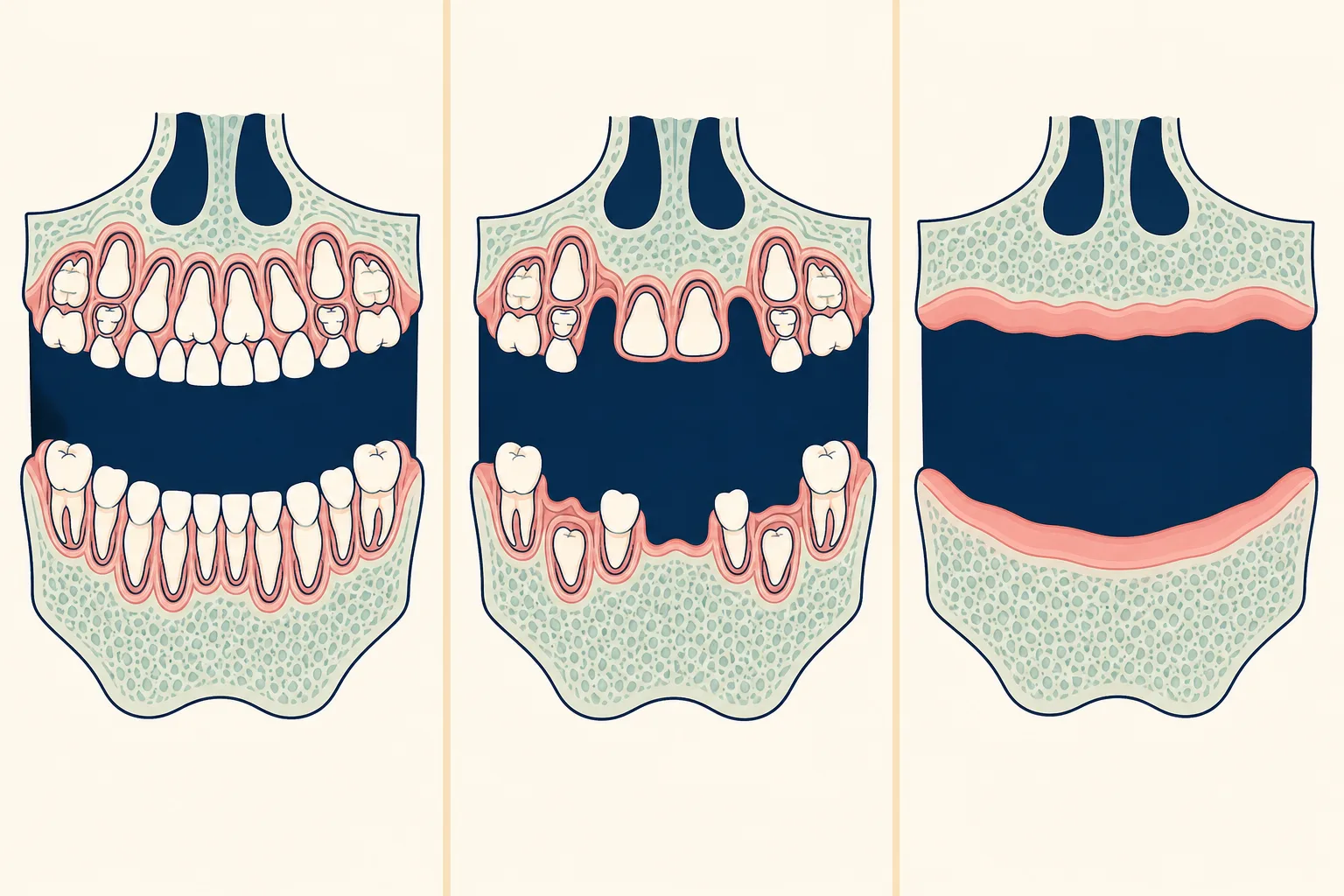
What the change looks like
What symptoms can appear?
| Clinical question | What the assessment considers | Patient-facing next step |
|---|---|---|
| A change noticed by the patient | The timing, trigger, location, and effect on function | Record what changed and arrange a dental assessment[1] |
| A finding after treatment or injury | The tooth, implant, sinus, nerve, or developing teeth may need separate checks | Take the treatment or injury history to the appointment[1] |
What can cause it?
Tooth agenesis can occur as an isolated finding or as part of a genetic or syndromic condition. Family history and other physical or dental findings may help the clinician decide whether a wider assessment is appropriate. The cause cannot be established from the number of visible teeth alone, and a genetic explanation should not be assumed without evaluation.
[2]How is it classified over time?
The assessment changes with development. In an infant or young child, the question is whether teeth are developing and when eruption would be expected. Later, the team considers jaw growth, function, speech, nutrition, and the timing of interim and definitive replacement. Treatment plans must leave room for growth.
[1]| Clinical question | What the assessment considers | Patient-facing next step |
|---|---|---|
| Earlier or developing finding | The history and examination may show a problem at a different point in its course | Ask what finding supports the classification[1] |
| Established or persistent finding | The next step depends on tissue status, function, and the suspected source | Ask what needs monitoring or treatment[1] |
What raises concern?
A family history of missing teeth, other dental anomalies, and features suggesting a syndrome can affect the assessment. The presence of missing teeth in a relative does not predict the exact pattern in a child. A careful medical and family history gives the dental team better context for imaging and referral.
[2]How is it diagnosed?
Diagnosis uses an oral examination, developmental history, family history, and dental imaging to determine which teeth are present, absent, or still developing. The clinician may coordinate with paediatric dental, orthodontic, prosthodontic, or genetic services when the pattern warrants it. The child's growth and function are part of the assessment.
[1]How is treatment planned?
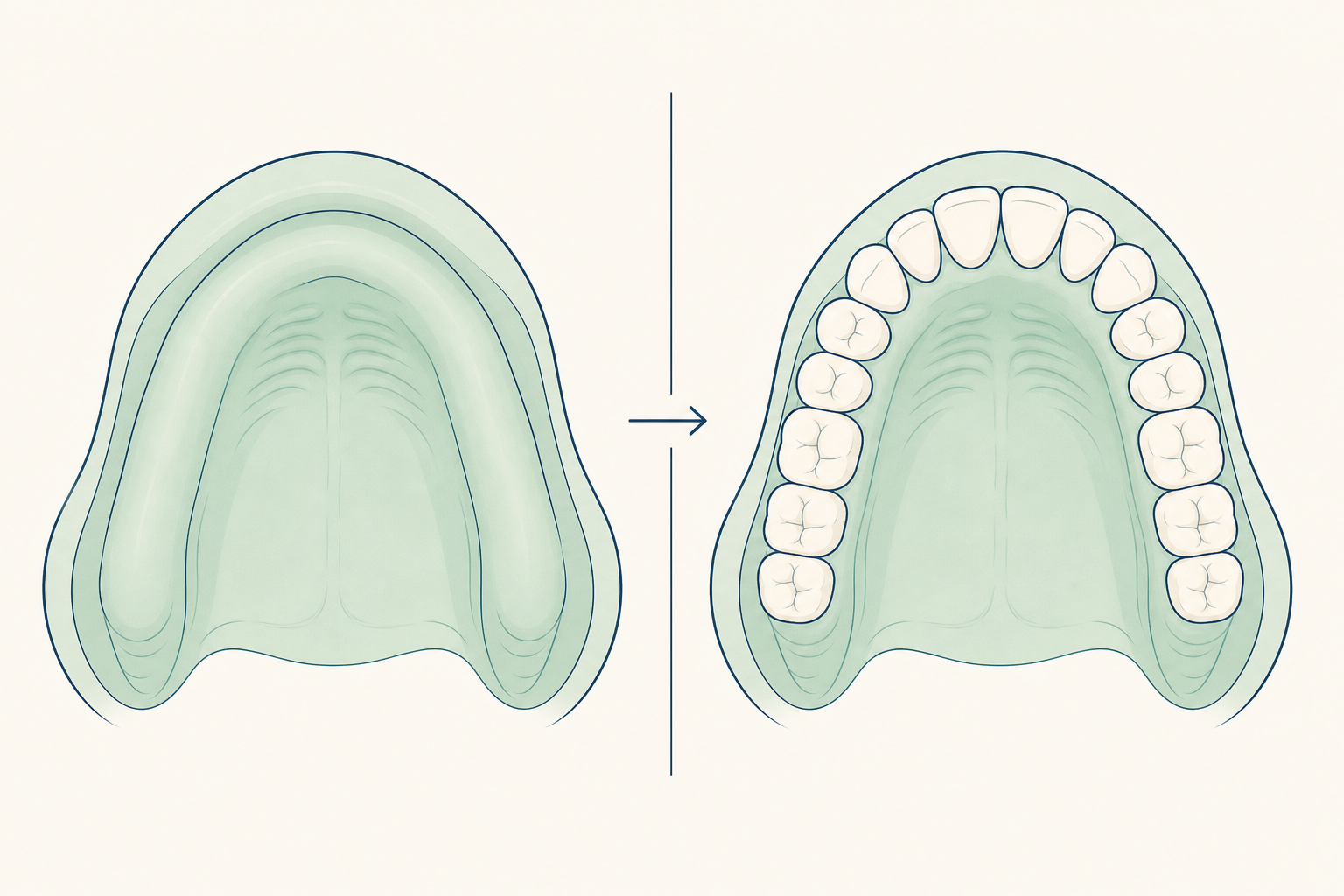
Care is individualised around age, growth, function, appearance, and the number and position of developing teeth. A child may need monitoring and an interim solution before a later prosthetic or orthodontic plan. The team may discuss dentures, orthodontic space management, implants after growth, or other replacements when appropriate.
[1]| Clinical question | What the assessment considers | Patient-facing next step |
|---|---|---|
| A local, repairable finding | Care may focus on the affected tooth, tissue, restoration, or source | Ask which part of the problem the proposed treatment addresses[1] |
| A finding needing coordinated care | More than one assessment or a staged plan may be needed | Request the sequence, follow-up, and decision points in writing[1] |
What should I ask about cost in Dubai?
A Dubai plan may include imaging, specialist assessments, interim appliances, orthodontic planning, and later replacement. Staged care can change as the jaws and remaining teeth develop.
[1]What can happen if it continues?
Missing teeth can affect chewing, speech, appearance, jaw development, and the position of remaining teeth. The effects depend on the pattern and the child's stage of growth. Delaying assessment can make it harder to plan space, function, and interim support, although the definitive replacement decision may need to wait.
[1]How can future problems be reduced?
Congenital tooth absence is not prevented by brushing or diet. Parents can support prevention of additional dental disease with daily oral care, suitable fluoride advice, regular dental review, and a complete medical and family history. Early assessment helps protect the teeth that are present and plan care around growth.
[1]Frequently asked questions
Can anodontia be diagnosed from symptoms alone?
No. Diagnosis uses an oral examination, developmental history, family history, and dental imaging to determine which teeth are present, absent, or still developing. The clinical history and examination determine the next step.
[1]