Dental Nation
Condition guide

Dental Arch Relationship Anomaly

A mismatch between the upper and lower dental arches can crowd teeth, alter eruption, and change how the bite closes.

[1][2]

The short answer

A dental arch relationship anomaly changes how the upper and lower arches meet, which can leave too little room for teeth to erupt in position.

[1][2]
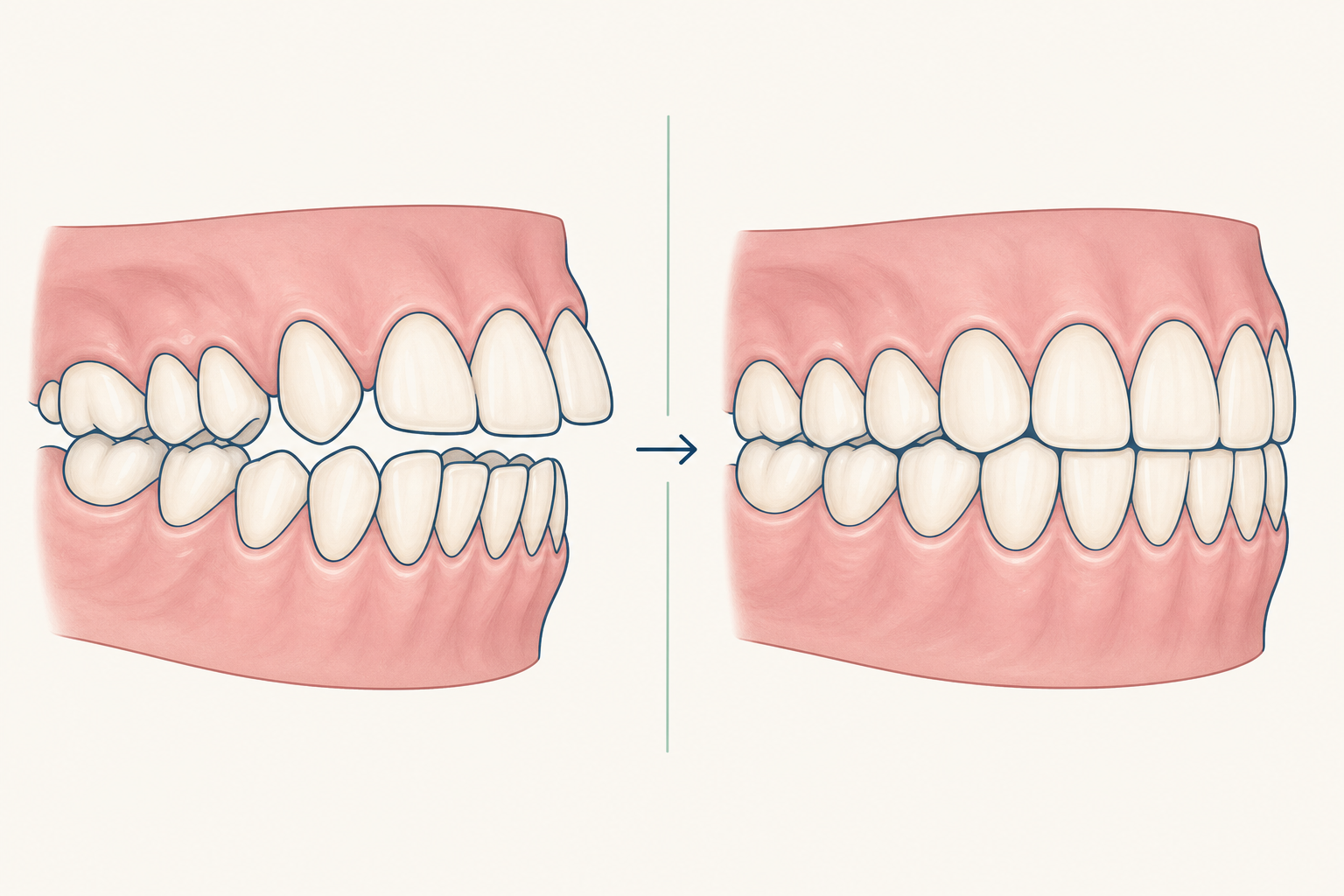
Dental Arch Relationship Anomaly dental educational illustration

What the change looks like

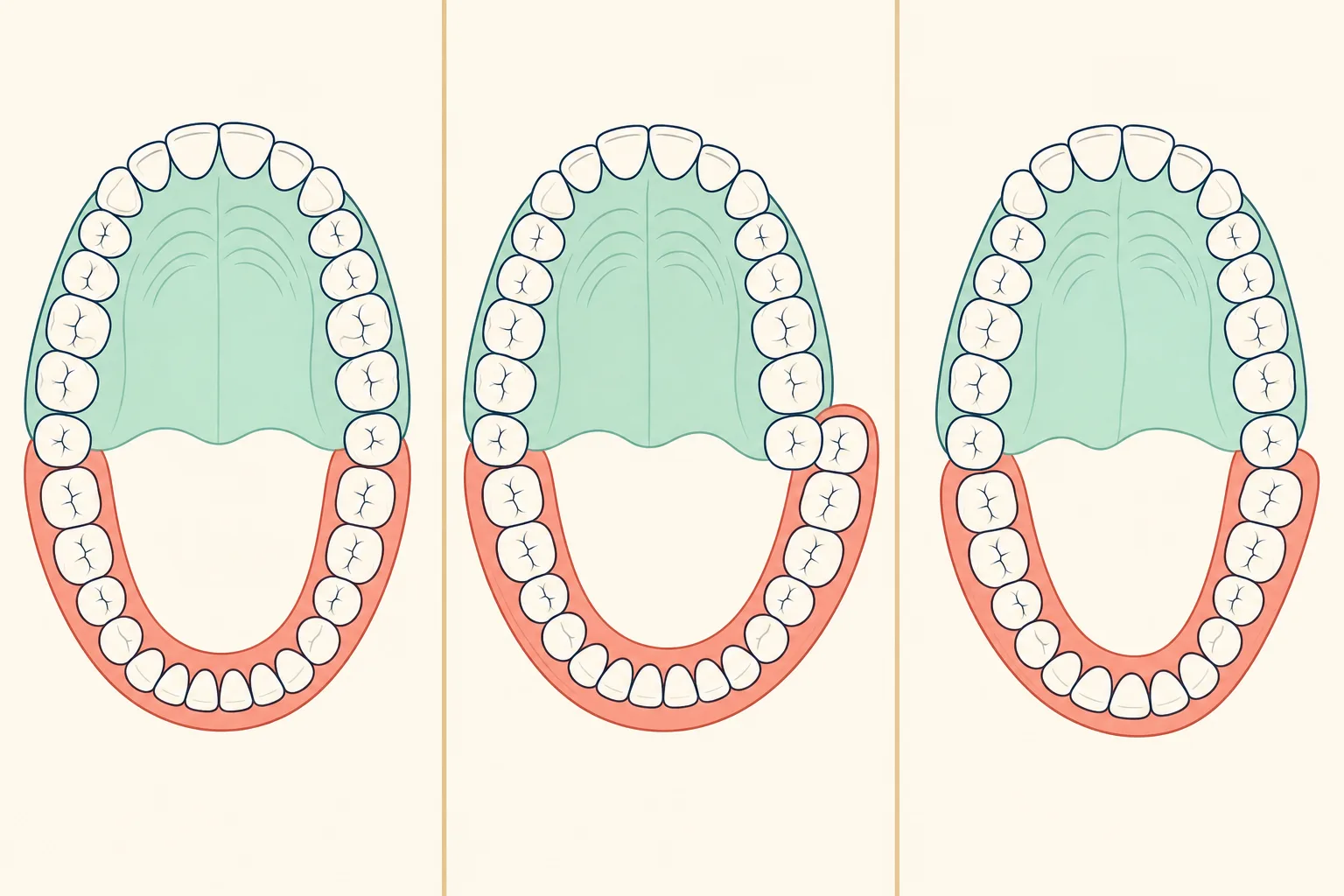
Illustrative diagram: Dental Arch Relationship Anomaly
Illustration — a representative diagram, not a patient photo.
The DN First Look799 AED
Book The DN First Look

What symptoms can appear?

Common findings include crowding, rotated teeth, crossbite, excessive overjet, excessive overbite, and ectopic eruption. Loss of arch length can make each of these patterns more severe.

[1][2]
Signs and clinical focus
Patient questionClinical focus
What may be noticed?Teeth may overlap, rotate, cross the bite, or emerge in an unusual place.[1][2]
What should be checked?The bite, eruption, available space, and relationship of the arches are checked together.[1][2]

[1][2]

What can cause it?

Premature loss of baby teeth from decay, infection, trauma, ectopic eruption, or crowding can shorten the arch. This loss of space can disturb molar relationships and the position of erupting teeth.

[1][2]

What stages might a dentist describe?

The dentition develops through primary teeth, mixed dentition, adolescent permanent teeth, and early adulthood. Arch relationships can change as teeth erupt, space is lost, and jaw growth continues.

[1][2]
How findings may be framed
FindingDiscussion
Primary dentitionThe first teeth emerge and establish the early arch form and spacing.[1][2]
Mixed dentitionEruption, crossbites, habits, crowding, and tooth anomalies can be identified.[1][2]

[1][2]

What can increase the chance of it?

Caries, infection, trauma, ectopic eruption, and existing crowding can cause premature tooth loss. A shortened arch has less perimeter and width for permanent teeth, increasing the chance of crowding and an unfavourable molar relationship.

[1][2]

How is it diagnosed?

An oral examination checks the bite and tooth positions. Panoramic, occlusal, and periapical radiographs can show unerupted, missing, extra, fused, or unusually shaped teeth, plus root development and resorption.

[1][2]

How is treatment chosen by stage?

When a baby tooth is lost early, a space maintainer can hold the neighbouring teeth in position until the permanent tooth erupts. Orthodontic treatment in the permanent dentition can aim for a functional, stable bite.

[1][2]
Treatment discussions
FindingPossible discussion
Early loss of a baby toothA space maintainer can preserve arch length, width, and perimeter.[1][2]
Permanent dentitionOrthodontic treatment can correct the bite after growth and eruption are assessed.[1][2]

[1][2]

What should I know about costs in Dubai?

The clinical work can range from imaging and monitoring eruption to maintaining lost space or moving teeth orthodontically. A cemented space maintainer needs inspection for band and cement leakage while it remains in place.

[1][2]

What can happen if it is left untreated?

Without enough arch length, crowding, rotations, ectopic eruption, crossbite, excessive overjet, excessive overbite, and adverse molar relationships can increase. Crowding can trap food and make between-tooth cleaning difficult.

[1][2]

Can it be prevented or reduced?

Restoring a decayed baby tooth to its original shape can help prevent space loss. When premature loss cannot be avoided, space maintenance can preserve the relative position of the remaining teeth until eruption continues.

[1][2]

Frequently asked questions

Why can a missing baby tooth affect permanent teeth?

Teeth beside the gap can move into the space, reducing the room available for the permanent tooth and making crowding or ectopic eruption more likely.

[1][2]