
Dental Calculus
Tartar is plaque hardened by mineral deposits. Brushing and flossing remove plaque, while established tartar needs professional cleaning.
[2]The short answer
Dental calculus is hardened plaque formed by mineralised biofilm, and established calculus cannot be removed with a toothbrush.
[3]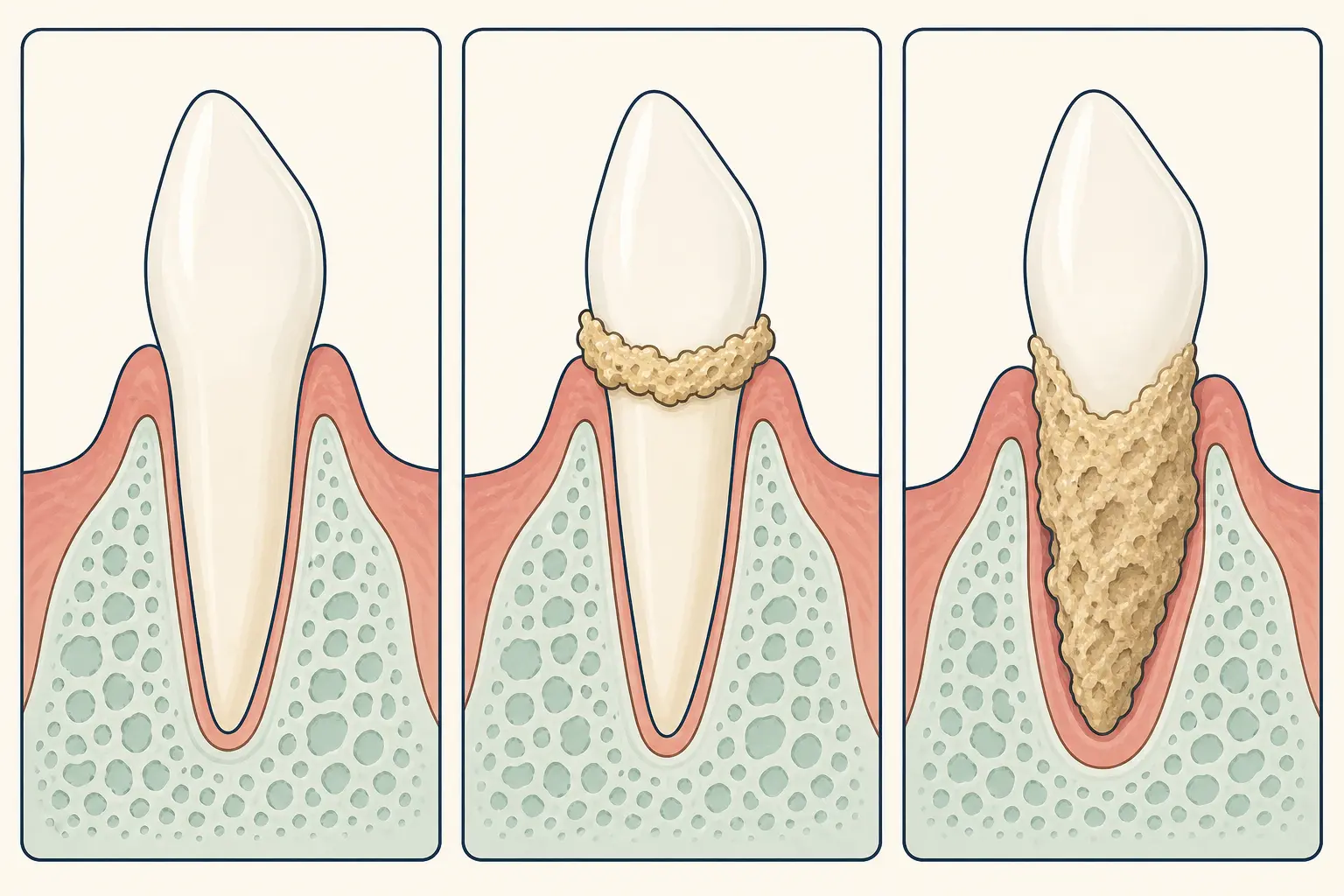
What the change looks like
What symptoms might I notice?
| Finding | Patient-facing next step |
|---|---|
| Pain, sensitivity, swelling, or a visible change | Arrange a dental assessment so the tooth and nearby tissues can be examined[3] |
| Fever, spreading facial swelling, or difficulty swallowing or breathing | Seek urgent dental or medical care[3] |
| No obvious symptom | Keep routine dental review because some findings are discovered during examination or imaging[3] |
What can cause it?
How is it described or staged?
Plaque is a sticky, colourless film that continually forms on teeth. When it is not removed by brushing and flossing, it hardens into calculus, also called tartar.
[2]| Assessment point | What the dentist is checking |
|---|---|
| Limited finding | Whether the change is confined to the tooth or a small area[3] |
| Nearby tissue involvement | Whether gums, supporting tissues, or adjacent structures are affected[3] |
| Function and progression | Whether the tooth works normally and whether the change is developing[3] |
What increases the risk?
How is it diagnosed?
Calculus is identified as hardened deposits arising from plaque on teeth. Gum signs that can accompany periodontal disease include red, swollen or bleeding gums and persistent bad breath.
[3]How is it treated at each stage?
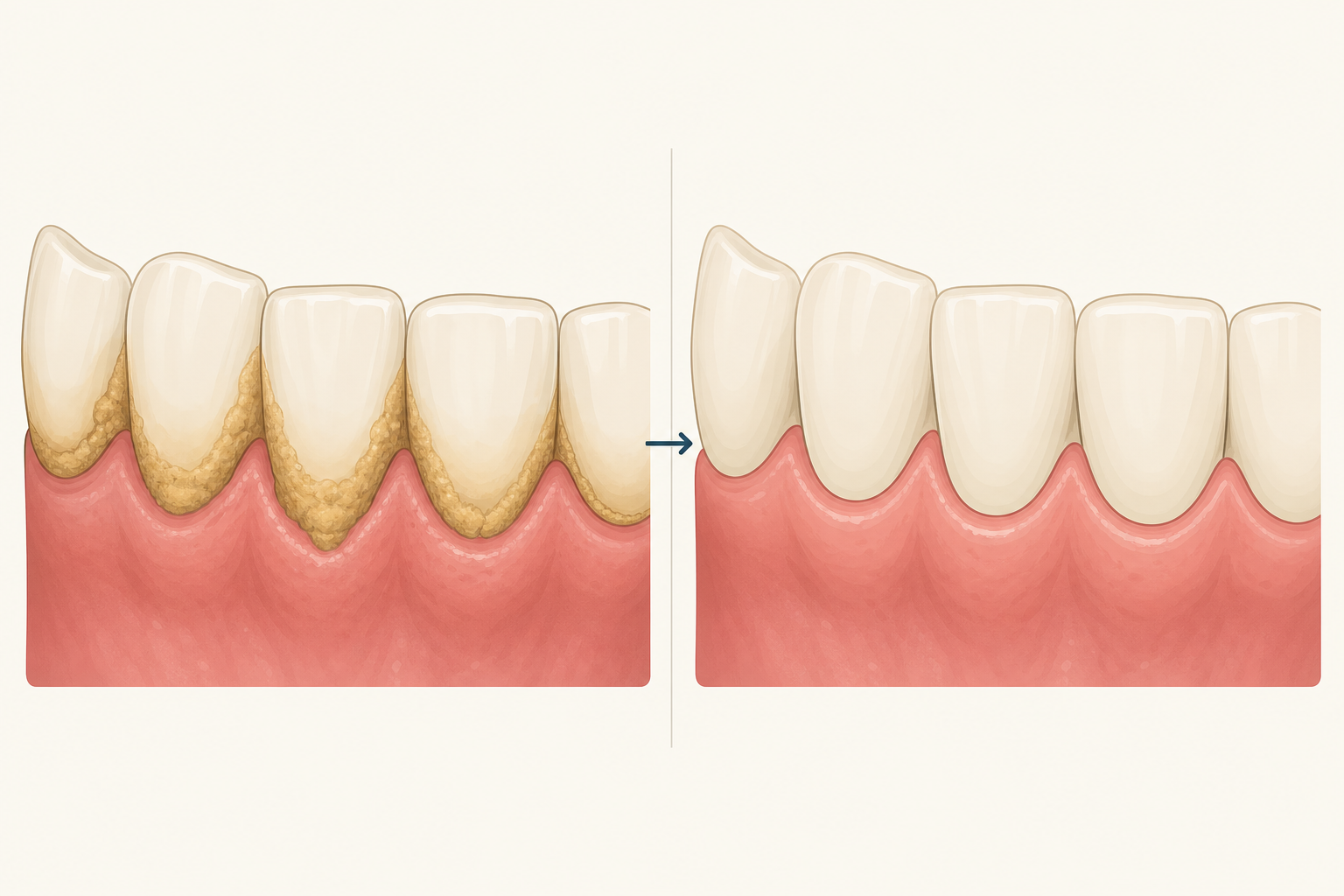
A dental professional removes calculus during an oral cleaning. A toothbrush cannot remove hardened calculus, so brushing and flossing are used to control the plaque that forms before it hardens.
[3]| Clinical situation | Possible direction of care |
|---|---|
| Limited or stable finding | Observation or a tooth-preserving procedure may be considered after examination[3] |
| Active disease or symptoms | Treatment is selected for the diagnosed cause and affected tissues[3] |
| Loss of function, spreading infection, or severe damage | Prompt assessment is needed to choose the appropriate procedure[3] |
What should I ask about the Dubai cost?
Professional cleaning removes established calculus, while daily home care targets plaque before mineral deposits form. These are different parts of controlling tartar.
[2]What can happen if it is untreated?
How can I reduce future problems?
Brush twice each day, floss at least once each day, and have regular dental cleanings to control plaque and calculus. Plaque removal prevents the deposits that later harden.
[3]Frequently asked questions
Can Dental Calculus be diagnosed from symptoms alone?
No. Symptoms can guide the history, but diagnosis requires a dental examination and may require imaging.
[3]