Dental Nation
Condition guide

Enamel Hypoplasia

Enamel hypoplasia leaves teeth with too little enamel, which can appear as pits, grooves or missing areas and increase decay risk.

[1][2]

The short answer

Enamel hypoplasia is reduced enamel formation that can leave pits, grooves or missing enamel and make teeth more vulnerable to decay.

[1][2]
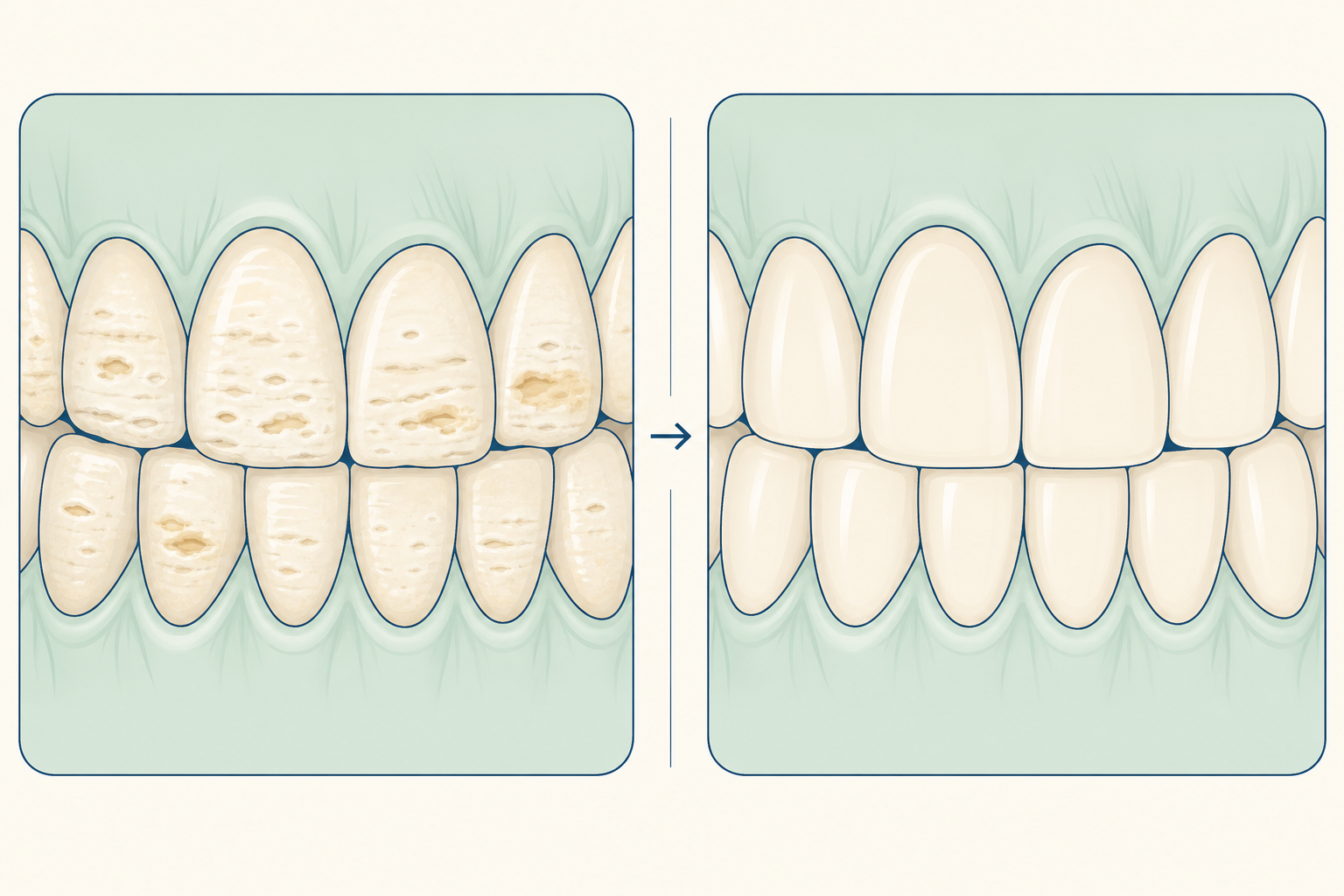
Enamel Hypoplasia dental educational illustration

What the change looks like

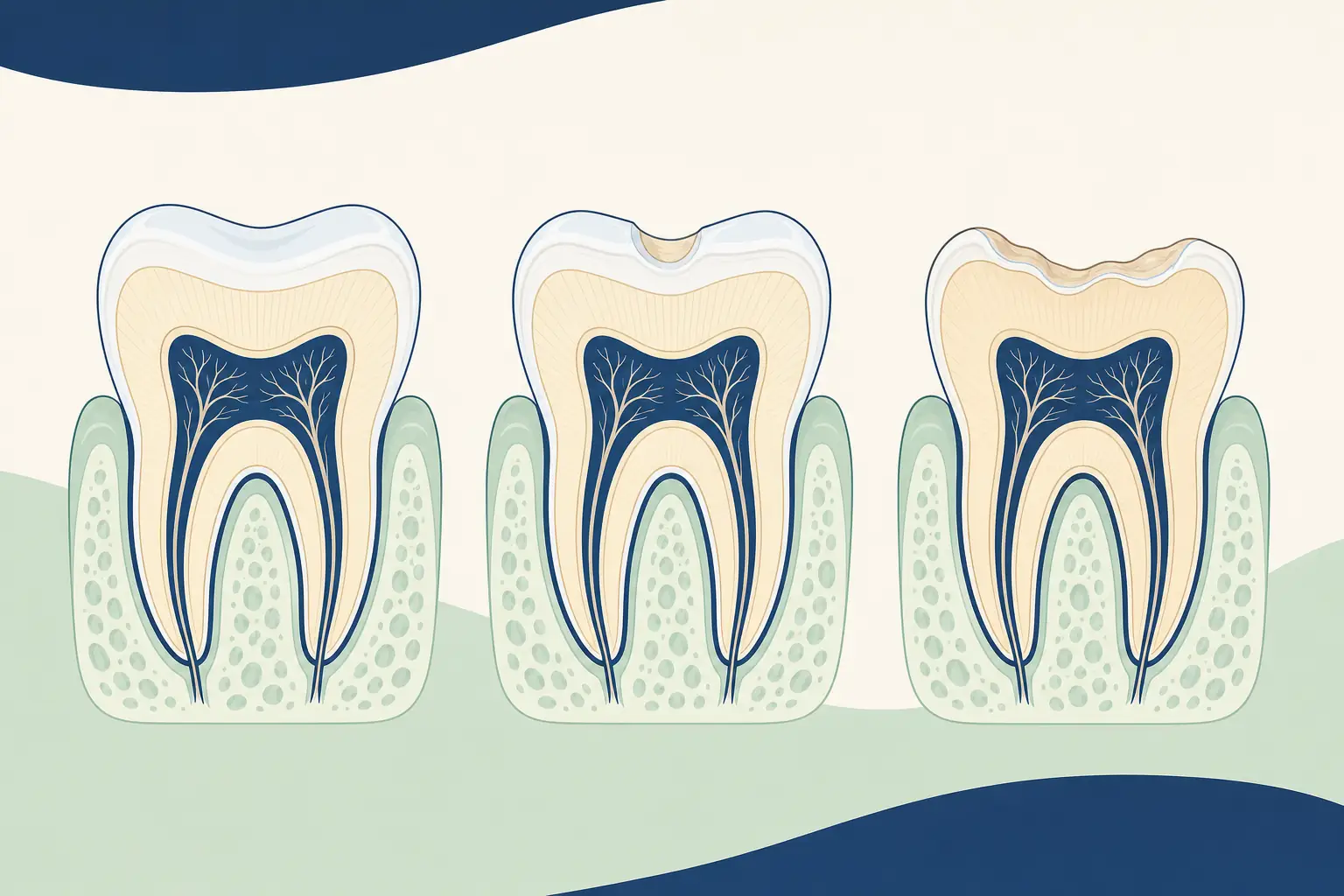
Illustrative diagram: Enamel Hypoplasia
Illustration — a representative diagram, not a patient photo.
The DN First Look799 AED
Book The DN First Look

What does enamel hypoplasia look like?

Visible changes in enamel formation
ChangeWhat it means
Pits or groovesThey are a recognised appearance of reduced enamel formation.[1][2]
Missing enamel areasThe tooth has less protective enamel over that area.[1][2]

[1][2]

What causes enamel hypoplasia?

Enamel development can be disturbed by inherited dental developmental anomalies. The condition is linked with structural developmental disturbances of teeth rather than wear that happens after the tooth has formed.

[1][2]

Which teeth can be affected?

The change occurs while enamel is being formed, so it may be seen in developing primary or permanent teeth. The amount and distribution of reduced enamel can differ between affected teeth.

[1][2]
Reduced enamel can affect protection
FeaturePractical effect
Thin or absent enamelThe tooth has less of its usual protective outer layer.[1][2]
Irregular surfacePits and grooves can be present on the affected tooth.[1][2]

[1][2]

Who may have enamel hypoplasia?

People with heritable dental developmental anomalies may have enamel developmental changes. A structural anomaly is assessed as part of the tooth’s development and overall dental pattern.

[1][2]

How is enamel hypoplasia identified?

Identification focuses on the tooth structure and the pattern of developmental enamel change. Pits, grooves and areas with reduced enamel are recorded to distinguish a formation problem from later surface damage.

[1][2]

How are affected teeth managed?

Management is directed at the structural problem and the tooth’s vulnerability to decay. Restorative care may be needed to preserve affected tooth structure when reduced enamel leaves a tooth insufficiently protected.

[1][2]
Care follows the structural effect
FindingCare focus
Reduced enamel with decay riskProtect and preserve the affected tooth structure.[1][2]
Developmental enamel anomalyAssess the wider pattern of tooth structure.[1][2]

[1][2]

What can change the treatment needed?

The amount of enamel missing and whether the tooth needs restorative protection determine the care required. A tooth with only a small visible defect is different from one with structural loss that needs preservation.

[1][2]

Why does reduced enamel matter?

Reduced enamel leaves less protection for the tooth and can increase its vulnerability to dental caries. Structural defects may therefore need preventive attention before further tooth tissue is lost.

[1][2]

How can affected teeth be protected?

Protecting the tooth structure and reducing the chance of caries are the preventive priorities. Early recognition of developmental enamel changes supports preservation of the natural tooth.

[1][2]

Frequently asked questions

Does enamel hypoplasia happen before the tooth erupts?

It is a developmental disturbance of tooth structure that occurs during enamel formation.

[1][2]