Dental Nation
Condition guide

Post-Eruptive Tooth Discoloration

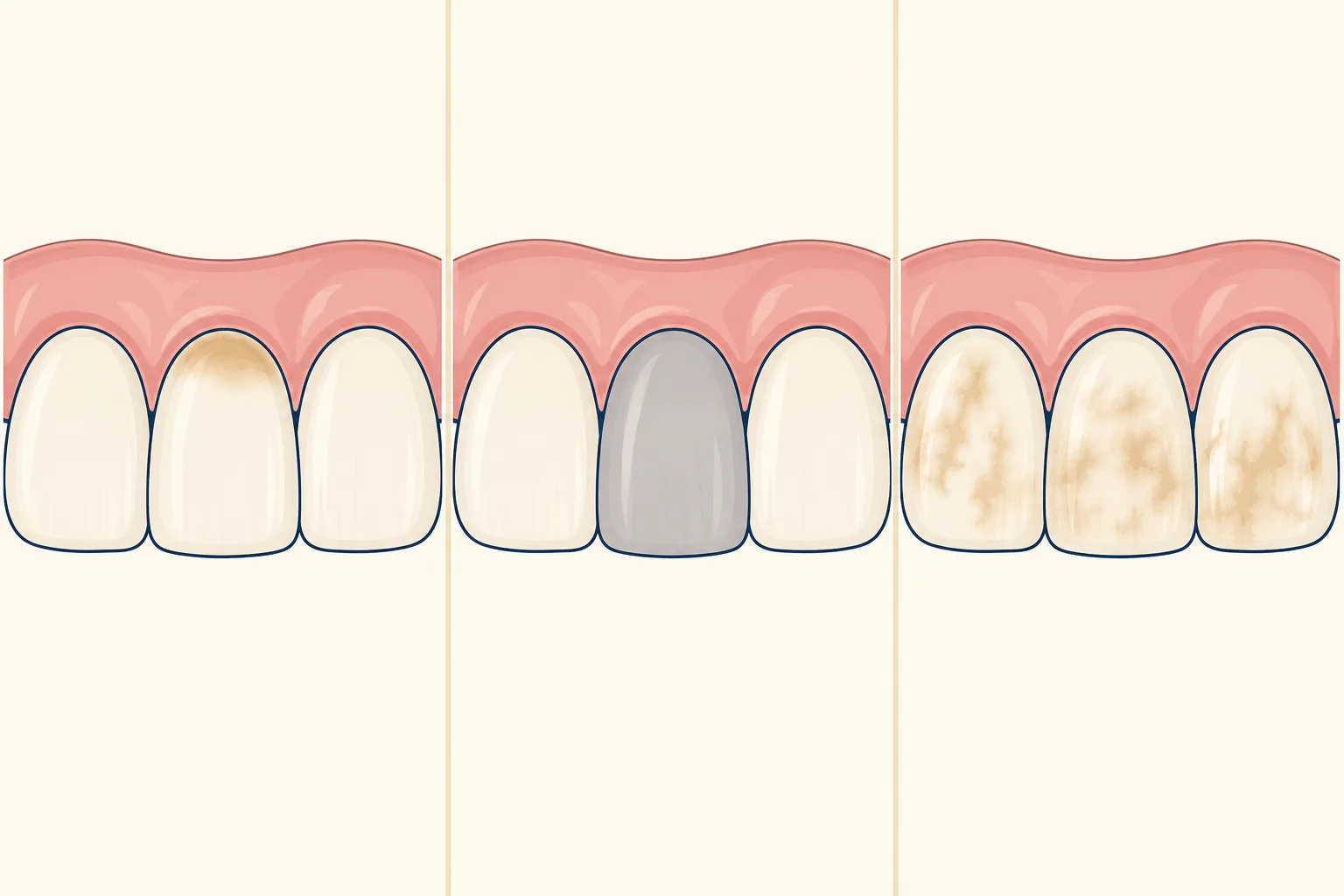
A tooth can look red-brown, blue or green when colour changes occur within its structure.

[1][2]

The short answer

Intrinsic tooth discoloration is colour built into enamel or dentine that toothpaste or pumice cannot remove.

[1][2][3]
Post-Eruptive Tooth Discoloration dental educational illustration

What the change looks like

Illustrative diagram: Post-Eruptive Tooth Discoloration
Illustration — a representative diagram, not a patient photo.
The DN First Look799 AED
Book The DN First Look

What can tooth discoloration look like?

Colour can appear red-brown, blue or green. A tooth that has lost vitality after trauma or infection can also become discoloured.

[1][2]
Colour patterns recorded in tooth discoloration
ColourRecorded association
Red-brownPorphyrin deposition in teeth[1][2]
Blue or greenAlkaptonuria or biliverdin deposition are recorded associations[1][2]

[1][2]

What can cause the colour change?

Tetracycline exposure during tooth calcification and mineralisation can leave teeth fluorescent yellow when they erupt. Light exposure can later oxidise the tetracycline pigment.

[1][2]

Where can the colour sit in the tooth?

Intrinsic discoloration is incorporated into enamel or dentine. Enamel covers the visible crown of the tooth and has a high mineral content.

[1][2][3]
The structures involved in intrinsic discoloration
StructureColour finding
EnamelIntrinsic colour may be incorporated into enamel[1][2][3]
DentineIntrinsic colour may be incorporated into dentine[1][2][3]

[1][2][3]

Which history details matter?

A detailed history can include childhood illness, medicines, infections affecting primary teeth, trauma, family patterns of abnormal teeth and fluoride exposure.

[1][2][3]

How is the cause worked out?

The cause guides treatment. The history distinguishes possible contributors such as trauma, infection, tetracycline exposure, fluorosis, hypoplasia and inherited enamel or dentine disorders.

[1][2][3]

What treatment can improve tooth colour?

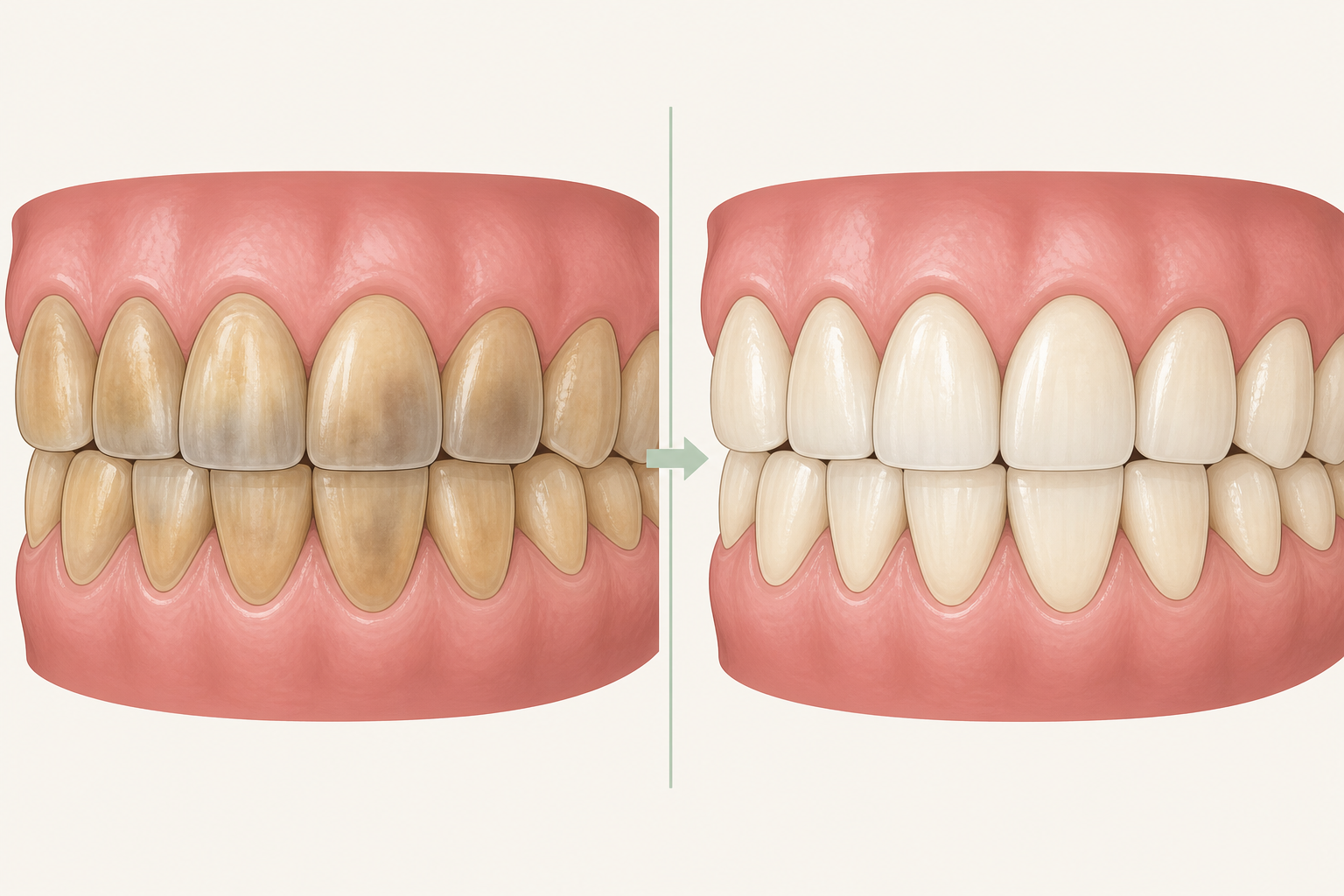
Tooth whitening is used to improve discoloration. Whitening agents work through a redox reaction, but the choice of treatment is influenced by the cause of the colour change.

[1][2]
Facts to weigh when considering whitening
PointWhat is recorded
PurposeWhitening is used to improve tooth discoloration[1][2]
MechanismOxides in the whitening reagent act through a redox reaction[1][2]

[1][2]

What can shape the treatment approach?

The cause of intrinsic discoloration influences the treatment selected. Teeth affected by amelogenesis or dentinogenesis imperfecta may also have a structurally at-risk dentition.

[1][2][3]

Are there risks with whitening?

Tooth sensitivity and irritation of the gums or other oral soft tissues can occur with whitening. Protecting oral soft tissues is particularly relevant during office whitening.

[1][2]

Can every colour change be prevented?

Some intrinsic colour changes are linked to events during tooth development, including tetracycline exposure during calcification and mineralisation. They may remain after the tooth erupts.
[1][2]

Frequently asked questions

Why does toothpaste not remove this kind of staining?

Intrinsic discoloration is incorporated into enamel or dentine, so it cannot be removed by prophylaxis with toothpaste or pumice.

[1][2][3]
Can tetracycline change tooth colour?

Tetracycline exposure during calcification and mineralisation can produce fluorescent yellow discoloration when teeth erupt.

[1][2]
