
Pearly white teeth
Pearly-white teeth are a cosmetic description shaped by enamel, dentine, surface stain, natural colour, and oral hygiene.
The short answer
Pearly-white teeth are a cosmetic description shaped by enamel, dentine, surface stain, natural colour, and oral hygiene. Healthy teeth are not naturally identical in shade, and whitening changes colour rather than repairing decay or replacing missing enamel.
What is the direct answer?
What does this question mean?
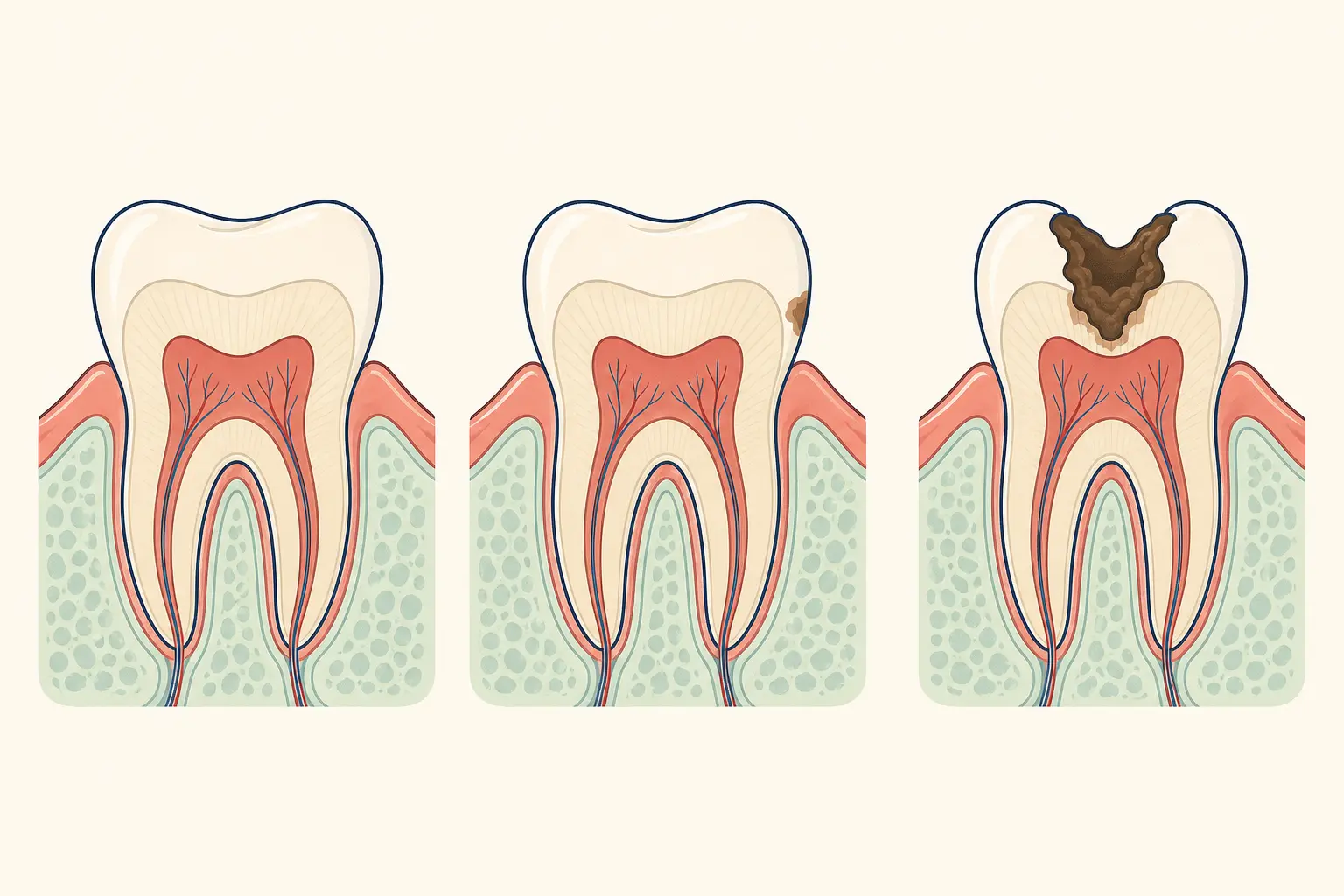
Enamel is the hard outer layer and dentine beneath it is naturally more yellow and affects the visible shade. Coffee, tea, tobacco, plaque, calculus, age, trauma, medicines, and developmental changes can alter appearance through different mechanisms.
What can you do next?
Brush with fluoride toothpaste, clean between teeth, and have deposits removed professionally when present. A dentist can distinguish surface stain from intrinsic colour change and discuss cleaning, bleaching, bonding, veneers, or no treatment according to the tooth structure.
When should you seek dental care?
Seek an examination for a new dark tooth, uneven colour, sensitivity, holes, rough edges, or gum bleeding. Cosmetic treatment should follow assessment of decay, cracks, enamel wear, and existing restorations.
What should you ask the dentist?
Ask what is causing your tooth colour, whether whitening can affect your fillings or crowns, and which option preserves the most natural tooth tissue. Ask how sensitivity and maintenance would be managed.
Frequently asked questions
Can brushing make teeth pearly white?
Brushing removes plaque and some surface deposits, but it cannot change the underlying natural shade of enamel and dentine.
Do veneers whiten natural teeth?
No. Veneers cover the front surface with a selected material shade; they do not bleach the natural tooth beneath them.