
How to clean stained teeth from smoking
Smoking stains are usually surface deposits that a professional cleaning can remove, while deeper colour change may need whitening.
The short answer
Smoking stains are usually surface deposits that a professional cleaning can remove, while deeper colour change may need whitening. Tobacco can also increase plaque retention and irritate the gums.
What is the direct answer?
What does this question mean?
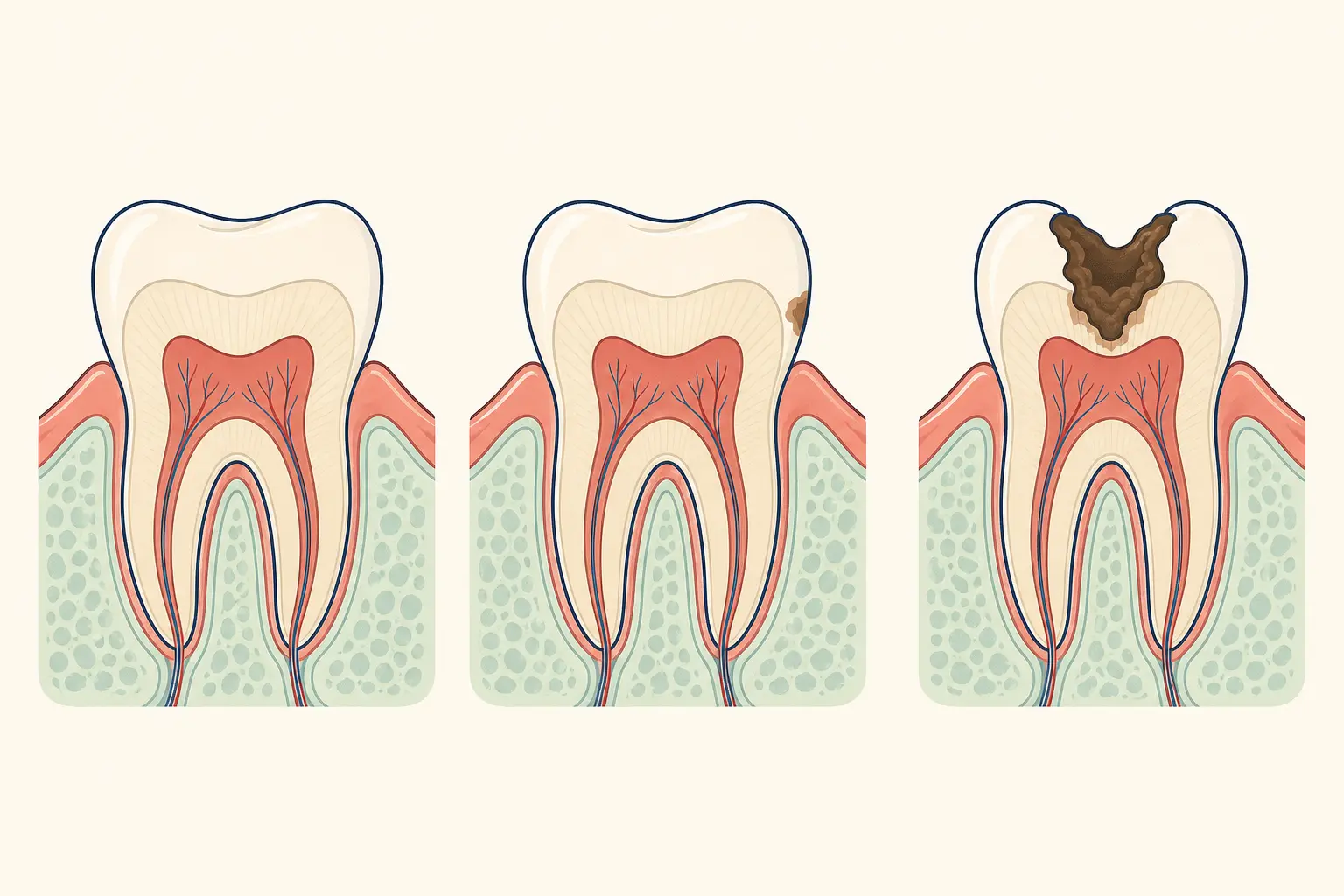
Smoke compounds adhere to the acquired pellicle on enamel and can darken into brown or black deposits. These deposits differ from internal dentine colour and from stains caused by decay or changes inside a tooth.
What can you do next?
A hygienist can examine the teeth, remove plaque and calculus with scaling, and polish appropriate surfaces. After the enamel is clean, a dentist can discuss whitening; abrasive scrubbing or household acids can wear enamel and irritate gums.
When should you seek dental care?
Book care when stains do not lift with normal cleaning, when one tooth is much darker, or when bleeding, gum recession, pain, or a rough deposit is present. Facial swelling or severe pain needs prompt assessment.
What should you ask the dentist?
Ask whether the colour is external or internal, whether calculus or decay is present, and whether cleaning, whitening, or restoration is the right sequence.
Frequently asked questions
Can brushing remove smoking stains?
Brushing can limit new deposits, but hardened stain and calculus usually need professional instruments.
Will whitening remove a crown?
No. Whitening changes natural tooth colour, so a crown may need separate colour planning.