
Dental Nation
Symptom guide

Loose Dental Implant

A loose implant can signal worn or failing parts or disease around the implant, so prompt assessment matters when movement or bleeding appears.

[1][2]

The short answer

Movement around an implant is a warning sign, especially when it comes with red or tender gums or bleeding during brushing. Implant parts can loosen or wear over time, and the implant may stop working if the problem is not treated quickly.

[1][2]
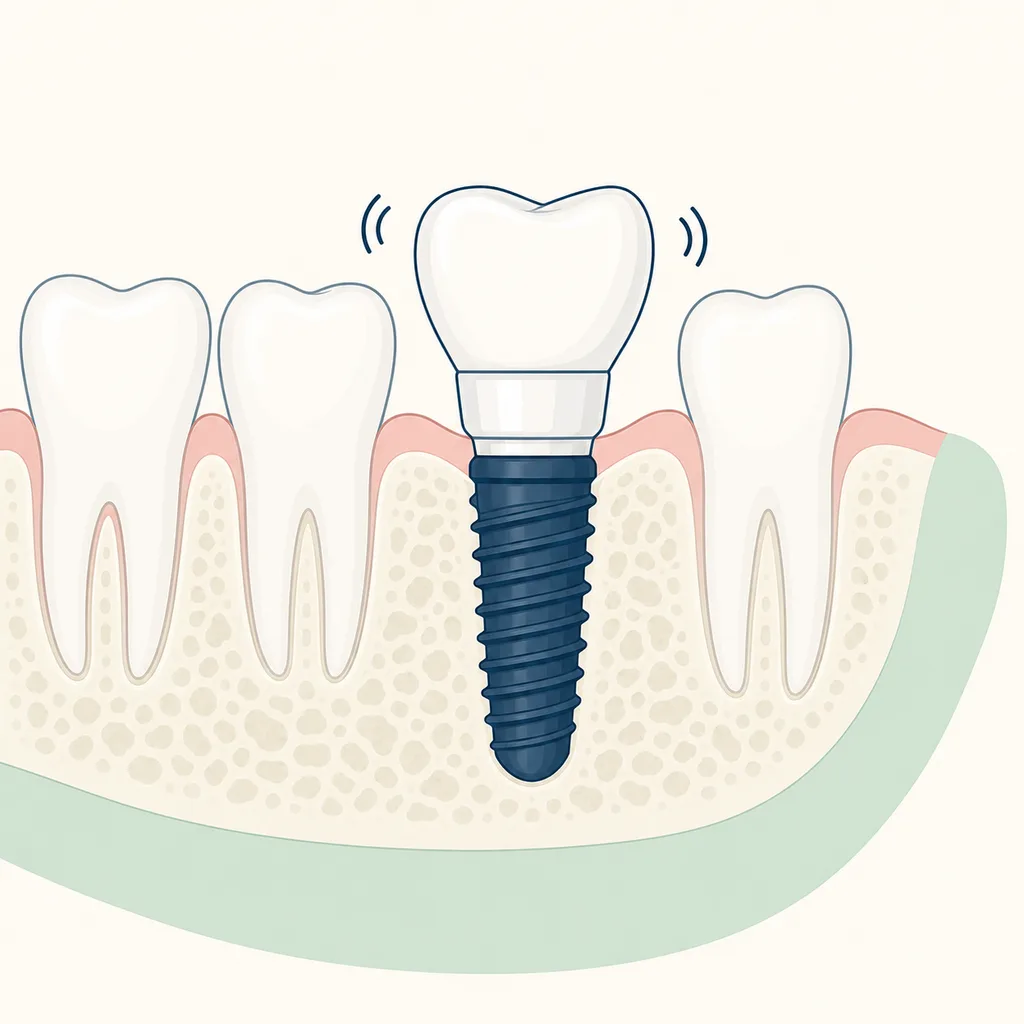
Loose Dental Implant dental educational illustration

What does a loose implant feel like?

Signs around a dental implant
SignWhat it can indicate
Red or tender gumsInflammation around the implant[1][2]
Bleeding when brushingA sign similar to gum disease around the implant[1][2]

[1][2]

Why can a dental implant become loose?

Bacteria can build up below the gum line at the base of an implant. The resulting inflammation can damage soft tissue and, if it is not caught early, the bone supporting the implant. Separate mechanical problems occur when implant parts loosen or wear out.

[1][2]
Factors linked with implant problems
FactorRecorded association
Poor plaque control, smoking or diabetesHigher risk of peri-implant disease[1][2]
Failure to join properly with jaw boneThe implant cannot be used[1][2]

[1][2]

What relief is safe tonight?

Keep the area under regular observation for red or tender gums and bleeding during brushing. Implants need regular brushing, flossing and professional check-ups because bacteria can affect them in much the same way as natural teeth.

[1][2]

How is a loose implant investigated?

Assessment includes monitoring the implant as part of a comprehensive periodontal evaluation. The distinction is between mucositis, where inflammation is limited to soft tissue with no bone loss, and peri-implantitis, where supporting bone has deteriorated.

[1]

How is implant loosening treated?

Early peri-implant mucositis may be successfully treated and is reversible. Peri-implantitis usually requires surgical treatment, while a worn or loose implant part needs prompt treatment because the implant can stop working.

[1][2]

How can implant problems be prevented?

Brush and floss around the implant and attend regular professional check-ups. Routine monitoring is part of comprehensive periodontal evaluation, and proper oral-health care can allow an implant to last a lifetime.

[1][2]

Why should a loose implant be dealt with promptly?

Untreated mechanical loosening can leave the implant not working. Inflammatory disease can progress from soft-tissue inflammation to deterioration of the supporting bone, and peri-implantitis usually needs surgery.

[1][2]

Frequently asked questions

Can peri-implant mucositis be reversed?

Peri-implant mucositis may be successfully treated and is reversible when caught early; peri-implantitis involves supporting-bone deterioration and usually requires surgery.

[1][2]