
Bad breath and gum bleeding
Bad breath with bleeding gums often points to plaque-related gum inflammation and needs a dental examination if it persists.
The short answer
Bad breath with bleeding gums often points to plaque-related gum inflammation and needs a dental examination if it persists. The dentist checks for gingivitis, periodontitis, trapped debris, decay, and other mouth or throat causes.
What is the direct answer?
What does this question mean?
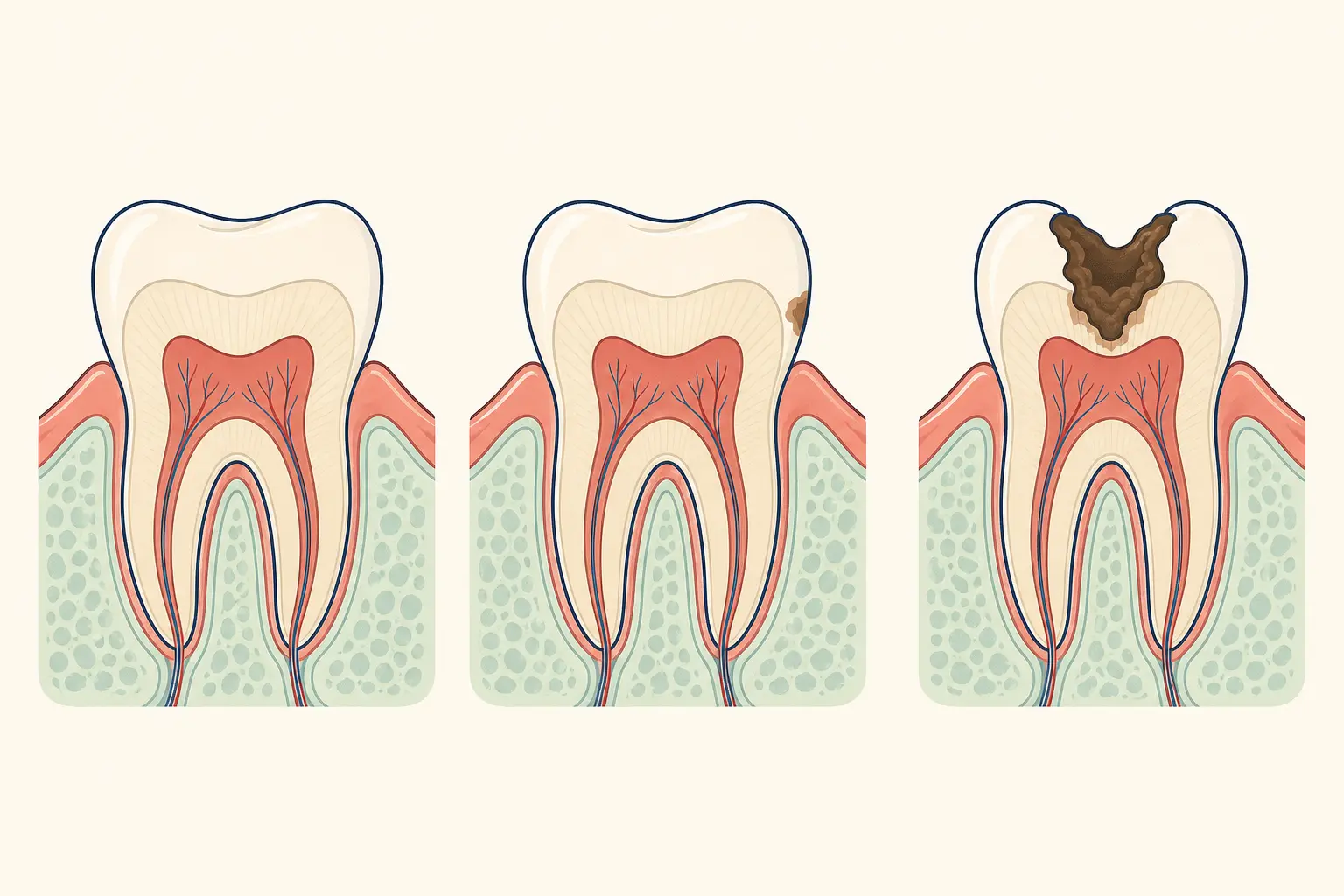
Plaque is a bacterial film that irritates the gingival margin. Bleeding during brushing, swelling, tenderness, and a persistent odor can occur when inflammation or deeper periodontal pockets allow bacteria and debris to collect.
What can you do next?
Brush gently twice daily with fluoride toothpaste, clean between the teeth with floss or interdental brushes, and clean the tongue. Arrange a professional examination and cleaning because hardened calculus cannot be removed with a toothbrush.
When should you seek dental care?
Book dental care when bleeding or odor continues, gums recede, teeth loosen, or chewing becomes uncomfortable. Seek urgent help for facial swelling, fever, difficulty swallowing, or difficulty breathing.
What should you ask the dentist?
Ask whether the bleeding is gingivitis or periodontitis, whether pocket measurements and radiographs are needed, and which interdental tool fits your teeth. Ask how often professional periodontal maintenance is appropriate.
Frequently asked questions
Can bleeding gums cause bad breath?
Inflamed gums and bacteria retained around them can contribute to a persistent mouth odor.
Will mouthwash cure the problem?
Mouthwash may temporarily change odor, but it does not remove calculus or treat the cause of periodontal disease.