
Dental question about observed-topic:blue-discolored-gums
Blue or purple gums may reflect normal pigment, bruising, inflammation, or a localized lesion that needs a dental examination.
The short answer
Blue or purple gums are not one diagnosis: the shade, location, surface, pain, bleeding, and recent injury determine the next step. Gum color can reflect melanin pigmentation, vascular tissue, pooled blood, inflammation, medication effects, or a localized growth.
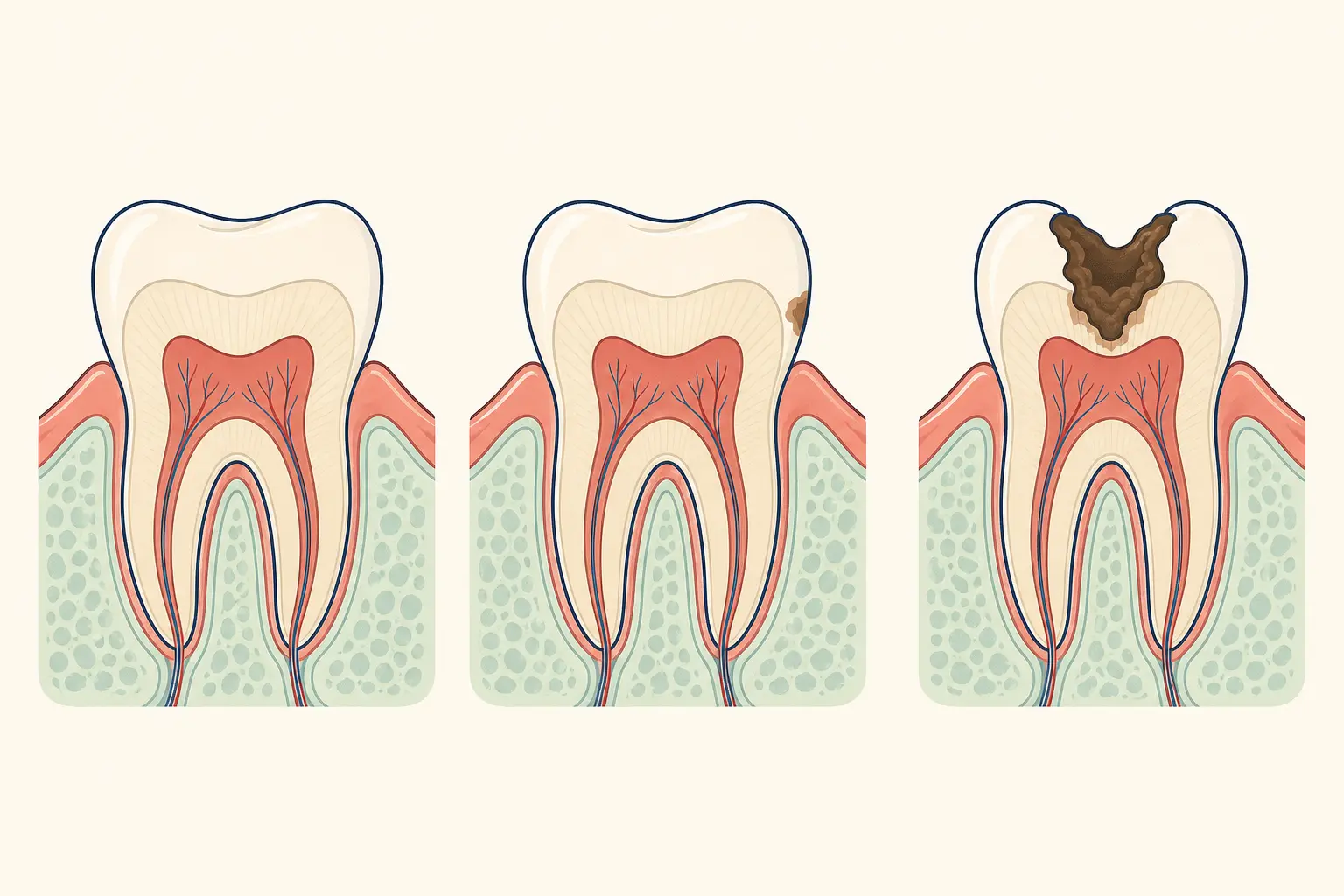
What is the direct answer?
What does this question mean?
Normal pigment is usually even and longstanding, while bruising or inflammation tends to appear after an identifiable change and may be tender. A dentist inspects the gums, checks the teeth and periodontal tissues, reviews medicines and trauma, and may use dental imaging or a tissue sample when the appearance is persistent or unexplained.
What can you do next?
Do not scrape or bleach the area. Brush gently with a soft toothbrush, avoid tobacco and irritating products, and photograph any changing spot in consistent lighting. Record when the color appeared, whether it is enlarging, and whether there is pain, bleeding, ulceration, or a loose tooth.
Frequently asked questions
Can blue gums be caused by gum disease?
Inflamed gums more often look red, swollen, or bleed, but color changes can overlap, so the surrounding tissues and teeth need examination.
Should I put whitening product on the spot?
No. Whitening products are designed for tooth surfaces and can irritate gum tissue without identifying the cause.