
Tooth decay at gum line
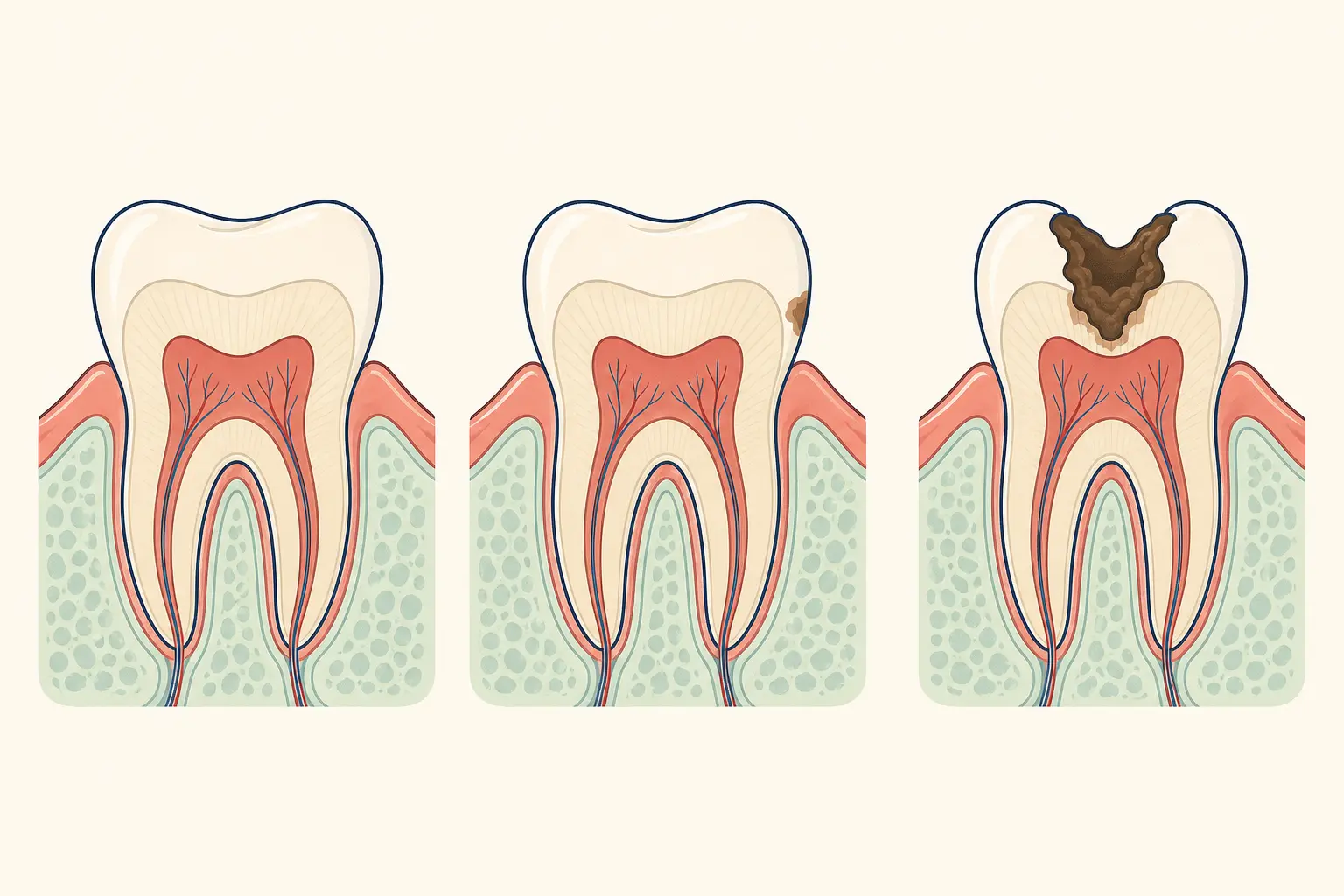
Decay at the gum line can affect exposed root dentine or enamel and needs treatment before the defect reaches the pulp.
What is the direct answer?
Decay at the gum line can affect exposed root dentine or enamel and needs treatment before the defect reaches the pulp.
What does this question mean?
The gum line is where gingiva meets the crown or root surface. Plaque acids can demineralize enamel, while recession exposes cementum and dentine, which are softer and can develop root caries more readily.
What can you do next?
Brush twice daily with fluoride toothpaste using light pressure at the gum margin, clean between the teeth, and limit repeated sugary or acidic exposures. Do not scrape the area or place household substances into the defect.
When should you seek dental care?
Arrange a dental examination for a notch, brown or white patch, rough edge, sensitivity, food trapping, or pain near the gum. Severe spontaneous pain, swelling, fever, or a draining spot can indicate deeper disease and needs prompt care.
What should you ask the dentist?
Ask whether the lesion is active caries, abrasion, erosion, or an exposed root surface. Ask whether fluoride treatment, a tooth-coloured restoration, gum treatment, or a bite adjustment is appropriate and how the margin will be cleaned.
Frequently asked questions
Can gum-line decay heal by itself?
Very early mineral loss may be arrested, but a cavitated defect cannot rebuild its missing tooth structure and needs dental care.
Does gum recession cause cavities?
Recession exposes root surfaces that lack the full enamel covering of a crown, increasing the importance of plaque control and examination.