
Instant relief for cavity pain
Cavity pain can be eased briefly by removing trapped food, using appropriate pain relief, and arranging treatment for the damaged tooth.
The short answer
Cavity pain can be eased briefly by removing trapped food, using appropriate pain relief, and arranging treatment for the damaged tooth. Rinsing and gentle brushing help clear irritants, but no home measure removes decay or seals the cavity.
What is the direct answer?
What does this question mean?
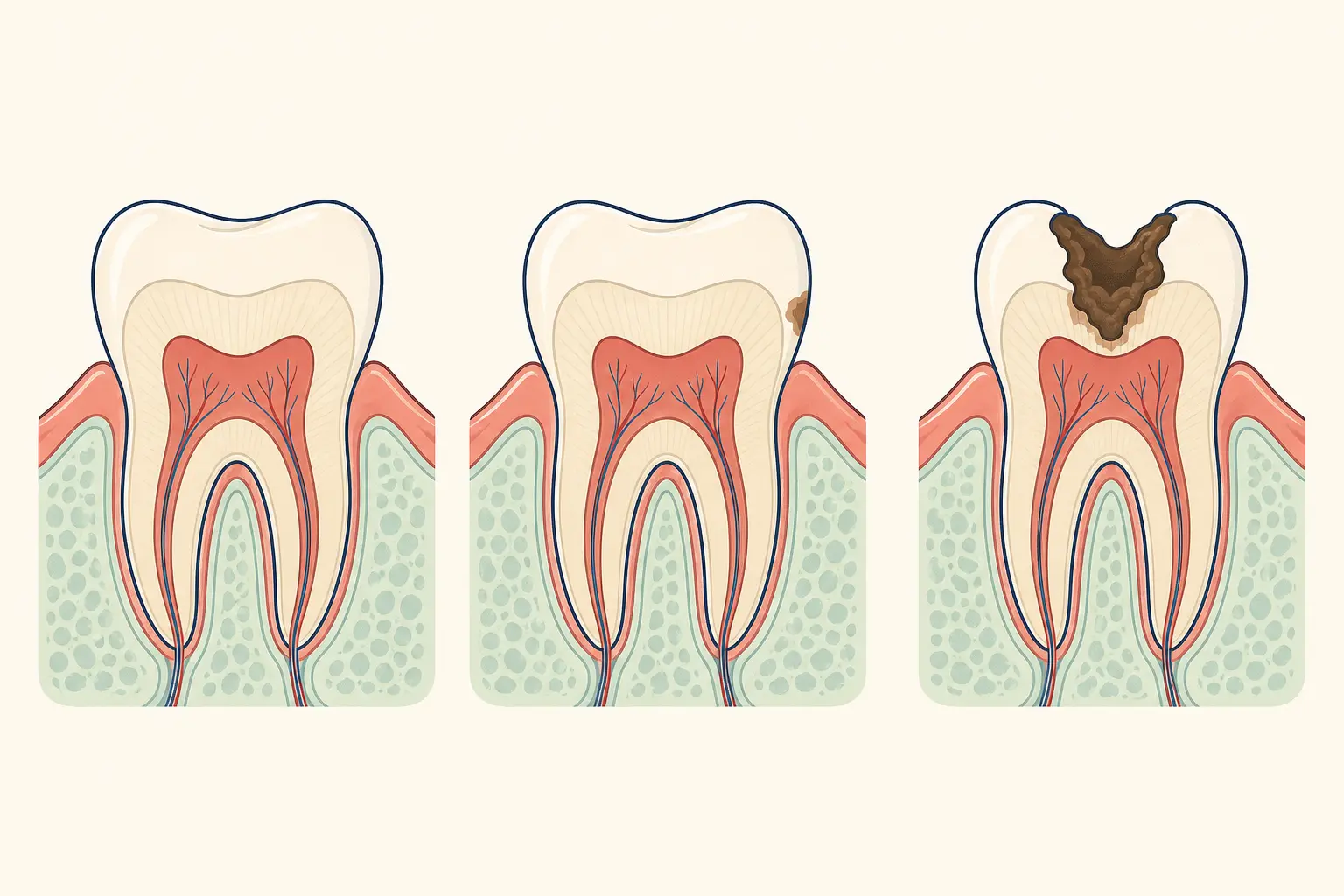
A cavity is mineral loss and breakdown in enamel and dentine caused by acid from bacterial plaque. When the damaged area approaches the pulp, the living tissue containing nerves and blood vessels, cold, sweet, biting, or spontaneous pain can occur.
What can you do next?
Rinse with lukewarm water, gently clean around the tooth, and use a pain medicine only if it is suitable for you and used exactly as labelled. Do not place aspirin or caustic substances on the gum, and avoid chewing on the painful side.
When should you seek dental care?
Arrange dental care promptly for cavity pain, especially if it wakes you, lingers after cold, or hurts on biting. Facial swelling, fever, pus, or difficulty swallowing or breathing can indicate spreading infection and needs urgent care.
What should you ask the dentist?
Ask how deep the decay is, whether a filling or root canal is needed, and what the X-ray shows. Ask what to eat and how to manage pain until the tooth is treated.
Frequently asked questions
Can a cavity heal at home?
Early mineral loss may be managed with preventive care, but a formed cavity requires dental assessment and treatment.
Why does the pain linger after cold?
Lingering pain can indicate irritation of the pulp inside the tooth and should be assessed.