
Medicine for cavity toothache
Pain medicine can reduce cavity toothache temporarily, but only dental treatment removes the decay and treats its cause.
The short answer
Pain medicine can reduce cavity toothache temporarily, but only dental treatment removes the decay and treats its cause. Depending on depth, treatment may involve a filling, pulp treatment, or extraction.
What is the direct answer?
What does this question mean?
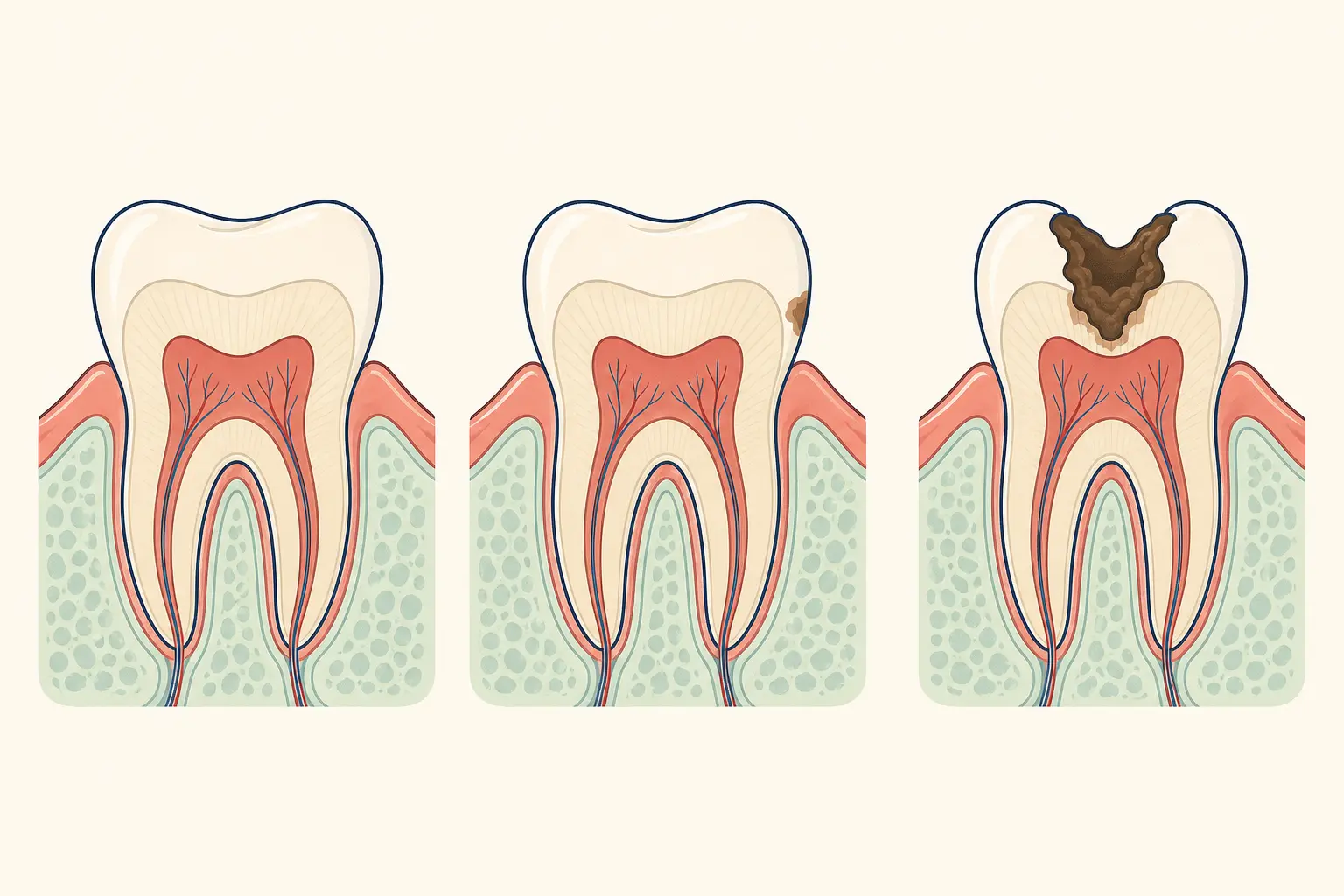
A cavity is mineral loss and bacterial damage in enamel and dentine. When the lesion approaches the pulp, the living tissue containing nerves and blood vessels can become inflamed, producing sensitivity or spontaneous pain.
What can you do next?
Use an over-the-counter pain reliever only if its label fits your health conditions and other medicines, and follow the stated dose. Keep the area clean, avoid very hot or cold foods, and do not place aspirin or tablets directly on the gum.
When should you seek dental care?
Book dental care promptly for pain that persists, returns without a trigger, or wakes you. Facial swelling, fever, difficulty swallowing, or difficulty breathing requires urgent medical attention because infection can spread beyond the tooth.
What should you ask the dentist?
Ask how deep the lesion is, whether the pulp is inflamed, and whether a filling or root canal can preserve the tooth. Ask which pain medicines fit your medical history while definitive treatment is arranged.
Frequently asked questions
Can antibiotics cure a cavity?
Antibiotics do not remove decayed tooth structure; they may be considered for spreading infection when a clinician finds a suitable indication.
Can I wait if the pain stops?
Pain stopping can mean the pulp has lost vitality, not that the cavity healed, so the tooth still needs assessment.