
Prevent cavities between teeth
Interdental cleaning, fluoride, and control of frequent sugar exposure help prevent decay where neighbouring teeth touch.
The short answer
Clean between every tooth daily with floss or an interdental brush, use fluoride toothpaste, and limit frequent sugary or acidic exposures. A dentist can identify early contact-point decay and apply preventive fluoride or seal a suitable area.
What is the direct answer?
What does this question mean?
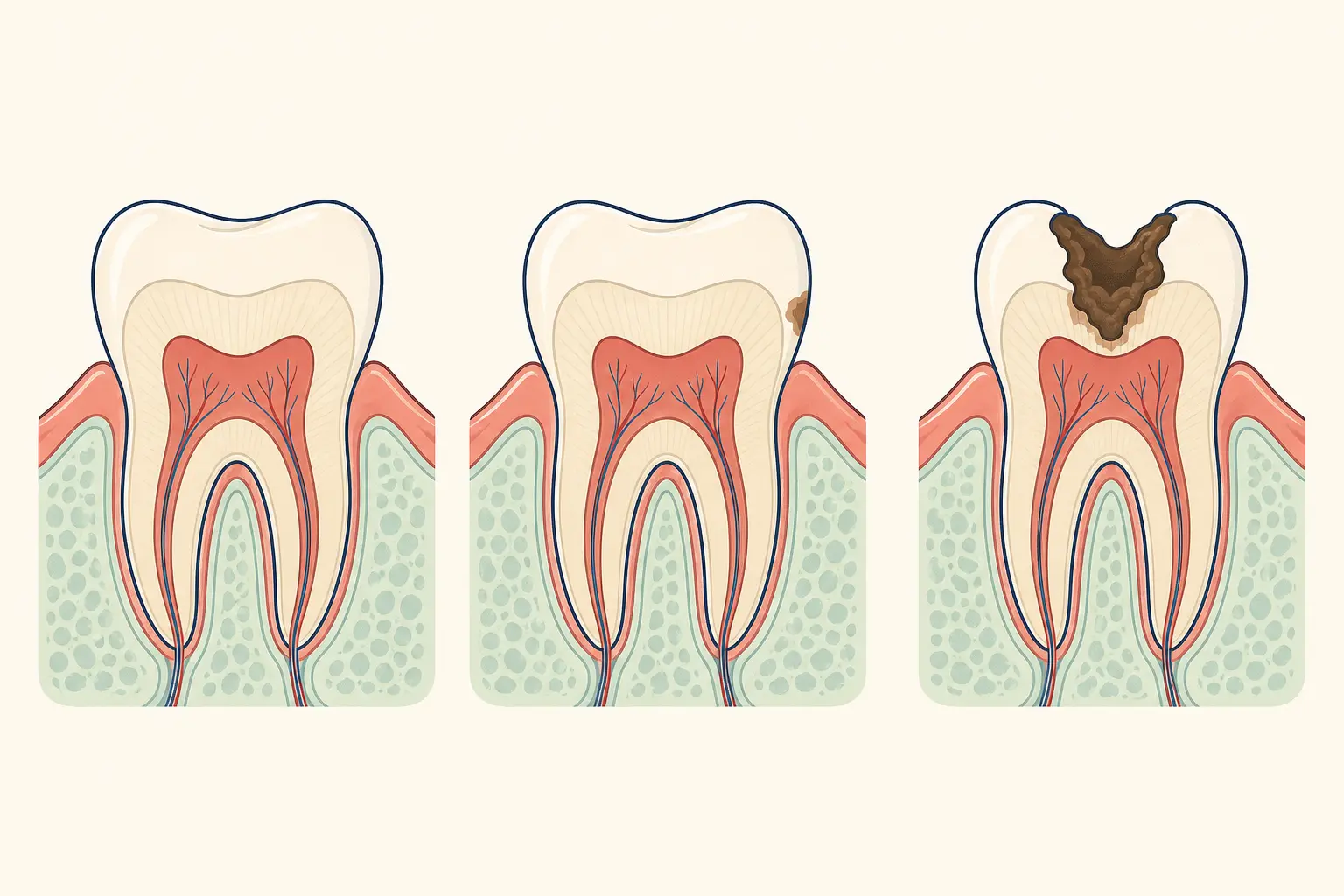
Between-tooth cavities form when plaque remains in the contact area and bacteria convert fermentable carbohydrates into acids. The enamel may demineralise on the side of one tooth or both, often where a toothbrush cannot reach effectively.
What can you do next?
Slide floss gently below the contact and curve it around each tooth, or choose an interdental brush that fits without forcing. Brush all tooth surfaces with fluoride toothpaste and replace sweet drinks or repeated snacks with water between meals.
When should you seek dental care?
Book an examination if food repeatedly traps between teeth, flossing causes persistent bleeding, or a tooth becomes sensitive, painful, or visibly discoloured. A dentist may use bitewing radiographs because contact-point decay can be hidden from direct view.
What should you ask the dentist?
Ask whether the contact area has an active lesion, an early enamel change, or a faulty filling, and which interdental size fits. Discuss fluoride varnish, monitoring, sealants, or a small restoration according to the depth of the lesion.
Frequently asked questions
Is flossing enough to prevent every cavity?
It removes plaque between teeth, but prevention also depends on fluoride exposure, diet frequency, saliva, tooth anatomy, and existing restorations.
Why do my gums bleed when I floss?
Bleeding often reflects inflamed plaque-covered gum tissue, although persistent bleeding should be assessed for gum disease or another local cause.