
How to ease the pain of tooth decay
Tooth-decay pain can be eased temporarily by avoiding triggers and using suitable pain relief, but the cavity needs dental treatment.
The short answer
To ease tooth-decay pain temporarily, avoid hot, cold, sweet, or hard foods, keep the area clean, and use suitable pain relief while arranging dental treatment.
What is the direct answer?
What does this question mean?
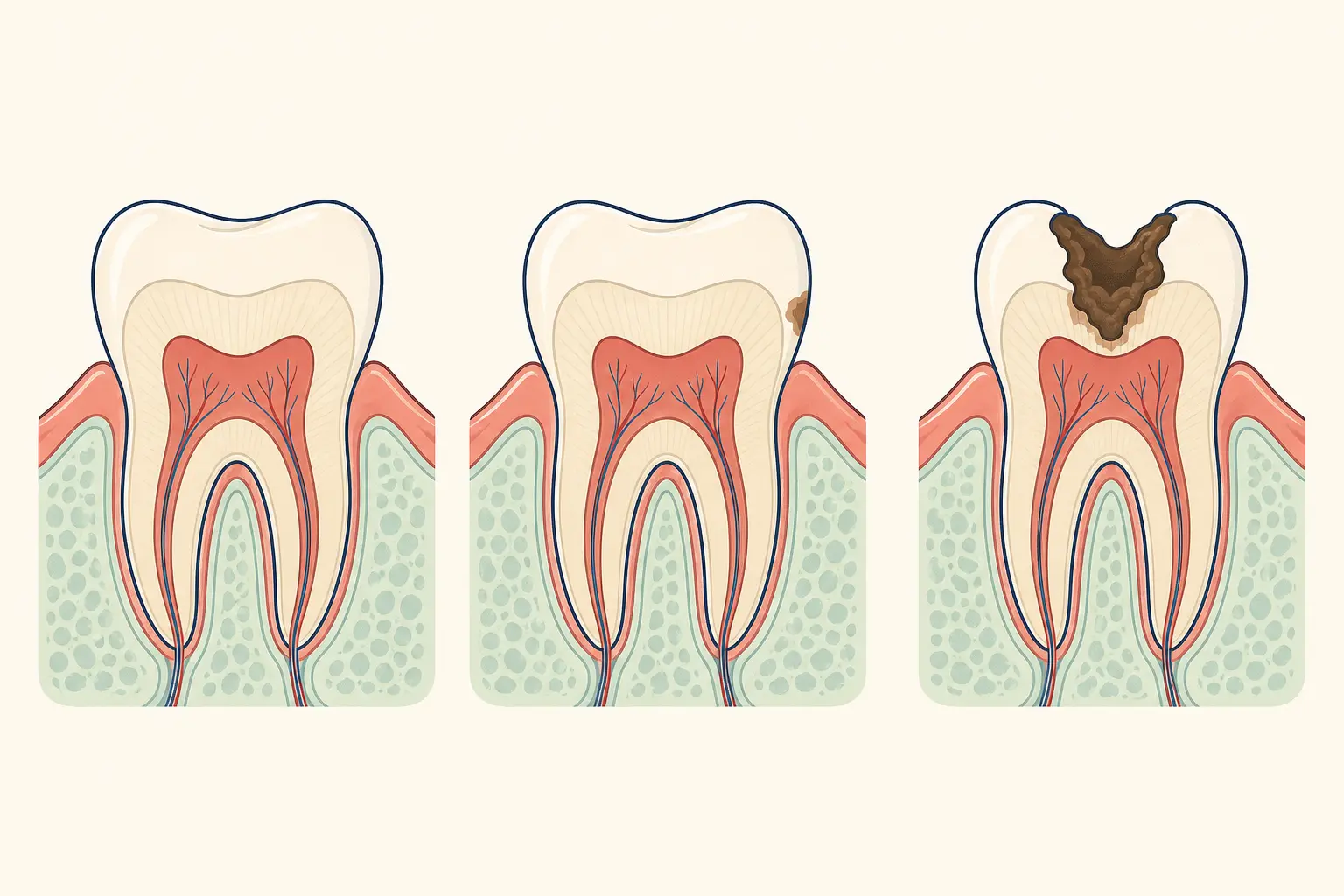
Decay begins when acids produced by oral bacteria dissolve minerals from enamel and dentine. As the cavity approaches the pulp, the nerve and blood-vessel tissue inside the tooth can become inflamed, causing sensitivity or spontaneous pain.
What can you do next?
Rinse gently with warm water, brush with a soft brush, and remove trapped food without forcing an object into the cavity. Use medicine only as directed on its label and do not put aspirin or tablets directly against the gum; a dentist can clean the decay and seal the tooth.
When should you seek dental care?
Arrange care soon when pain persists, wakes you, or occurs without eating. Swelling, fever, a bad taste, pus, difficulty opening the mouth, or trouble swallowing or breathing can indicate spreading infection and needs urgent attention.
What should you ask the dentist?
Ask how deep the decay is and whether the pulp is involved. Ask whether a filling, pulp treatment, crown, or extraction is appropriate and how to prevent new decay around the tooth.
Frequently asked questions
Can a cavity heal by itself once it hurts?
A painful established cavity does not close on its own and needs examination and treatment.
Why does cold water hurt a decayed tooth?
Temperature can stimulate exposed dentine or an inflamed pulp through the damaged tooth structure.