
Front teeth gap crowns
Crowns can close a front-tooth gap only in selected cases; orthodontics, bonding, or veneers may preserve more tooth structure.
The short answer
Crowns can sometimes change the shape of front teeth to reduce a gap, but they require tooth preparation and are not automatically the best option for a space between healthy teeth.
What is the direct answer?
What does this question mean?
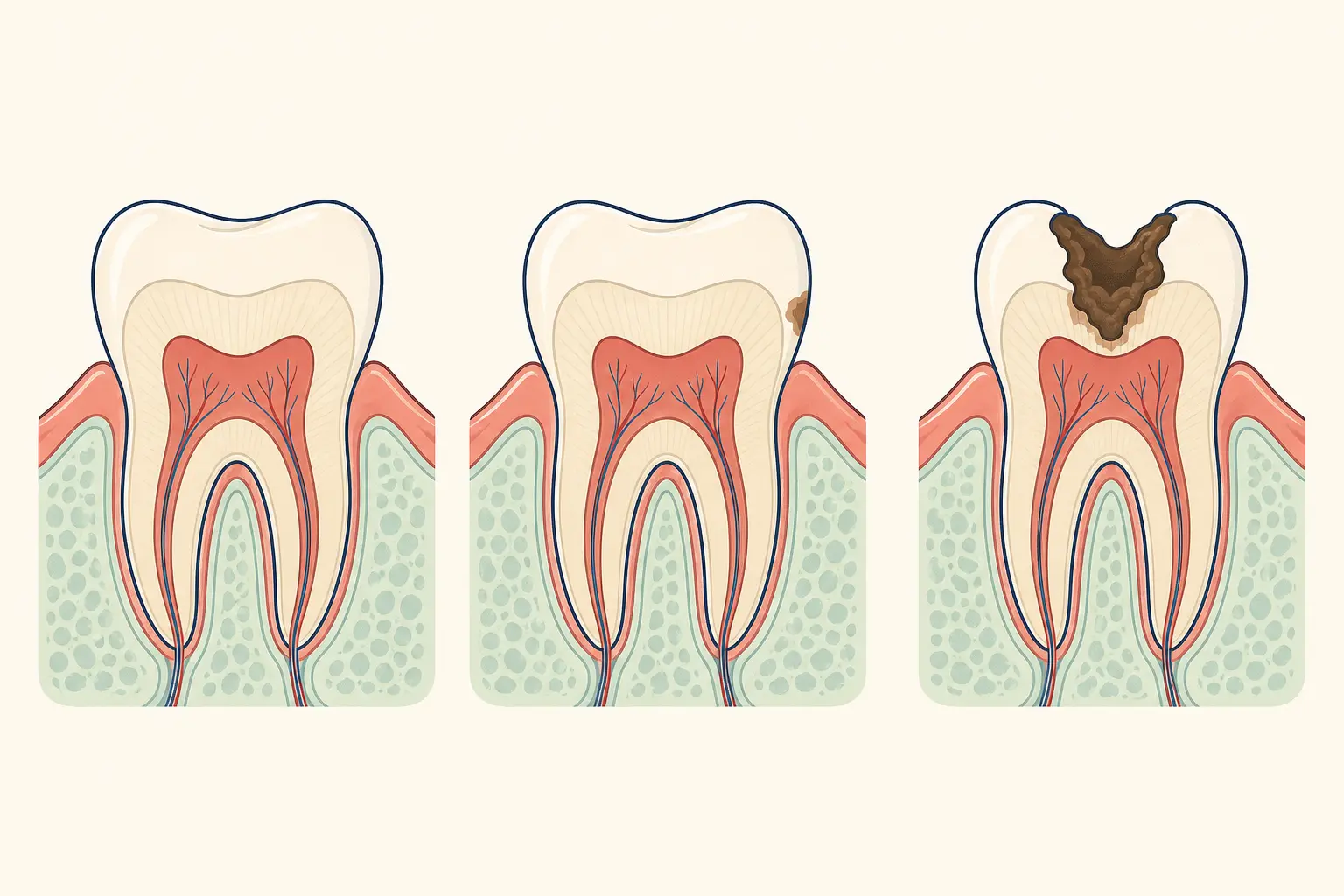
A crown is a full-coverage restoration that surrounds a prepared tooth above the gumline. A front gap may instead reflect tooth position, a missing tooth, a small tooth, a frenum attachment, gum changes, or an imbalance between tooth width and arch size.
What can you do next?
The dentist measures the space, checks the bite and gum attachment, and examines the enamel before comparing orthodontic movement, direct composite bonding, veneers, a bridge, or crowns. If a crown is chosen, the tooth is shaped, an impression or scan is taken, a temporary may be placed, and the final crown is bonded or cemented.
When should you seek dental care?
Arrange an assessment if the gap is new, widening, associated with gum bleeding, tooth mobility, pain, or a change in bite. Prompt care is needed for swelling, a fractured tooth, or injury to a front tooth.
What should you ask the dentist?
Ask why the gap formed, whether the teeth and gums are healthy, and how much tooth structure each option would remove. Ask how the proposed result will affect flossing, speech, bite contacts, cleaning under the gumline, and future repair.
Frequently asked questions
Can crowns close a gap without braces?
They can alter tooth contours in selected cases, but the dentist must check whether the result would be healthy, cleanable, and proportionate.
Are veneers better than crowns for a front gap?
Veneers cover the front surface while crowns cover the whole prepared tooth; the healthier and more suitable choice depends on the defect and remaining tooth structure.