
Dental question about observed-topic:e91885687
A dental examination identifies the tooth, gum, bite, or jaw problem behind an oral symptom and guides the appropriate care.
The short answer
A dental examination identifies the tooth, gum, bite, or jaw problem behind an oral symptom and guides the appropriate care. The dentist combines your history, an examination, and imaging when needed.
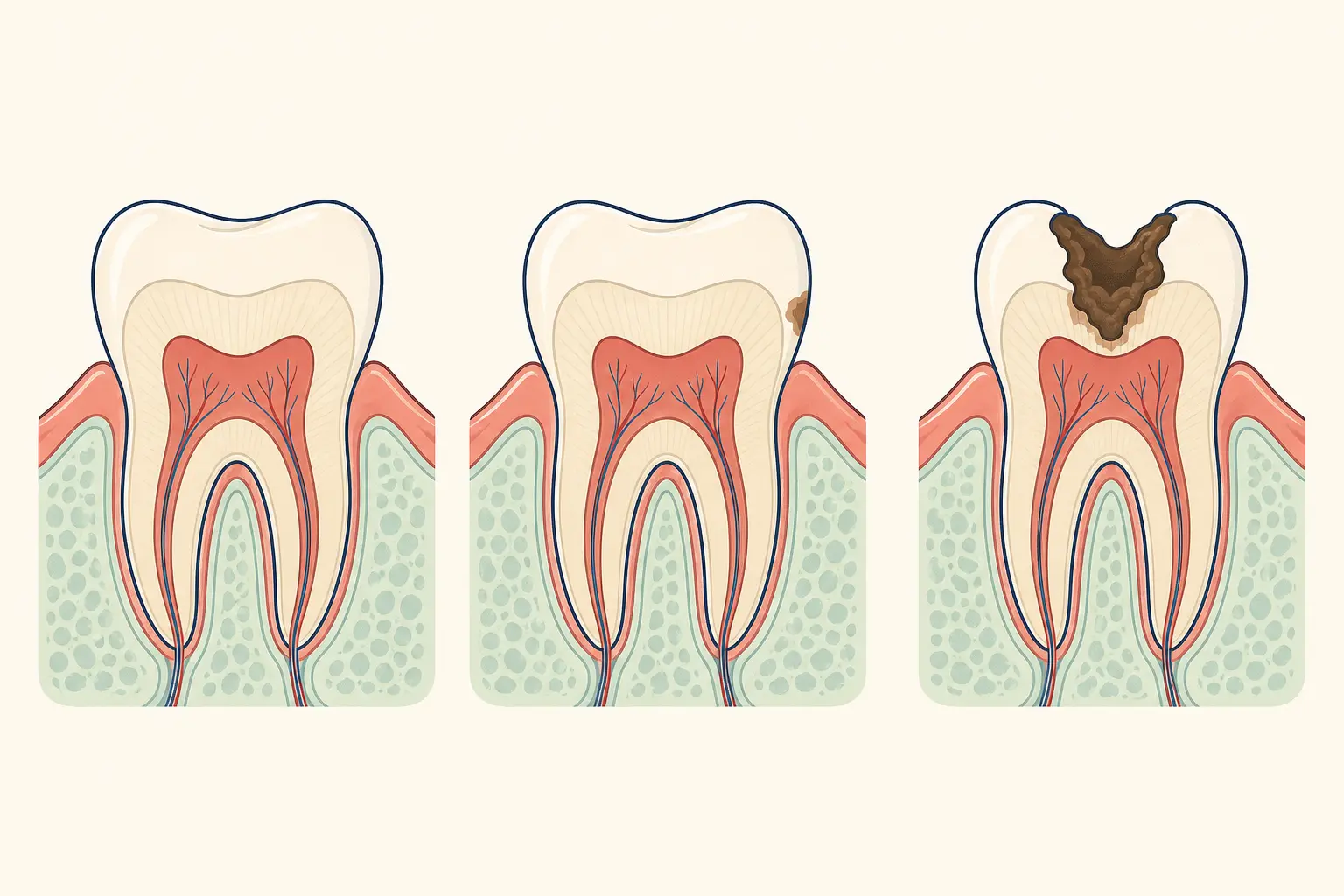
What is the direct answer?
What does this question mean?
An oral complaint can come from enamel, dentine, the pulp, periodontal tissues, the jaw joint, or nearby soft tissue. Similar symptoms can have different causes, so location, timing, triggers, and visible changes help narrow the diagnosis.
What can you do next?
Note when the symptom began, what triggers it, and whether swelling, bleeding, fever, or sensitivity occurs. Keep brushing gently with fluoride toothpaste, avoid picking at the area, and arrange an examination if it persists or returns.
When should you seek dental care?
Book dental care for persistent pain, repeated bleeding, a broken tooth, a loose tooth, or a recurring lump. Seek urgent help for rapidly increasing facial or mouth swelling, difficulty breathing or swallowing, uncontrolled bleeding, or a serious facial injury.
What should you ask the dentist?
Ask which structure is affected, what findings support the diagnosis, and whether an X-ray or other test is needed. Ask which treatment addresses the cause, what alternatives exist, and what changes should prompt a prompt review.
Frequently asked questions
Can one symptom have several causes?
Yes. The same pain or bleeding pattern may arise from different oral tissues, so examination is needed to distinguish them.
What should I bring to the appointment?
Bring a list of medicines, relevant medical conditions, and a short record of when the symptom occurs.