
Dental question about observed-topic:3f5fec61b
Routine dental care combines plaque removal, fluoride exposure, dietary control, and examinations that find problems before they worsen.
The short answer
Good dental care means removing plaque daily with a fluoride toothpaste, cleaning between teeth, and treating problems according to their cause.
What is the direct answer?
What does this question mean?
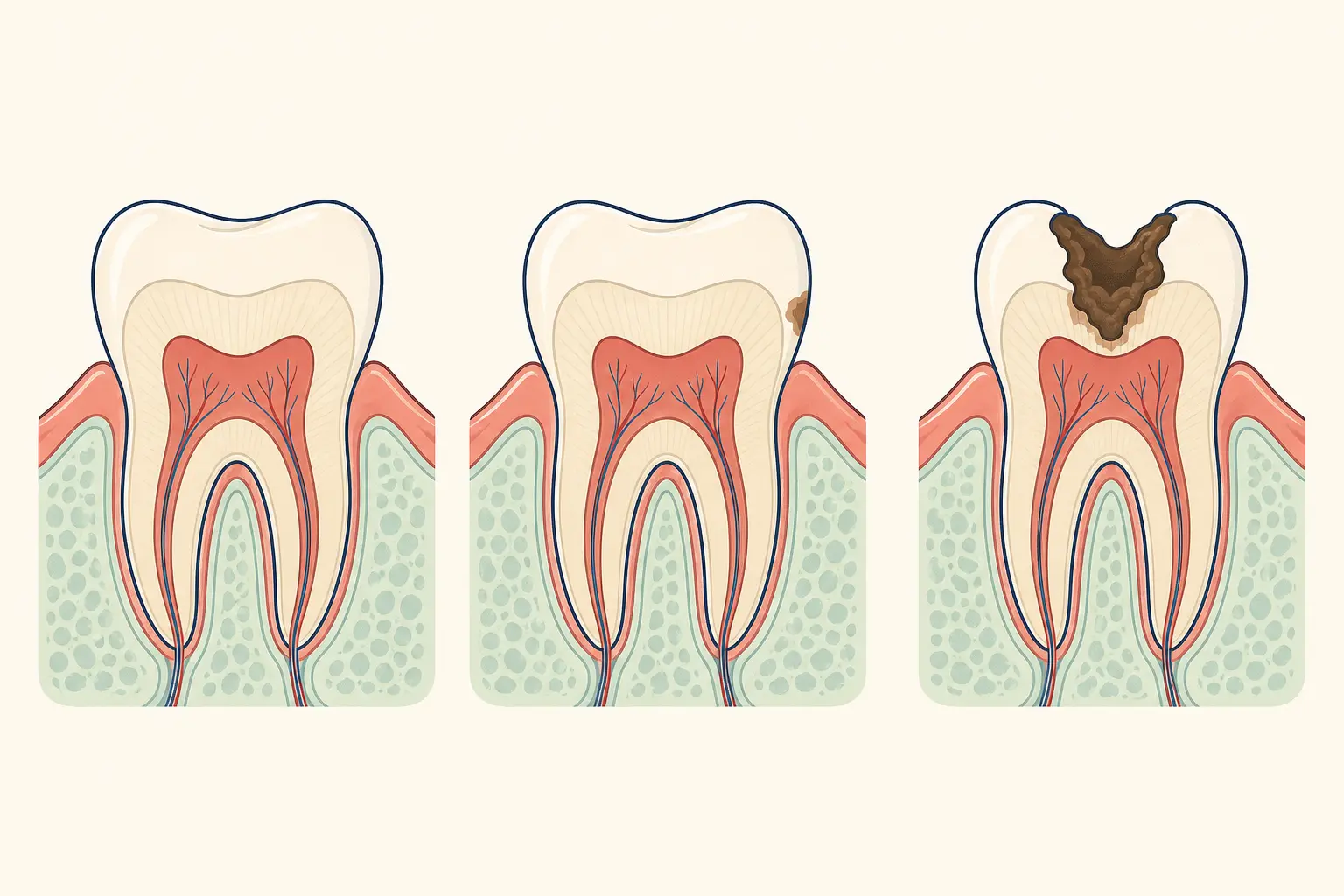
Plaque is a bacterial biofilm that adheres to enamel, restorations, and the gingival margin. If it remains, acids can demineralize enamel and inflammation can develop in gingival tissue.
What can you do next?
Brush all tooth surfaces with a soft brush and fluoride toothpaste, clean between teeth, and limit frequent sugary or acidic exposures. Keep scheduled examinations and professional cleaning based on individual findings.
When should you seek dental care?
Seek prompt care for toothache, facial swelling, fever, bleeding that persists, a broken tooth, or a dental injury. Emergency swelling affecting breathing or swallowing needs urgent medical attention.
What should you ask the dentist?
Which findings need treatment now? Ask how to adapt brushing, interdental cleaning, fluoride use, diet, and recall timing to your mouth.
Frequently asked questions
Is brushing alone enough?
No. Interdental cleaning is needed because a toothbrush cannot fully clean the contact areas between teeth.
Why are dental examinations needed?
Some decay, gum disease, cracks, and changes around restorations are not reliably visible or felt at home.