
Dental question about observed-topic:e0d20f3b3
An examination must first identify whether the concern involves a tooth, gum, jaw joint, or oral tissue.
The short answer
A dental examination is the way to identify the unnamed concern behind this question, because symptoms can arise from a tooth, gum, jaw joint, or oral soft tissue.
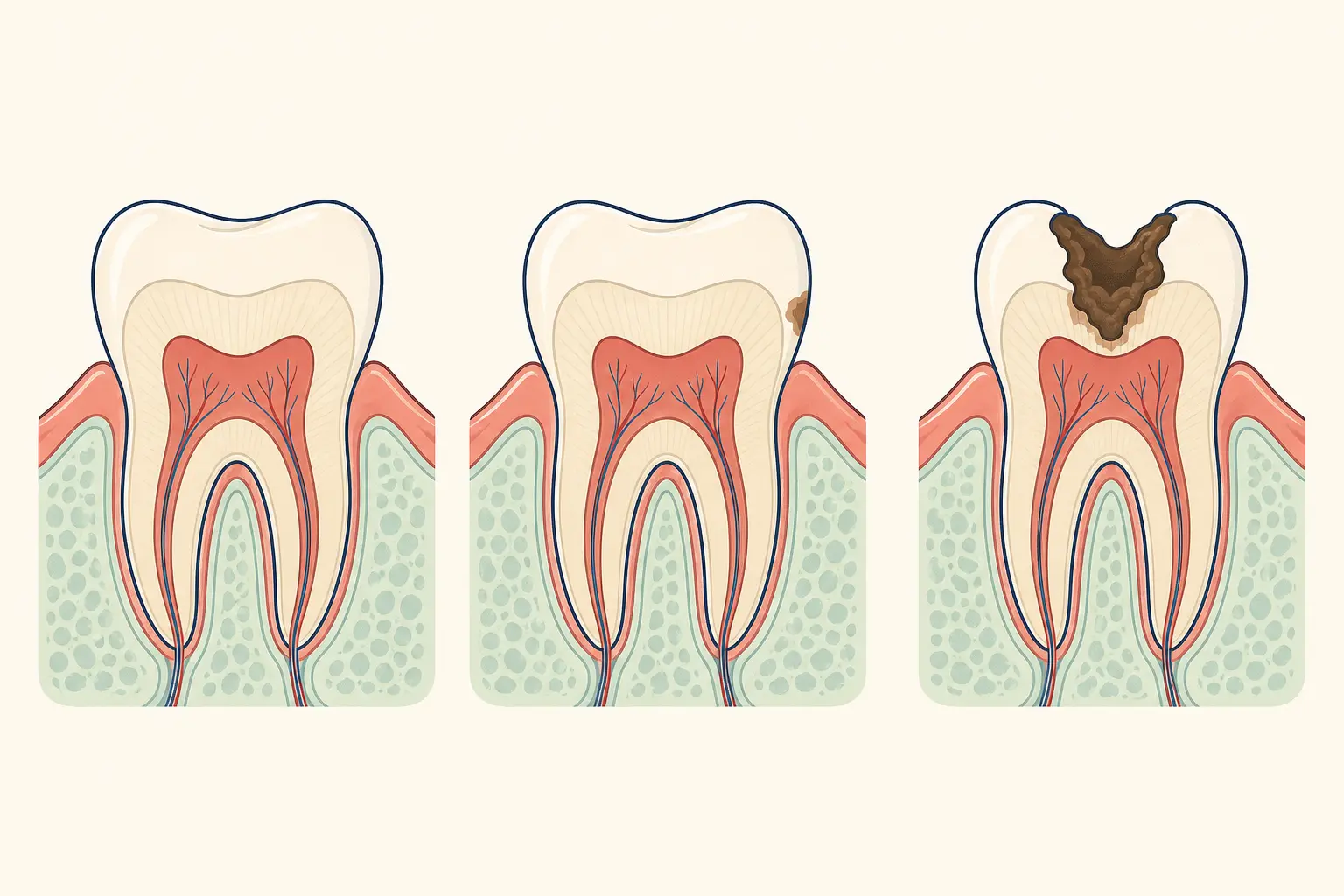
What is the direct answer?
Dentists examine teeth, gingiva, tongue, cheeks, palate, jaw muscles, and the temporomandibular joints, then select tests that match the finding.
What does this question mean?
Write down the exact location, onset, triggers, duration, visible change, and any swelling, bleeding, fever, altered bite, or discharge.
At the visit, the dentist may use visual inspection, periodontal probing, percussion, palpation, thermal or electric pulp testing, bite testing, photographs, or radiographs.
What can you do next?
Do not scratch, cut, squeeze, or apply household chemicals to an unexplained oral lesion or swelling. Keep brushing gently and note changes.
Bring the name and dose of medicines you take, relevant medical conditions, and any recent dental work or injury. These details help narrow the diagnosis.
When should you seek dental care?
Seek prompt care for persistent pain, a new lump, an ulcer that does not heal, unexplained bleeding, facial swelling, fever, or trouble opening the mouth.
Get emergency help for difficulty breathing or swallowing, rapidly increasing swelling, or major facial injury.
What should you ask the dentist?
What exact finding should be examined first?
Which tests are needed and what will each test show?
What changes should make me return sooner?
Frequently asked questions
How should I describe an oral problem?
Mention its site, start date, triggers, visible changes, and any pain, swelling, bleeding, fever, or discharge.
Do I always need an X-ray?
Some problems are diagnosed clinically, while hidden decay, root changes, bone findings, or impacted teeth may require imaging.