
Dental question about observed-topic:9f904dc29
Dental symptoms are interpreted by examining the teeth, gums, bite, and jaw, then selecting care for the identified cause.
The short answer
Dental symptoms are interpreted by examining the teeth, gums, bite, and jaw, then selecting care for the identified cause. Tests can include visual inspection, periodontal measurements, pulp tests, bite checks, and radiographs.
What is the direct answer?
What does this question mean?
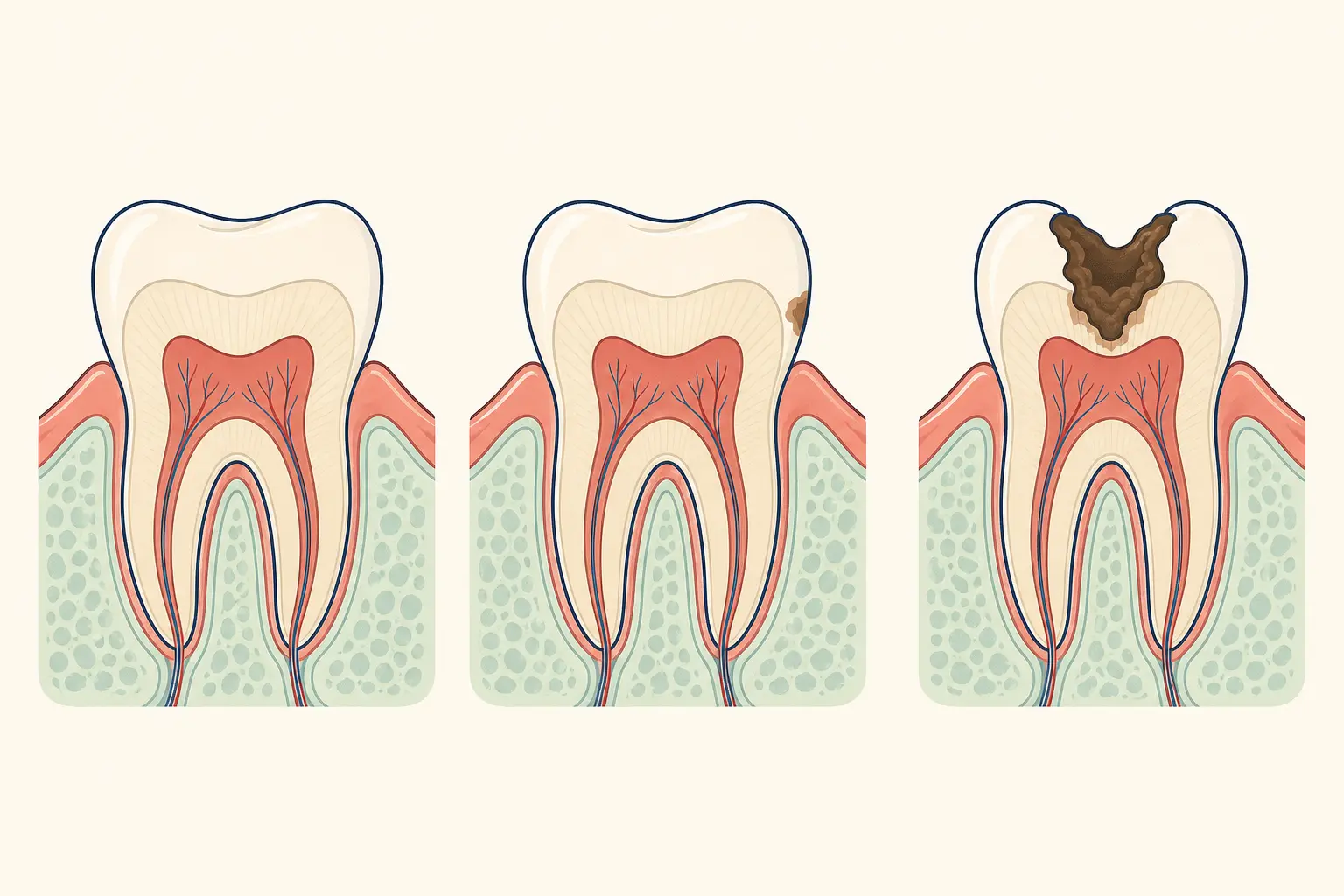
A symptom such as pain, bleeding, or sensitivity identifies a problem but not its source. Decay, gum inflammation, exposed dentine, cracks, bite overload, and jaw muscles can produce overlapping sensations.
What can you do next?
Keep a short symptom record and continue gentle fluoride brushing and interdental cleaning. Avoid chewing on a painful tooth and avoid home chemicals that can burn oral tissue.
When should you seek dental care?
Book an examination for recurring or persistent symptoms, a broken tooth, gum swelling, or a new bite change. Facial swelling with fever or trouble swallowing or breathing needs urgent care.
What should you ask the dentist?
Ask what structure is affected and how the diagnosis was reached. Ask which treatment is necessary now, which options preserve tooth tissue, and what warning signs require urgent review.
Frequently asked questions
Why might an X-ray be needed?
It can show roots, bone, hidden decay, and structures that are not visible during a mouth examination.
Can symptoms be monitored at home?
Mild short-lived symptoms may be recorded, but recurring or worsening symptoms should be examined.