
Dental question about observed-topic:aa21dad5b
A dental concern is best understood by identifying the affected tooth or tissue, its symptoms, possible causes, and the examination it needs.
The short answer
A dental concern should be described by its location, timing, symptoms, triggers, and visible changes so the clinician can identify the cause and treatment. Pain, swelling, bleeding, sensitivity, and changes in chewing can arise from teeth, gums, bone, jaw joints, or oral mucosa.
What is the direct answer?
What does this question mean?
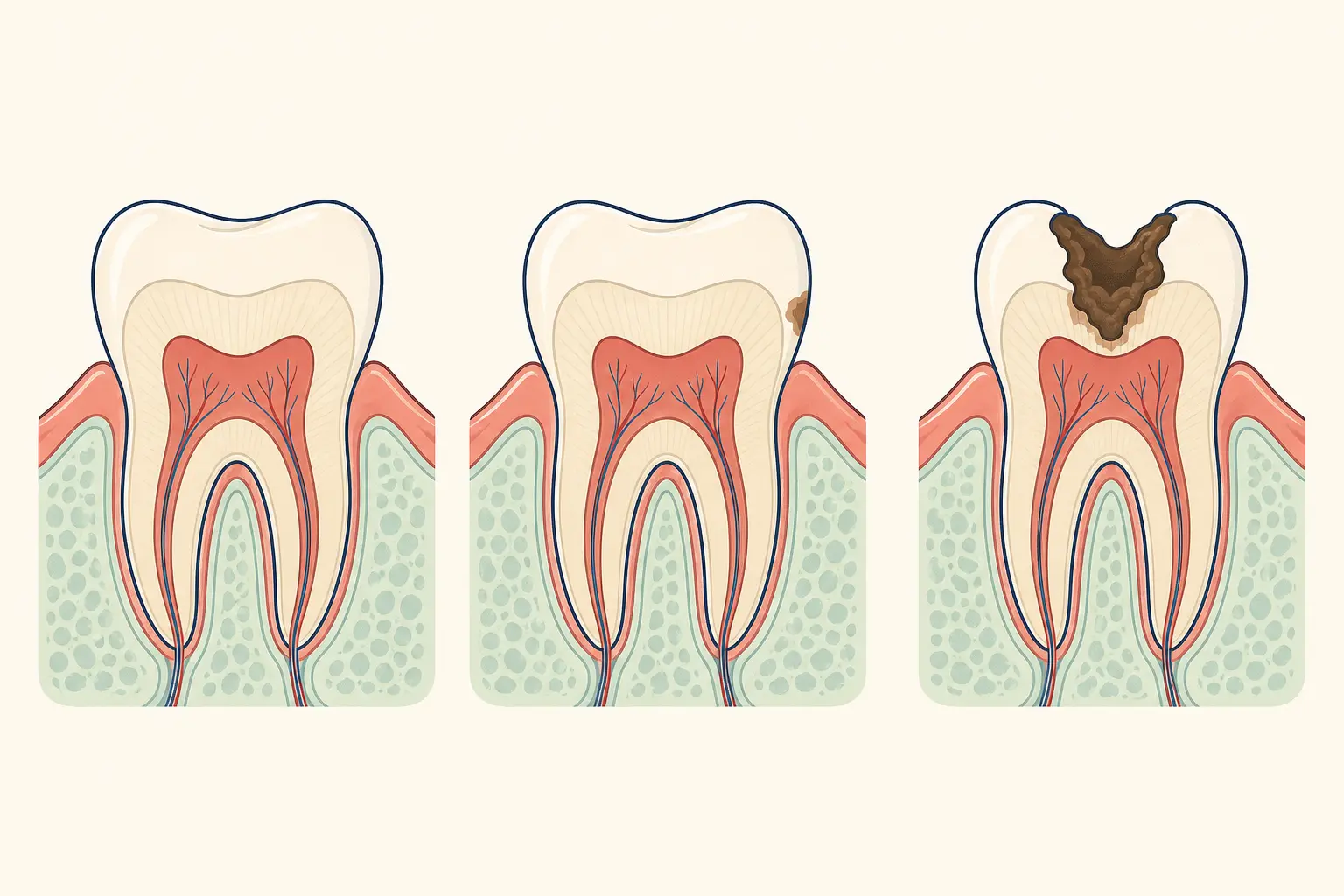
An unclear dental question may refer to a symptom, a diagnosis, a treatment, or a product. Naming the structure involved, such as enamel, dentine, pulp, gingiva, tongue, or jaw joint, makes the next clinical step more precise.
What can you do next?
Record when the problem began, what makes it better or worse, and any recent injury, dental work, illness, or new product. Keep brushing gently, avoid obvious irritants, and do not delay care by trying repeated untested remedies.
When should you seek dental care?
Seek an examination for persistent pain, swelling, bleeding, a non-healing sore, tooth mobility, or a change that is worsening. Fever, facial swelling, or difficulty breathing or swallowing needs urgent assessment.
What should you ask the dentist?
Ask which structure is affected, what findings support the diagnosis, and whether X-rays or other tests are needed. Ask what treatment options exist and what can happen if the problem is left untreated.
Frequently asked questions
What should I write down before an appointment?
Note the site, start date, triggers, severity, visible changes, medicines, and recent dental treatment.
Will I always need an X-ray?
No. The examination determines whether imaging is useful for the suspected tooth, bone, or jaw problem.