
Dental question about observed-topic:62e6b6b03
Dental care identifies the affected structure and matches treatment to the clinical finding, not to the symptom alone.
The short answer
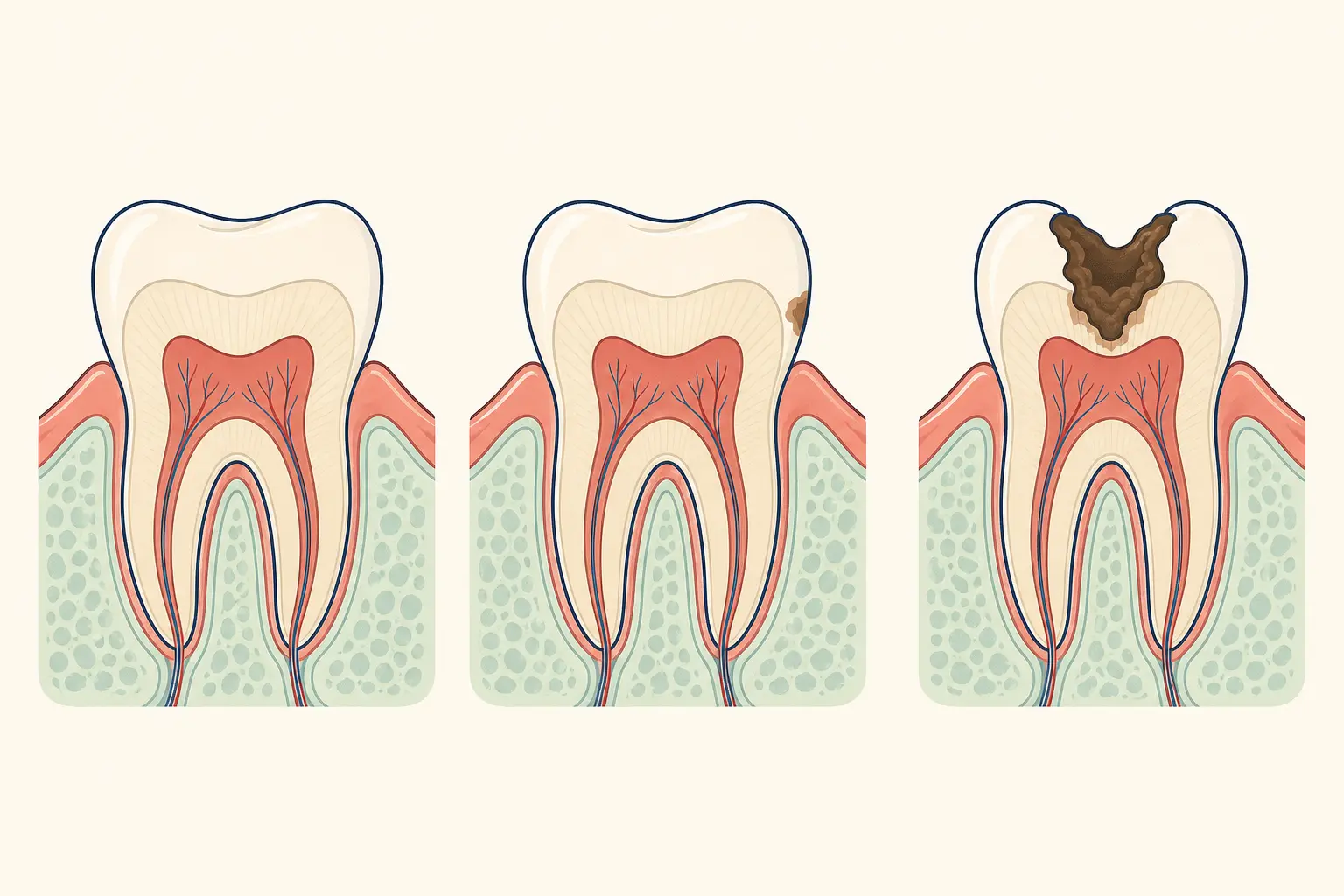
A dental concern is answered by identifying the affected structure, checking for disease or injury, and matching treatment to the clinical finding rather than to the symptom alone.
What is the direct answer?
What does this question mean?
The same sensation can have different causes: cold sensitivity may involve exposed dentin or a cracked tooth, while jaw discomfort may involve muscles, teeth, or the temporomandibular joint. Diagnosis combines history, visual inspection, gentle tests, gum measurements, and selected radiographs.
What can you do next?
Write down triggers, duration, location, previous treatment, and changes in eating or sleep. Keep brushing and interdental cleaning gentle, avoid self-applied chemicals, and bring a list of medicines and relevant medical conditions to the appointment.
When should you seek dental care?
Seek urgent care for facial swelling, fever, breathing or swallowing difficulty, major trauma, or bleeding that does not stop. Make a routine appointment for a symptom that persists, returns, or changes.
What should you ask the dentist?
Which structures could cause this symptom, what tests will distinguish them, and what treatment choices preserve the tooth?
Frequently asked questions
Which structures could cause this symptom, what tests will distinguish them, and what treatment choices preserve the tooth?
Which structures could cause this symptom, what tests will distinguish them, and what treatment choices preserve the tooth?
Can home care replace a dental examination?
Home care may reduce irritation or symptoms, but it cannot identify or remove an underlying infection, calculus, decay, or structural problem.