
Access floss gum
An interdental floss holder can clean tight spaces when finger floss is difficult, using gentle contact below the gum edge.
What is the direct answer?
An interdental floss holder can clean tight spaces when finger floss is difficult, using gentle contact below the gum edge.
What does this question mean?
A floss holder has a handle and a short span of floss, while an interdental brush uses a small bristled wire. Both remove plaque and food where a toothbrush cannot reach, but the correct size and shape depend on the gap.
What can you do next?
Guide the floss gently through the contact, curve it around each tooth in a C shape, and slide it just under the gum margin without snapping. Use a fresh section or clean holder as directed and ask for a size check if it will not pass.
When should you seek dental care?
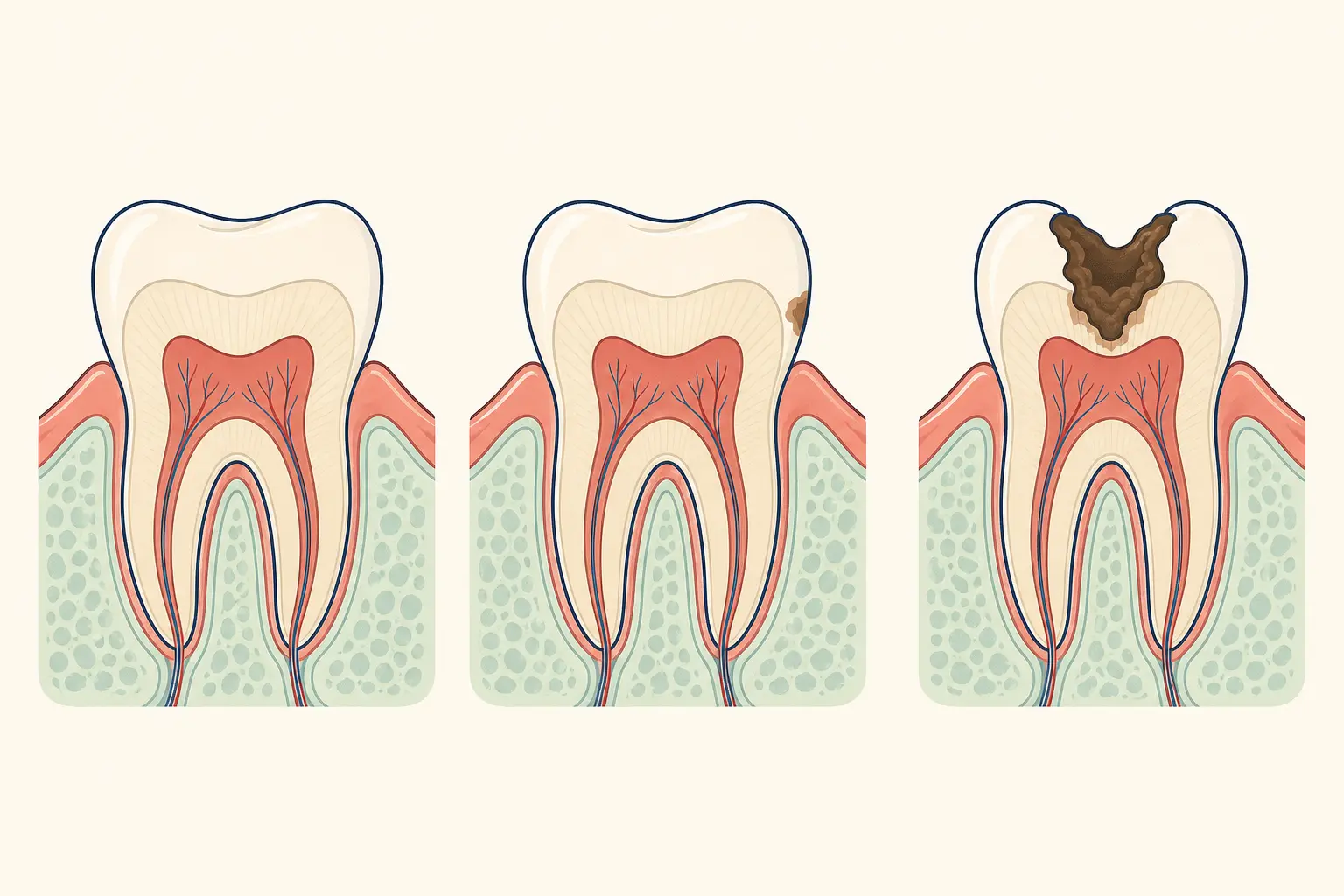
Arrange a dental visit for repeated bleeding, soreness, food trapping, bad breath, or a gap that cannot be cleaned. A dentist can check for cavities, gum inflammation, calculus, open contacts, or a restoration that catches floss.
What should you ask the dentist?
Ask whether a floss holder, tape, interdental brush, or water flosser suits each space, and request a demonstration. Ask whether bleeding indicates inflammation and whether a cleaning or restoration adjustment is needed.
Frequently asked questions
Is a floss holder as good as string floss?
It can clean effectively when used correctly, although access and fit vary by mouth and tooth position.
Why does floss catch on one tooth?
A rough filling edge, tartar, cavity, or tight contact can catch floss and should be examined.