
Dental question about observed-topic:d2b4c3ee0
Oral symptoms should be understood by location, timing, triggers, and associated changes in teeth, gums, or soft tissues.
The short answer
A dental symptom is a change such as pain, sensitivity, bleeding, swelling, odor, a sore, or altered tooth function, and its cause is determined from its pattern and examination findings.
What is the direct answer?
What does this question mean?
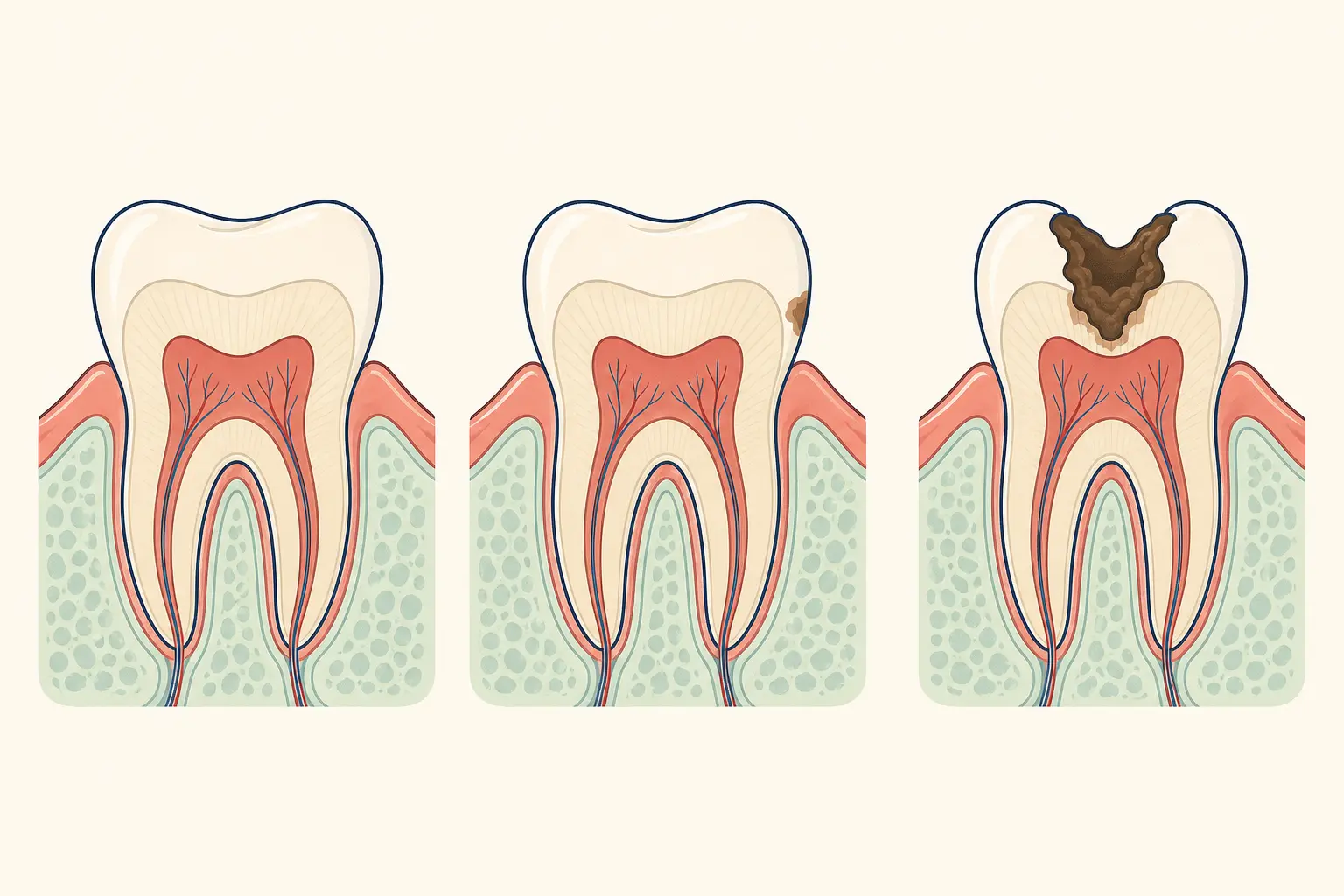
Symptoms can come from enamel, dentin, the pulp inside a tooth, the periodontal ligament, gingiva, jaw muscles, joints, or oral mucosa. The same sensation can have different causes, so location, duration, triggers, visible changes, and medical history help narrow the diagnosis.
What can you do next?
Record when the symptom began, what triggers it, which tooth or tissue is involved, and whether it affects sleep, eating, opening the mouth, or swallowing. Keep brushing gently, avoid aggravating temperatures or pressure, and do not place chemicals on the tissue.
When should you seek dental care?
Book an examination for a persistent or recurring symptom, a broken or loose tooth, gum bleeding, a nonhealing ulcer, or a change in color or bite. Seek urgent care for spreading swelling, fever, uncontrolled bleeding, or breathing or swallowing difficulty.
What should you ask the dentist?
Ask which structures may be involved, what findings support the diagnosis, and whether tests such as pulp testing, periodontal probing, or radiographs are needed. Ask what can be done today and which changes require follow-up.
Frequently asked questions
Can a symptom identify the exact tooth?
Not always. Referred pain and overlapping nerve pathways can make the source unclear until the dentist tests nearby teeth and tissues.
Why might a dental examination include an X-ray?
A radiograph can show areas not visible during a mouth inspection, such as roots, bone, hidden decay, or changes around an unerupted tooth.