
Dental question about observed-topic:beb73be4b
A new dental symptom should be described by its location, timing, triggers, and associated swelling, bleeding, or sensitivity.
The short answer
When a dental symptom is unclear, record where it occurs, when it began, what triggers it, and whether swelling, bleeding, fever, or tooth damage is present. These details help a dentist separate tooth, gum, jaw, and soft-tissue causes.
What is the direct answer?
What does this question mean?
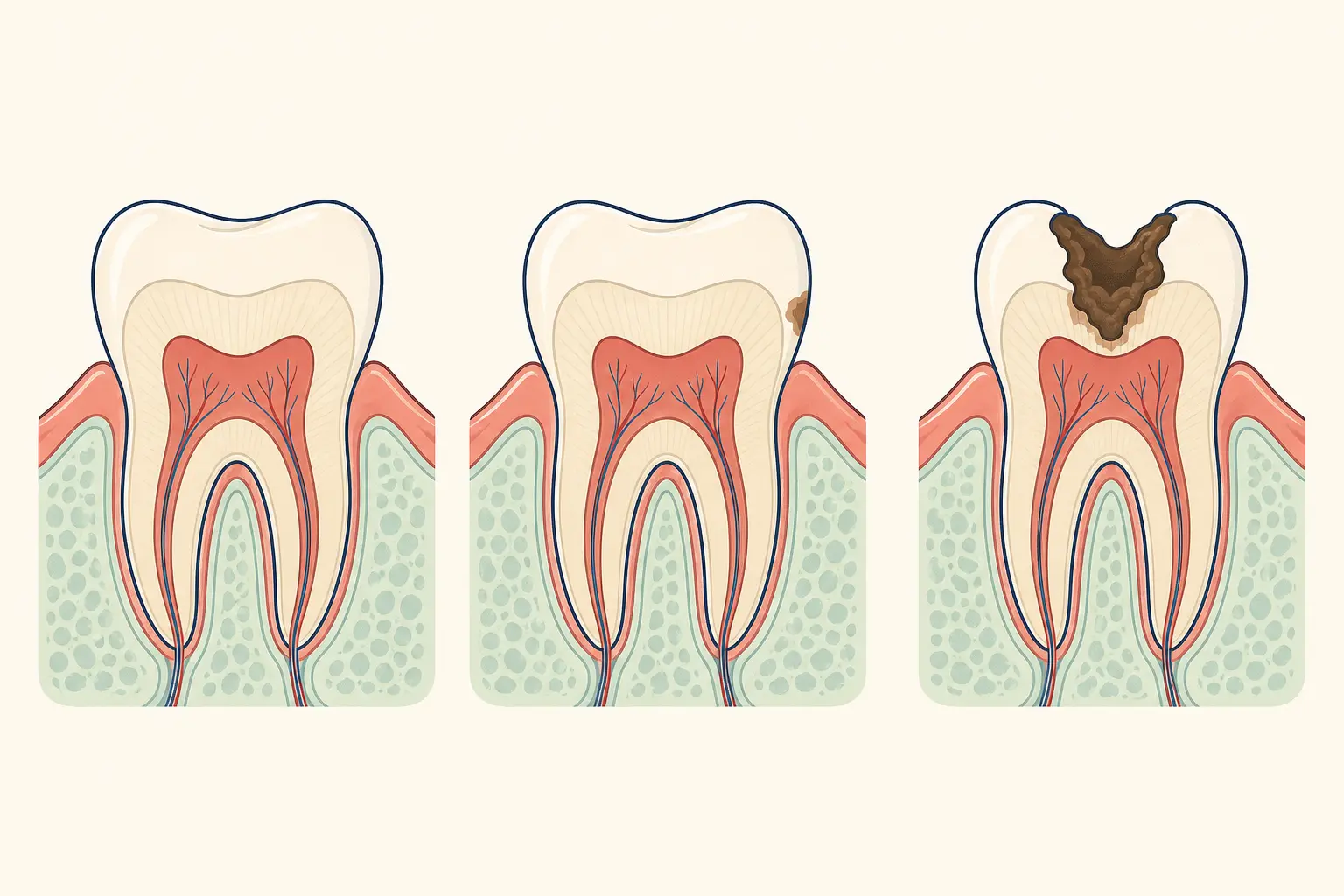
Dental symptoms can arise from enamel, dentin, pulp, the periodontal tissues, jaw joints, or oral mucosa. Similar sensations can come from different structures, so location and provoking factors are more useful than a symptom label alone.
What can you do next?
Use gentle oral hygiene, avoid repeatedly pressing the area, and note changes in pain, swelling, temperature sensitivity, chewing, or mouth opening. A dentist may examine the tissues, test tooth vitality and bite, check the gums, and use imaging when indicated.
When should you seek dental care?
Seek prompt care for worsening pain, facial swelling, pus, fever, a broken tooth, or difficulty opening the mouth. Breathing or swallowing difficulty, or swelling extending toward the eye or neck, requires urgent help.
What should you ask the dentist?
Ask which structure appears to be involved, what tests support that assessment, and which treatments address the cause. Tell the dentist about recent dental work, injury, medicines, and any change in general health.
Frequently asked questions
What information helps a dental diagnosis?
The exact location, timing, triggers, severity, and associated swelling or fever are useful starting details.
Can pain come from a nearby tooth?
Yes. Tooth nerves and nearby tissues can make the source feel less precise than the actual diseased area.