
Dried blood in gums
Dried blood around the gums often comes from minor gum bleeding, plaque-related inflammation, or an injured gum margin and should be checked if repeated.
The short answer
Dried blood near the gums is usually blood that has slowly oozed from irritated gingival tissue and then mixed with saliva before drying. Repeated staining can signal plaque-related inflammation, a gum pocket, trauma, or bleeding from a nearby tooth.
What is the direct answer?
What does this question mean?
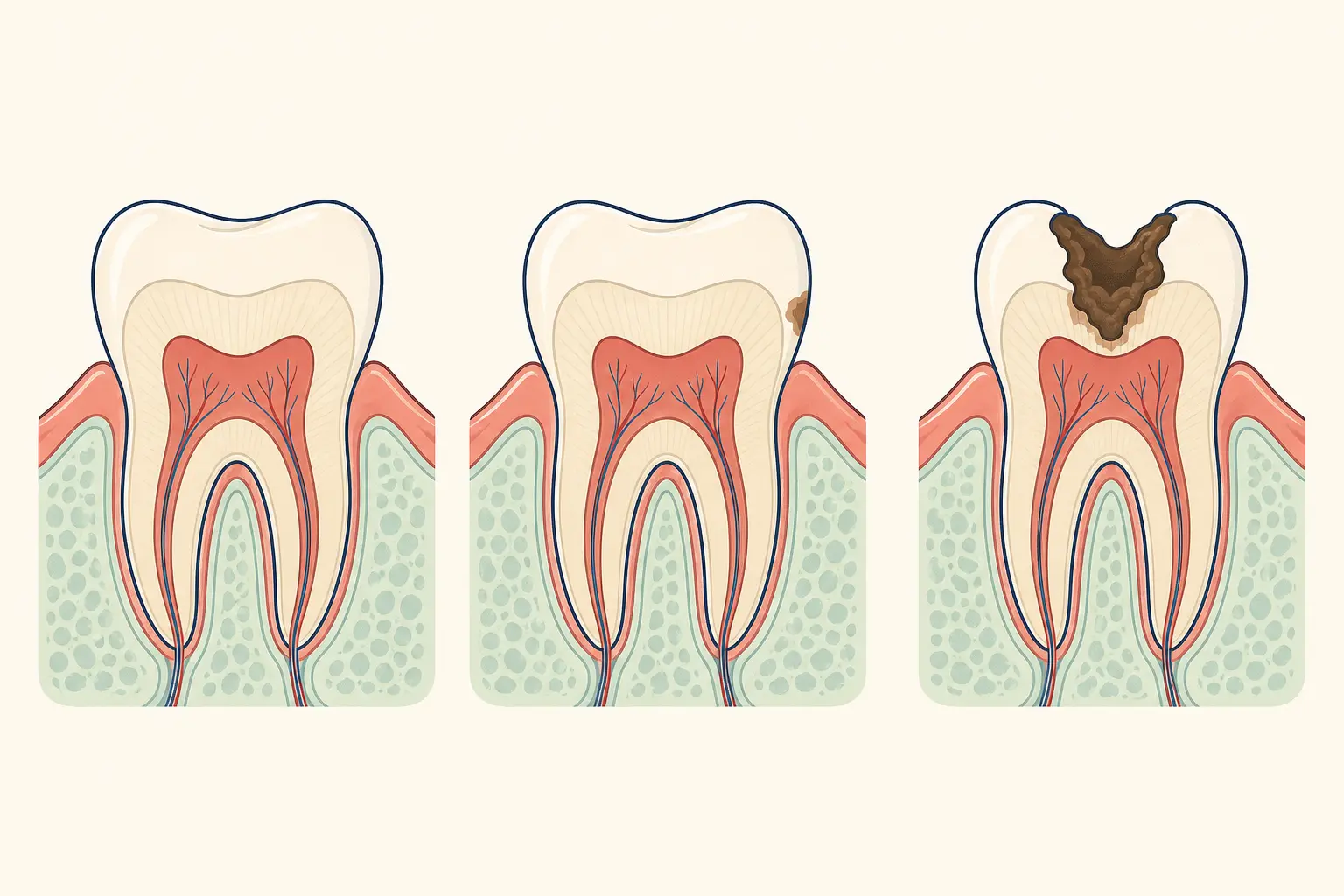
Healthy gingiva fits closely around the tooth and normally does not bleed with gentle cleaning. Plaque and hardened calculus can inflame the margin, while brushing injury, floss snapping, food impaction, or appliances can create a small wound. The location matters: blood between two teeth suggests an interdental gum area, while blood beside one painful tooth can arise from a pocket, fracture, extraction site, or infection. Examination is needed to identify the tissue involved.
What can you do next?
Gently brush the gumline and clean between the teeth, using a soft brush and controlled movements. Do not scrape the dried material with a sharp object. Rinse gently with water and observe whether bleeding returns, which areas are affected, and whether pain or swelling is present.
When should you seek dental care?
Book a dental assessment when dried blood recurs, collects in one area, or appears with gum swelling, tenderness, bad breath, loose teeth, or tooth pain. Seek urgent care for uncontrolled bleeding, facial swelling, fever, or difficulty swallowing or breathing.
What should you ask the dentist?
Ask which gum area is bleeding, whether calculus or a deep pocket is present, and whether the dentist recommends cleaning, an X-ray, or treatment of a damaged tooth.
Frequently asked questions
Can dried blood be from brushing too hard?
Yes, a forceful brush or snapping floss can injure the gum, but repeated bleeding still deserves assessment.
What if the blood is beside one tooth?
A localized source such as a gum pocket, damaged tooth, or infection should be considered.