
Dental question about observed-topic:379dc34f2
A dental concern is assessed by its location, duration, triggers, and associated changes in teeth, gums, joints, or soft tissue.
The short answer
A dental concern should be interpreted by its location, duration, triggers, and associated changes, because one mouth sensation can come from a tooth, gum, jaw joint, or soft tissue.
What is the direct answer?
What does this question mean?
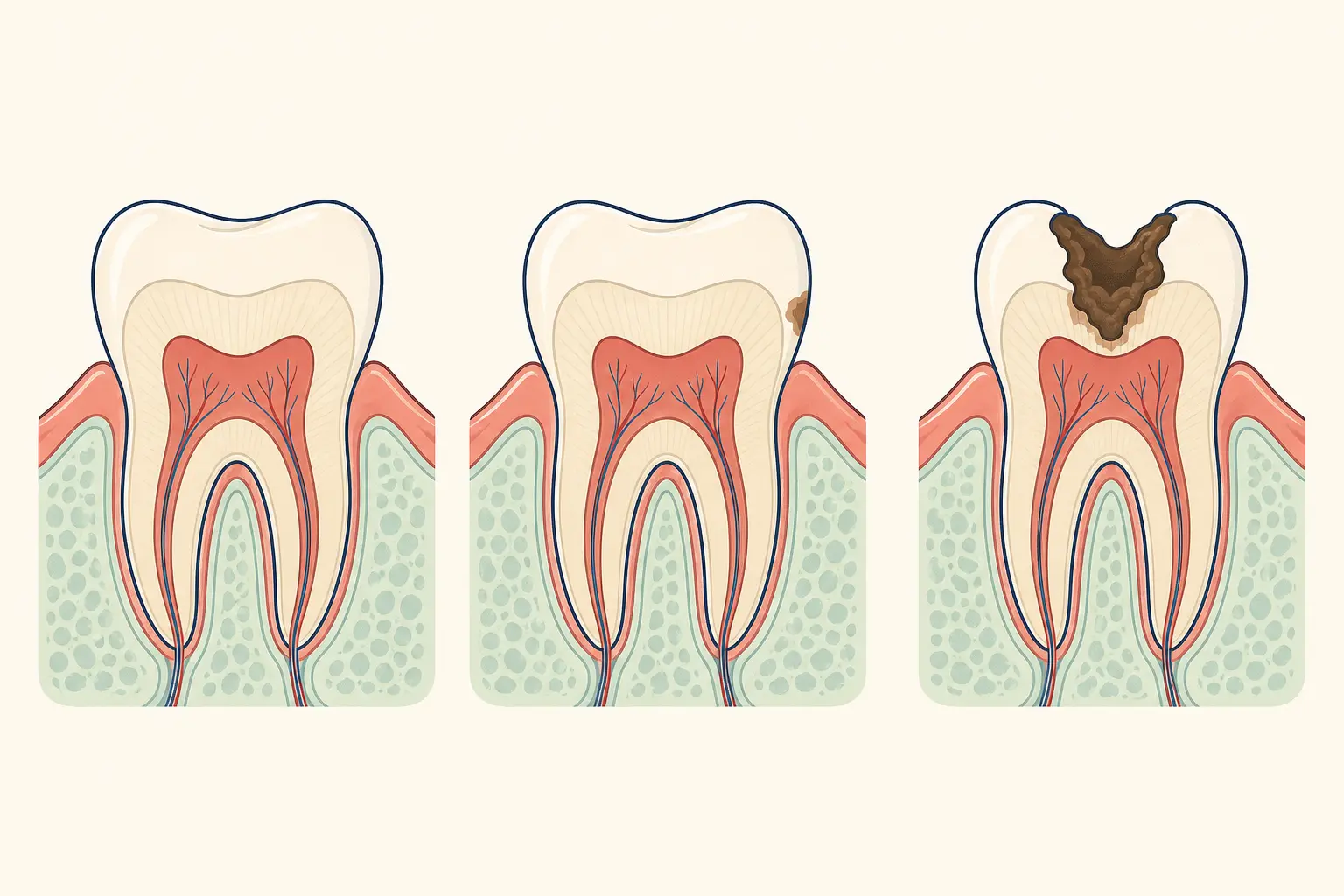
Dental problems involve enamel, dentin, pulp, periodontal ligament, gingiva, tongue, cheeks, salivary glands, and the temporomandibular joint. Identifying the structure narrows causes.
What can you do next?
Decay, inflammation, infection, trauma, clenching, dry mouth, and appliance irritation can overlap. A clear history helps distinguish short irritation from a condition needing treatment.
When should you seek dental care?
The dentist records history, examines teeth and soft tissues, checks bite and jaw movement, and uses focused tests or imaging when justified. Treatment follows the identified cause.
What should you ask the dentist?
Record onset, triggers, pain, swelling, bleeding, fever, altered sensation, or chewing changes. Keep cleaning gentle and avoid self-treatment that can burn tissue.
Frequently asked questions
Can this problem have more than one cause?
Dental problems involve enamel, dentin, pulp, periodontal ligament, gingiva, tongue, cheeks, salivary glands, and the temporomandibular joint. Identifying the structure narrows causes.
What happens at a dental visit?
The dentist records history, examines teeth and soft tissues, checks bite and jaw movement, and uses focused tests or imaging when justified. Treatment follows the identified cause.