
Dental question about observed-topic:09cdf335c
Good dental care combines fluoride cleaning, interdental plaque removal, a balanced diet, and examinations suited to your mouth.
The short answer
Good dental care means removing plaque from teeth and gums, limiting frequent sugar exposure, protecting teeth from injury, and treating problems early. It includes home care plus examinations that identify decay, gum disease, bite problems, and oral lesions.
What is the direct answer?
What does this question mean?
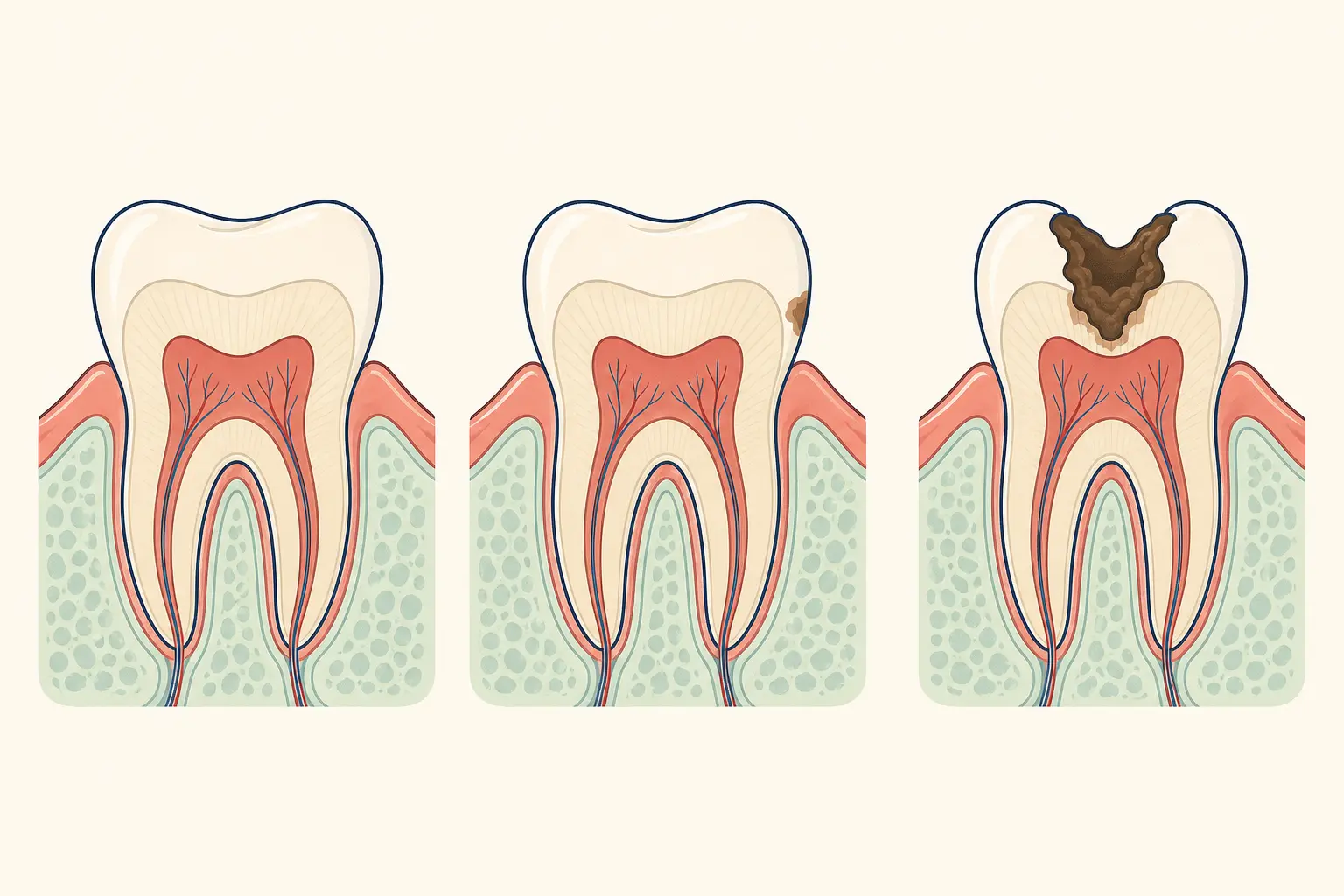
Plaque is a bacterial biofilm that collects on tooth surfaces and along the gumline. If it remains, acids can damage enamel and inflammation can affect the gingiva and supporting tissues.
What can you do next?
Brush all tooth surfaces with fluoride toothpaste and clean between teeth with floss or an interdental brush. Choose water often, keep sugary foods and drinks to mealtimes, and use a mouthguard for activities with a risk of dental injury.
When should you seek dental care?
Arrange care for toothache, bleeding or swollen gums, sensitivity that persists, a broken tooth, a persistent ulcer, or a new lump. Facial swelling, fever, or trouble breathing or swallowing requires urgent attention.
What should you ask the dentist?
Ask which areas need better plaque control and whether you have decay, gum inflammation, enamel wear, or bite-related damage. Ask how often your examination and cleaning schedule should be reviewed for your risks.
Frequently asked questions
Is brushing alone enough?
A toothbrush does not fully clean every contact between teeth, so an interdental method is often needed.
Why do gums bleed when I brush?
Bleeding can occur with plaque-related inflammation, trauma from technique, or other gum conditions and should be assessed if it persists.