
Gaps in teeth after deep cleaning / scaling
Spaces can look larger after scaling because calculus and swollen gum tissue no longer fill them; the dentist should check the cause.
The short answer
Gaps may appear after deep cleaning because calculus has been removed and inflamed gum tissue has shrunk, revealing the true space between teeth. Scaling does not normally cut healthy tooth structure or create a new gap.
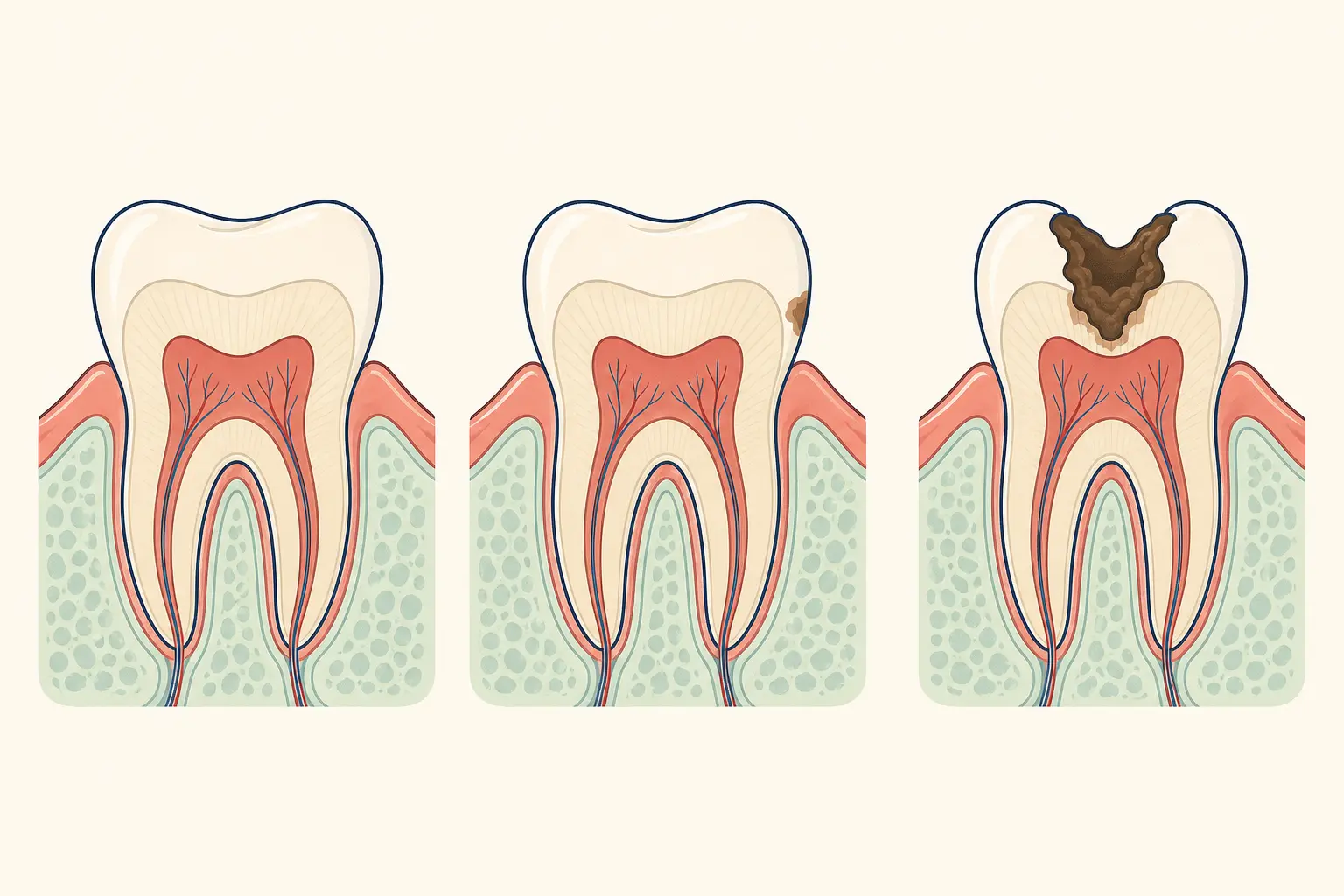
What is the direct answer?
What does this question mean?
Periodontal pockets can hold calculus beneath the gum margin. When the deposit is removed and inflammation settles, gum contours and spaces called black triangles may become more visible, especially where the interdental papilla has receded.
What can you do next?
Keep the area clean with a soft brush and the interdental brush or floss size recommended after the examination. Do not force an oversized brush into the space; healing and gum response are assessed over follow-up visits.
When should you seek dental care?
Return for review if the space is enlarging, gums bleed repeatedly, teeth feel loose, or pain, pus, swelling, or persistent sensitivity develops. A periodontal examination and dental radiographs can distinguish gum attachment loss from a harmless contour change.
What should you ask the dentist?
Ask whether the gap reflects gum recession, bone loss, tooth movement, or a natural tooth shape, and whether your periodontal pockets are improving. Ask which interdental tool fits and when the next maintenance visit is due.
Frequently asked questions
Will the space close by itself?
Some swelling settles after treatment, but a lost gum papilla or bone support may not return without specific periodontal or restorative treatment.
Can I fill the gap with bonding?
Composite bonding can change tooth contours in selected cases, but active gum disease must be assessed and controlled first.