
Inflammation around teeth
Inflammation around a tooth usually involves the gum or tissues around the root and needs care matched to its cause.
The short answer
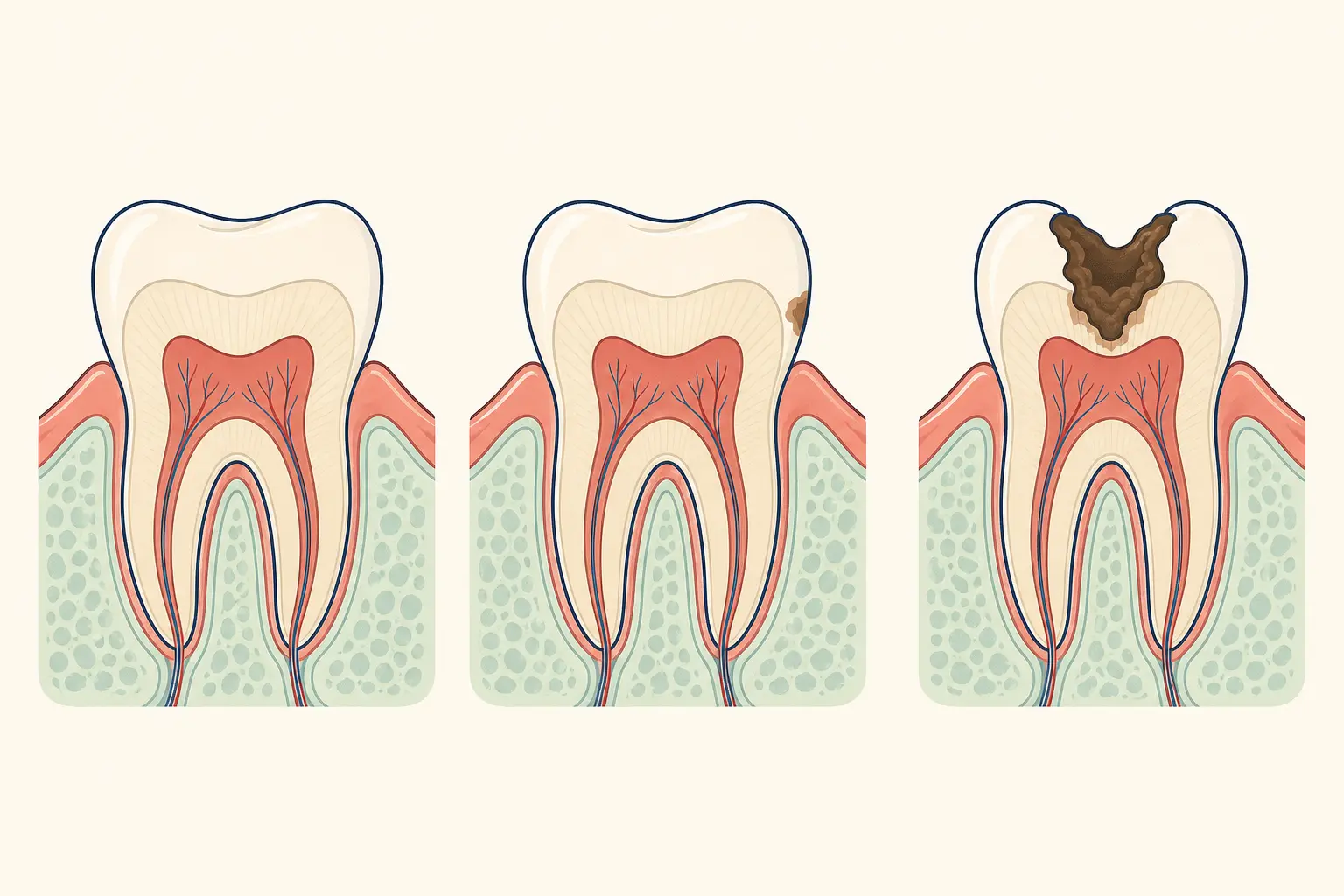
Inflammation around a tooth is commonly caused by plaque-related gum disease, trapped food, decay, or infection near the root, and treatment depends on which tissue is affected. A dental examination distinguishes a gum problem from inflammation inside the tooth or jawbone.
What is the direct answer?
What does this question mean?
Red, swollen, tender, or bleeding gum tissue may indicate gingivitis or periodontitis. Pain with biting, a gum pimple, facial swelling, or lingering heat sensitivity can point to pulpal or periapical disease instead.
What can you do next?
Brush gently along the gumline with fluoride toothpaste, clean between the teeth, and rinse away trapped food with water. Do not place aspirin, alcohol, or concentrated oils on the gum; a dentist may remove deposits, repair decay, drain infection, or provide root canal treatment according to the diagnosis.
When should you seek dental care?
Book dental care when swelling, bleeding, tenderness, bad taste, or pain persists or recurs. Seek urgent care for facial swelling, fever, difficulty swallowing, difficulty breathing, or trouble opening the mouth.
What should you ask the dentist?
Ask whether the inflammation is in the gum, tooth pulp, or tissues around the root, and whether probing or radiographs are needed. Ask which treatment removes the cause and how to prevent the area from becoming inflamed again.
Frequently asked questions
Can inflammation around a tooth go away by itself?
Mild irritation may settle after the trigger is removed, but persistent swelling or pain can reflect disease that requires dental treatment.
Is gum inflammation the same as a tooth abscess?
No. Gum inflammation affects gum tissue, while an abscess is a collection of infection that may arise from a tooth root or gum pocket.