
Last gum swelling
Gum swelling can settle briefly while plaque, trapped food, a gum pocket, or infection remains and needs assessment.
The short answer
Gum swelling may last from a short episode to a persistent problem, but duration alone does not identify the cause; recurring or painful swelling needs a dental examination. Common causes include plaque-related gingivitis, a periodontal pocket, trapped food, a tooth abscess, or irritation from trauma.
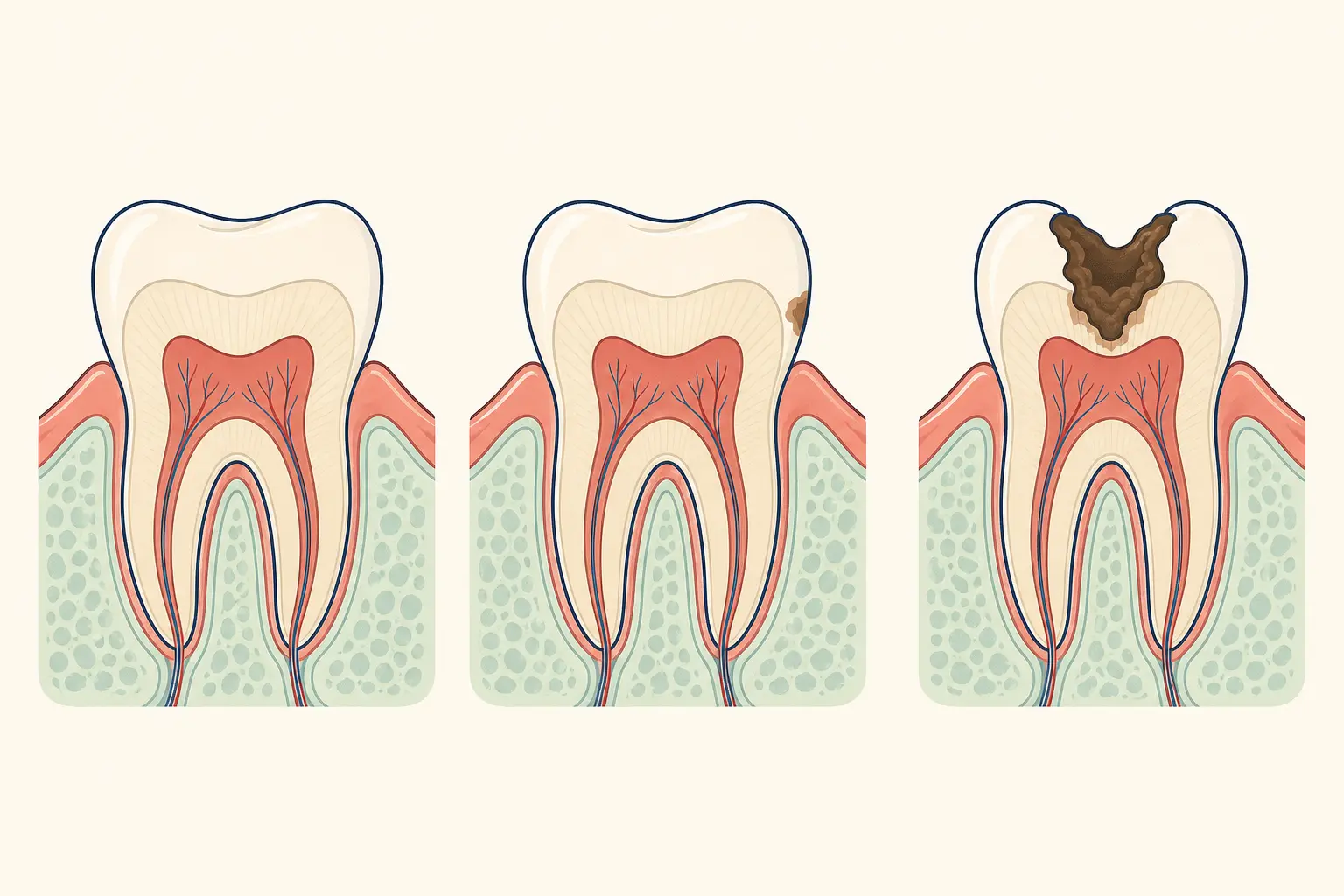
What is the direct answer?
What does this question mean?
The swelling is enlargement of gingival tissue caused by inflammation, fluid, or an abscess near a tooth. A small blister, tenderness, bleeding, bad taste, loose tooth, or pus can help locate the source but cannot confirm it without examination.
What can you do next?
Brush gently around the area, clean between the teeth, rinse with lukewarm water, and avoid squeezing or puncturing the swelling. Arrange care if it does not settle promptly or keeps returning, because home measures do not remove an abscess or deep periodontal pocket.
When should you seek dental care?
Seek urgent care for facial swelling, fever, pus, severe pain, a rapidly enlarging lump, or difficulty opening the mouth, swallowing, or breathing. A painless swelling that persists, or swelling around one tooth, also requires assessment.
What should you ask the dentist?
Ask whether the source is gum inflammation, a periodontal pocket, decay, a cracked tooth, an erupting tooth, or an abscess. Ask whether you need probing, radiographs, drainage, cleaning, root canal treatment, extraction, or another procedure.
Frequently asked questions
Can gum swelling go away by itself?
It can reduce temporarily, but recurrence or persistence can mean that plaque, a pocket, decay, or infection remains.
Should I pop a swollen gum?
No. Puncturing it can injure tissue and does not treat the source; have the area examined instead.