
Molar swelling
A swollen area near a molar often reflects inflamed gum, an erupting wisdom tooth, decay, or infection and needs assessment if persistent.
The short answer
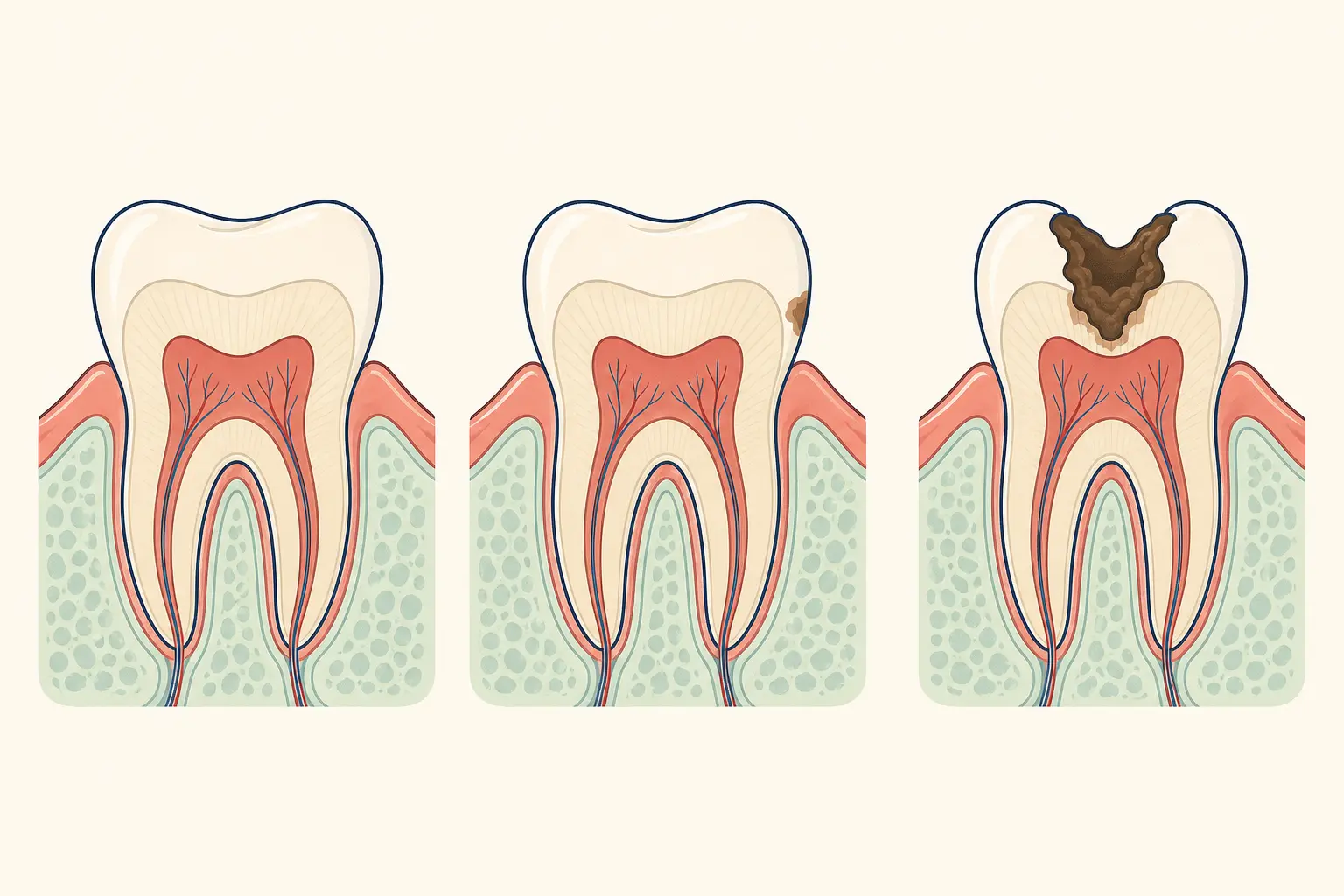
Swelling around a molar is commonly caused by inflamed gum tissue, decay reaching the pulp, a dental abscess, or inflammation around a partially erupted wisdom tooth.
What is the direct answer?
What does this question mean?
A molar is a broad back tooth with roots anchored in the jaw; swelling may arise in the gum, periodontal tissues, pulp, or bone around those roots.
What can you do next?
Rinse gently with warm water, keep the area clean, avoid squeezing the swelling, and use only pain medicine suitable for your health history. Do not place aspirin or concentrated substances on the gum.
When should you seek dental care?
Urgent care is needed for fever, facial swelling, pus, worsening pain, difficulty opening the mouth, swallowing, or breathing. A dentist may examine the tooth, test pulp vitality, take an X-ray, drain infection, or provide root canal treatment or extraction.
What should you ask the dentist?
Ask whether the swelling is in the gum, pulp, or tissues around the root, and whether imaging shows decay, a pocket, or a wisdom-tooth problem. Ask what treatment removes the source rather than only reducing symptoms.
Frequently asked questions
What is the main cause?
Swelling around a molar is commonly caused by inflamed gum tissue, decay reaching the pulp, a dental abscess, or inflammation around a partially erupted wisdom tooth.
Can home care replace treatment?
Home care may reduce irritation, but it cannot remove a structural dental cause or established infection.