
Root decay
Root decay is caries on exposed tooth root, where missing enamel leaves softer cementum vulnerable to plaque acids.
The short answer
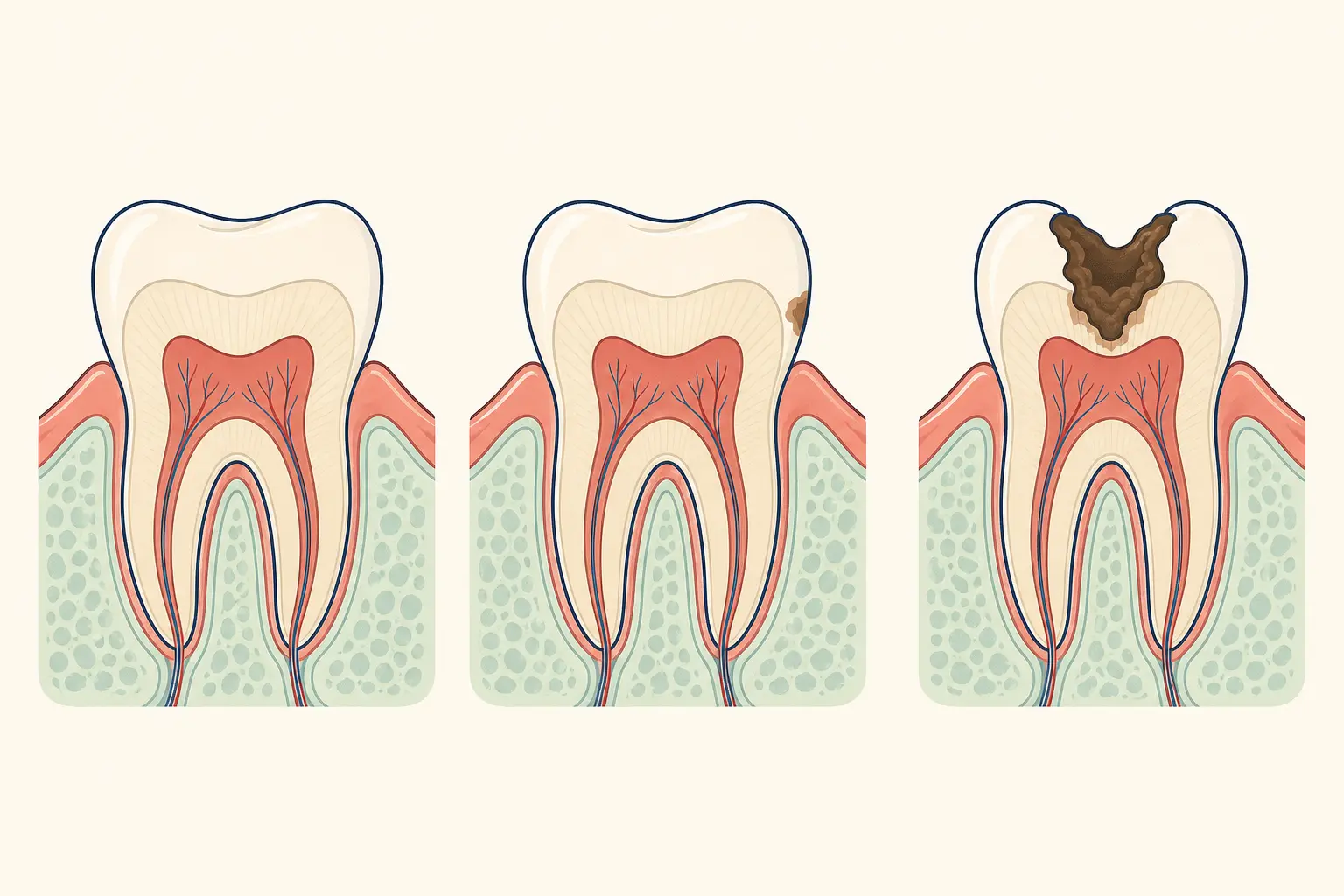
Root decay is a cavity affecting exposed cementum or dentine near the gumline, usually after gum recession exposes the root surface.
What is the direct answer?
What does this question mean?
The crown is protected by enamel, but the root is covered by thinner cementum over dentine. Plaque bacteria produce acids from sugars, and the softer root surface can demineralize when it remains exposed.
What can you do next?
Brush gently with fluoride toothpaste and clean around the gumline and between teeth. A dentist may remove softened tissue and place a tooth-colored or glass-ionomer filling, while fluoride treatment and gum care help protect remaining root surfaces.
When should you seek dental care?
Arrange care for a notch, brown or soft area, sensitivity, or pain at the gumline. Urgent assessment is needed for swelling, fever, spontaneous severe pain, or a broken tooth.
What should you ask the dentist?
Ask whether the lesion is root caries, abrasion, erosion, or an old restoration, and whether an X-ray is needed. Ask how recession, dry mouth, diet, and brushing technique affect the treatment plan.
Frequently asked questions
Can root decay be reversed?
Very early mineral loss may be arrested with plaque control and fluoride, but a cavitated defect usually needs restoration.
Why is root decay sensitive?
Exposed dentine contains tubules that can transmit cold, touch, or sweet stimuli toward the pulp.