
My smile whitening toothpaste
Whitening toothpaste mainly removes surface stains with mild abrasives; it does not change the natural color deep inside a tooth.
The short answer
Whitening toothpaste mainly removes surface stains with mild abrasives; it does not change the natural color deep inside a tooth. Some formulas also contain ingredients intended to limit new stain attachment.
What is the direct answer?
What does this question mean?
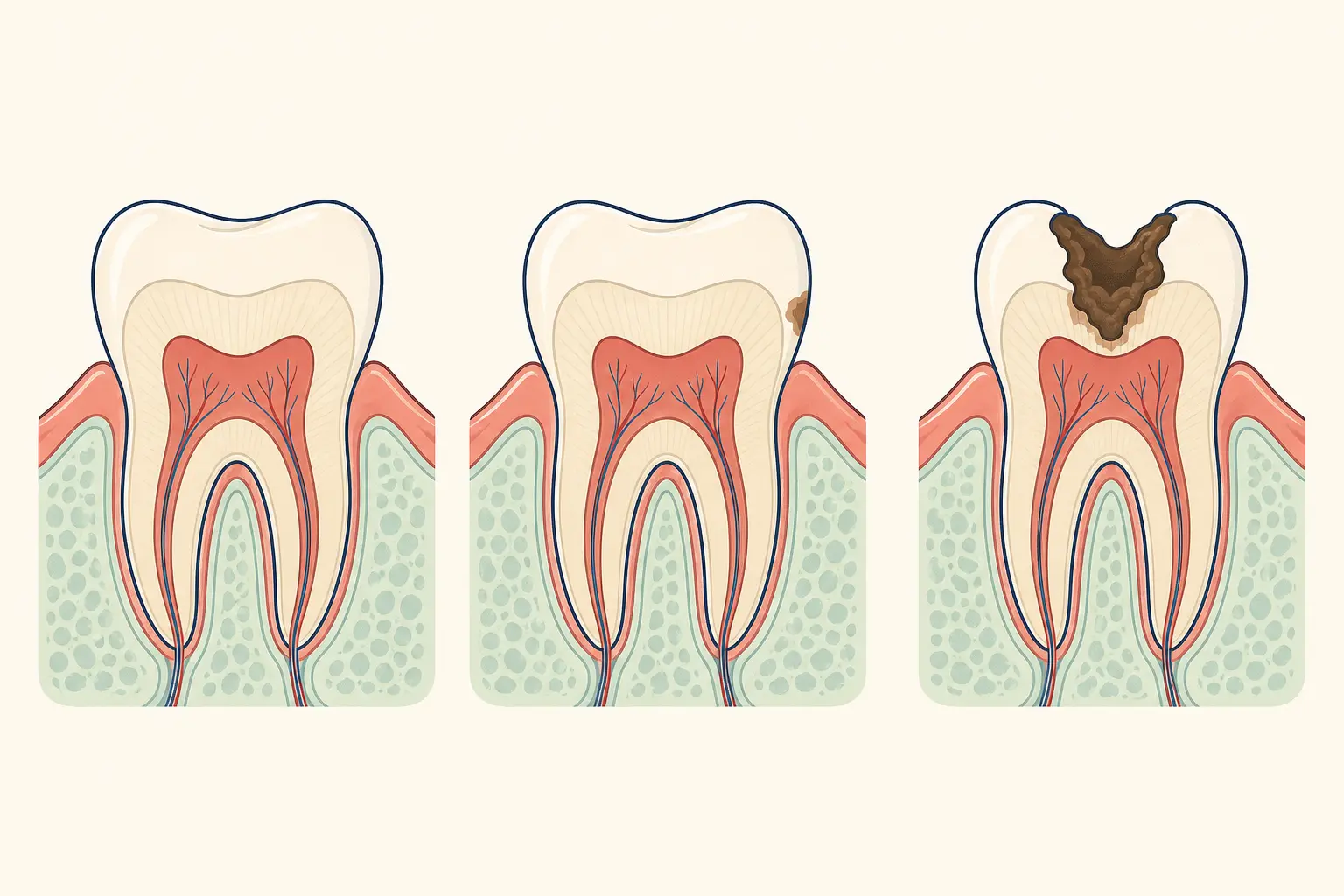
Tooth color comes from translucent enamel over yellowish dentine, while tea, coffee, tobacco, and colored foods can stain the outer surface. A toothpaste acts at that outer layer, so fillings, crowns, and veneers do not whiten with brushing.
What can you do next?
Brush twice daily with a soft brush and fluoride toothpaste, using gentle pressure at the gumline. If you want a change beyond surface stain removal, a dentist can check the cause of discoloration and discuss peroxide whitening or restoration replacement.
When should you seek dental care?
Arrange a dental examination for one dark tooth, new discoloration, pain, or a rough patch that does not brush away. Sensitivity or gum irritation after a whitening product is also a reason to pause it and request advice.
What should you ask the dentist?
Ask whether the color is surface stain, enamel change, decay, or an old restoration. Ask which whitening method matches your teeth and how existing fillings or crowns will affect the final shade.
Frequently asked questions
Does whitening toothpaste bleach teeth?
Most whitening toothpastes remove surface stain rather than bleaching dentine through the enamel.
Why are my teeth still yellow?
Natural dentine color, thin enamel, age-related change, internal stains, or restorations may explain the shade.