
Sore under mouth
A sore under the mouth can arise from an ulcer, friction, salivary-gland blockage, infection, or another lesion that needs examination if it persists.
The short answer
The underside of the mouth includes the floor of the mouth, the ventral tongue, the lingual frenulum, and openings of the submandibular salivary ducts. A sore may be a shallow traumatic or aphthous ulcer, but location, duration, texture, swelling, and associated symptoms help narrow the cause.
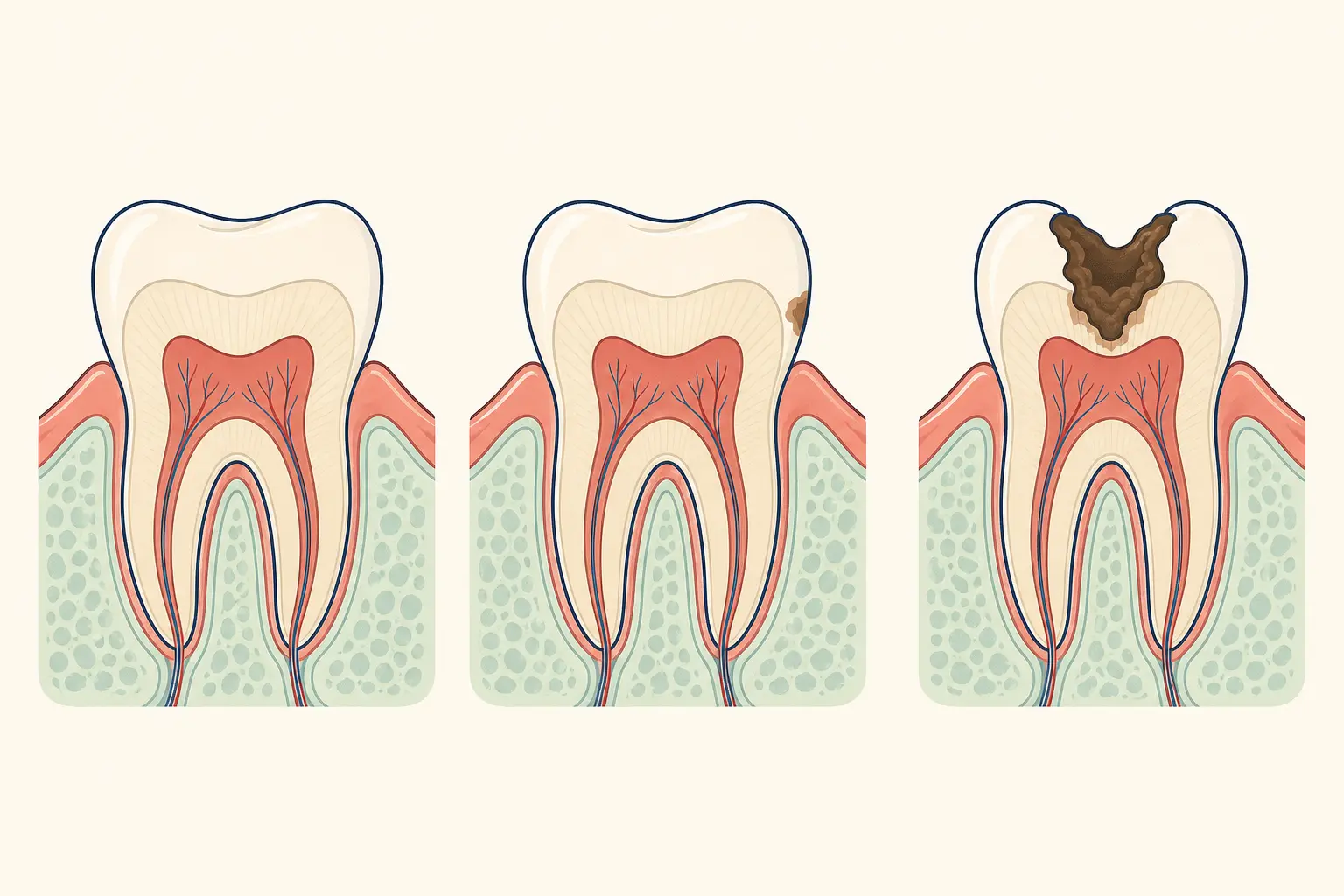
What is the direct answer?
What does this question mean?
A dentist inspects the mucosa, tongue, teeth, gums, salivary duct openings, and neck, then palpates the area when appropriate. Treatment may involve removing a sharp tooth edge, managing infection or dry mouth, or referring a persistent unexplained lesion for further assessment.
What can you do next?
Rinse gently with salt water, choose cool soft foods, avoid tobacco, alcohol, spicy foods, and sharp edges, and do not scratch or squeeze the area. Keep the mouth clean while observing whether the lesion is changing.
When should you seek dental care?
Seek prompt care for a sore that persists, enlarges, hardens, repeatedly bleeds, or comes with a neck lump, unexplained weight change, fever, difficulty swallowing, or reduced tongue movement. Breathing difficulty requires emergency help.
What should you ask the dentist?
Ask which structure is affected, whether a tooth or salivary duct is rubbing it, how long observation is appropriate, and whether examination, imaging, medication, or tissue sampling is needed.
Frequently asked questions
Can a mouth ulcer occur under the tongue?
Yes. Ulcers can affect the floor of the mouth or underside of the tongue, but a persistent or unusual lesion needs assessment.
Why is swelling under the tongue important?
Swelling can involve a salivary duct, infection, or deeper tissue, particularly when pain or difficulty swallowing is present.