
Swollen gum upper jaw
A swollen upper gum can come from plaque, trapped food, trauma, a tooth abscess, or inflammation around an erupting tooth.
The short answer
A swollen upper gum needs examination because the cause may be local gum inflammation, trapped food, trauma, or infection from a nearby tooth.
What is the direct answer?
What does this question mean?
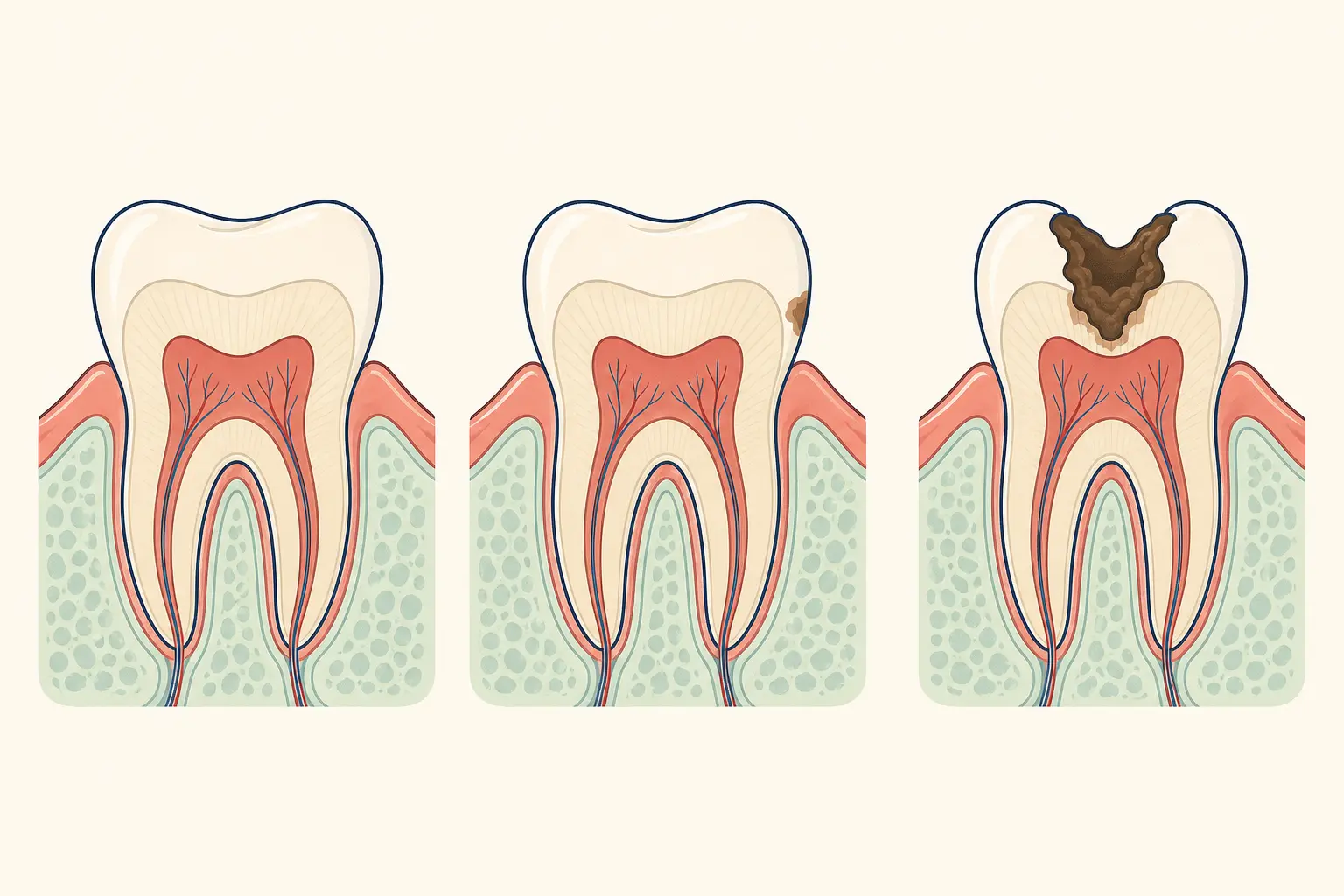
The upper jaw contains tooth roots, gum tissue, and the maxillary sinus nearby, so pain or swelling can sometimes be referred between these structures.
What can you do next?
Clean gently around the area, avoid squeezing it, record whether the swelling is beside one tooth or spread across the gum, and arrange an examination.
When should you seek dental care?
Prompt care is needed for increasing swelling, fever, bad taste or pus, severe pain, facial swelling, or difficulty opening the mouth, swallowing, or breathing.
What should you ask the dentist?
Ask whether the swelling is in the gum, from a tooth root, related to an erupting tooth, or associated with the maxillary sinus.
Frequently asked questions
Can a gum abscess disappear by itself?
Pain or drainage may change while the underlying source remains, so examination is needed.
Why does the upper jaw sometimes hurt near the cheek?
Tooth roots and the maxillary sinus are close, and the clinician may need to distinguish their sources.