
Using baking powder on teeth
Baking powder is not a controlled tooth-whitening treatment and may irritate gums or abrade enamel when scrubbed onto teeth.
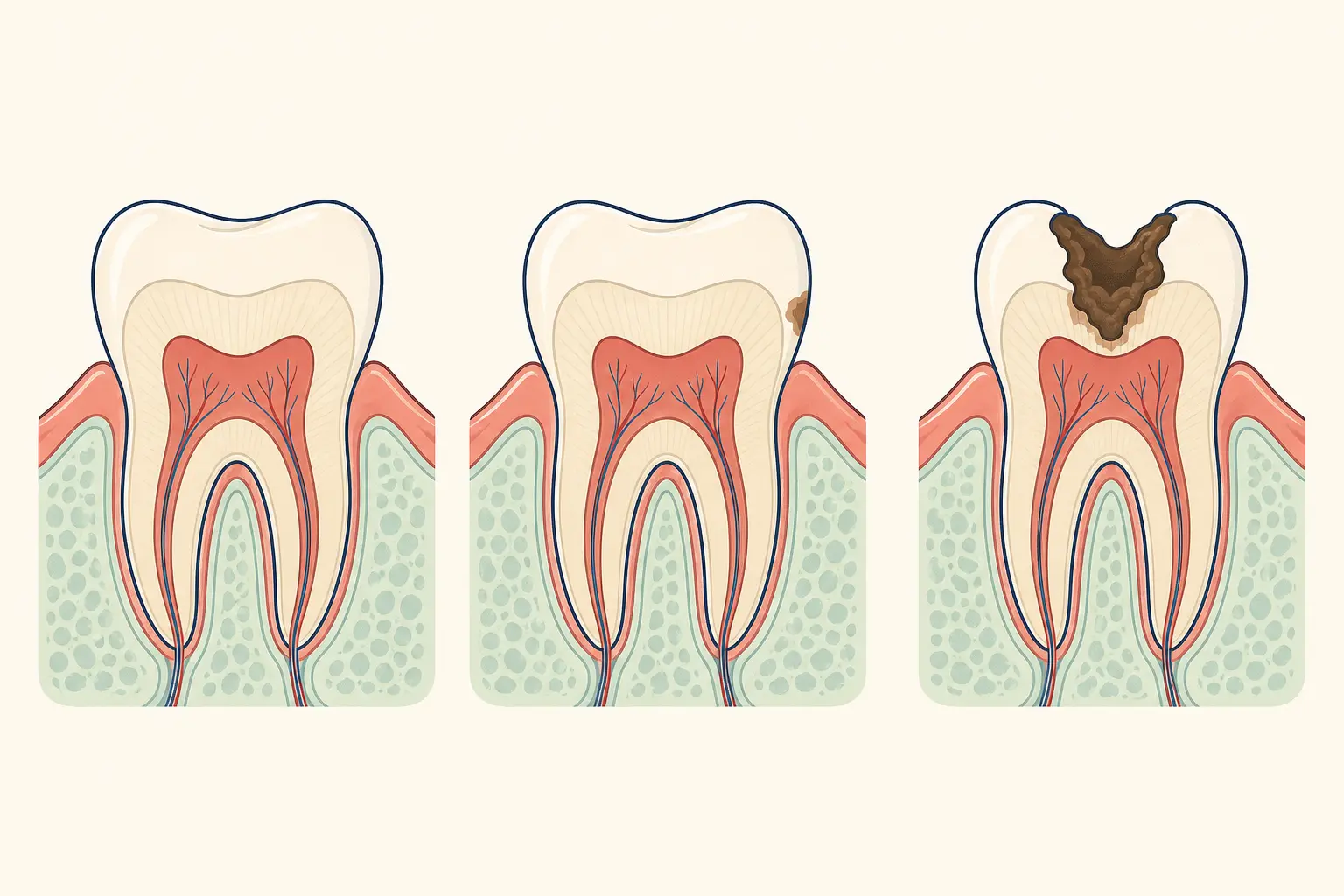
What is the direct answer?
Baking powder is not a controlled tooth-whitening treatment and may irritate gums or abrade enamel when scrubbed onto teeth.
What does this question mean?
Baking powder commonly contains sodium bicarbonate with an acid salt and a drying starch. It is formulated for cooking, not for controlled contact with enamel, dentine, fillings, or gingiva.
What can you do next?
Scrubbing powder can remove some external debris while leaving the cause of discoloration untreated. Repeated abrasive use can roughen a surface, and contact with the gum margin can cause irritation.
When should you seek dental care?
Use fluoride toothpaste and a soft brush for routine cleaning. If the goal is whitening, a dentist can identify surface stain, decay, enamel defects, or a restoration before selecting treatment.
What should you ask the dentist?
Stop using the powder and seek care for pain, sensitivity, bleeding, ulcers, or a change in tooth shape or color. Ask what caused the stain and which treatment preserves the tooth surface.
Frequently asked questions
What is the main point to remember?
Baking powder is not a controlled tooth-whitening treatment and may irritate gums or abrade enamel when scrubbed onto teeth.
When should the problem be examined?
Stop using the powder and seek care for pain, sensitivity, bleeding, ulcers, or a change in tooth shape or color. Ask what caused the stain and which treatment preserves the tooth surface.