
Best way to whiten teeth without damaging enamel
The enamel-conscious approach is a dental check followed by correctly used whitening, with decay, gum disease, and sensitivity addressed first.
The short answer
Choose whitening after a dental examination, treatment of disease, and selection of a correctly fitted product. Peroxide oxidizes stain molecules, while excess exposure can irritate teeth and gums.
What is the direct answer?
What does this question mean?
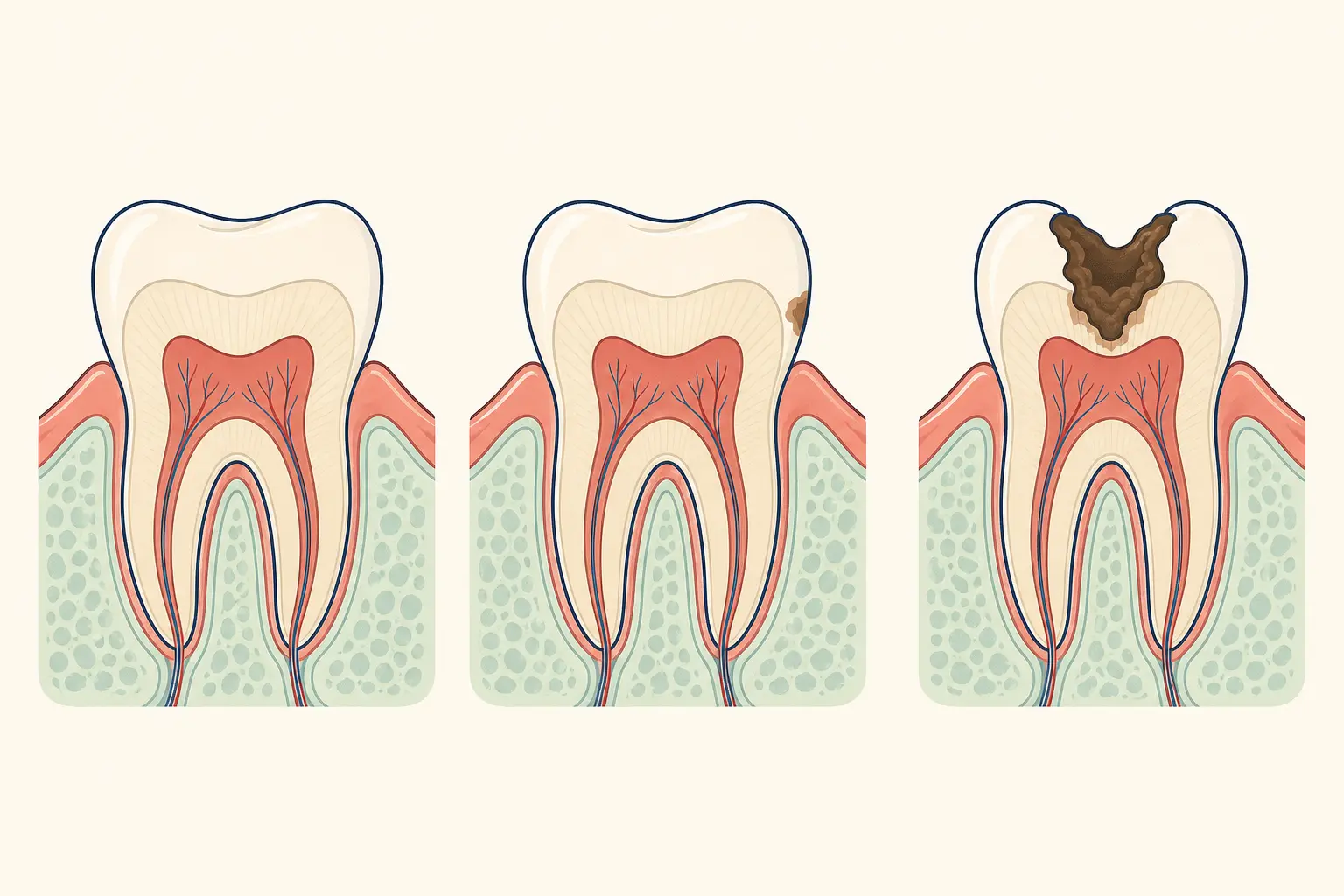
Enamel covers the crown and dentin lies beneath it, where exposed tubules can transmit sensitivity. Gritty powders and forceful brushing wear surfaces rather than safely bleaching them.
What can you do next?
Use a soft brush, fluoride toothpaste, and only the recommended concentration and contact time. Keep gel off the gums and stop if marked irritation develops.
When should you seek dental care?
Have decay, cracks, exposed roots, gum disease, or a single dark tooth examined first. Persistent sensitivity or ulcers need review.
What should you ask the dentist?
Ask whether enamel and gums are healthy, which product and wear time fit your teeth, and how existing restorations will be handled.
Frequently asked questions
Does whitening remove enamel?
Bleaching changes stain molecules, while abrasive scrubbing can wear the surface.
What if teeth are sensitive?
Identify the cause before whitening and adjust or postpone the plan if needed.