
Whitening studio
A whitening studio brightens teeth with peroxide products, but treatment should begin with an oral health assessment.
The short answer
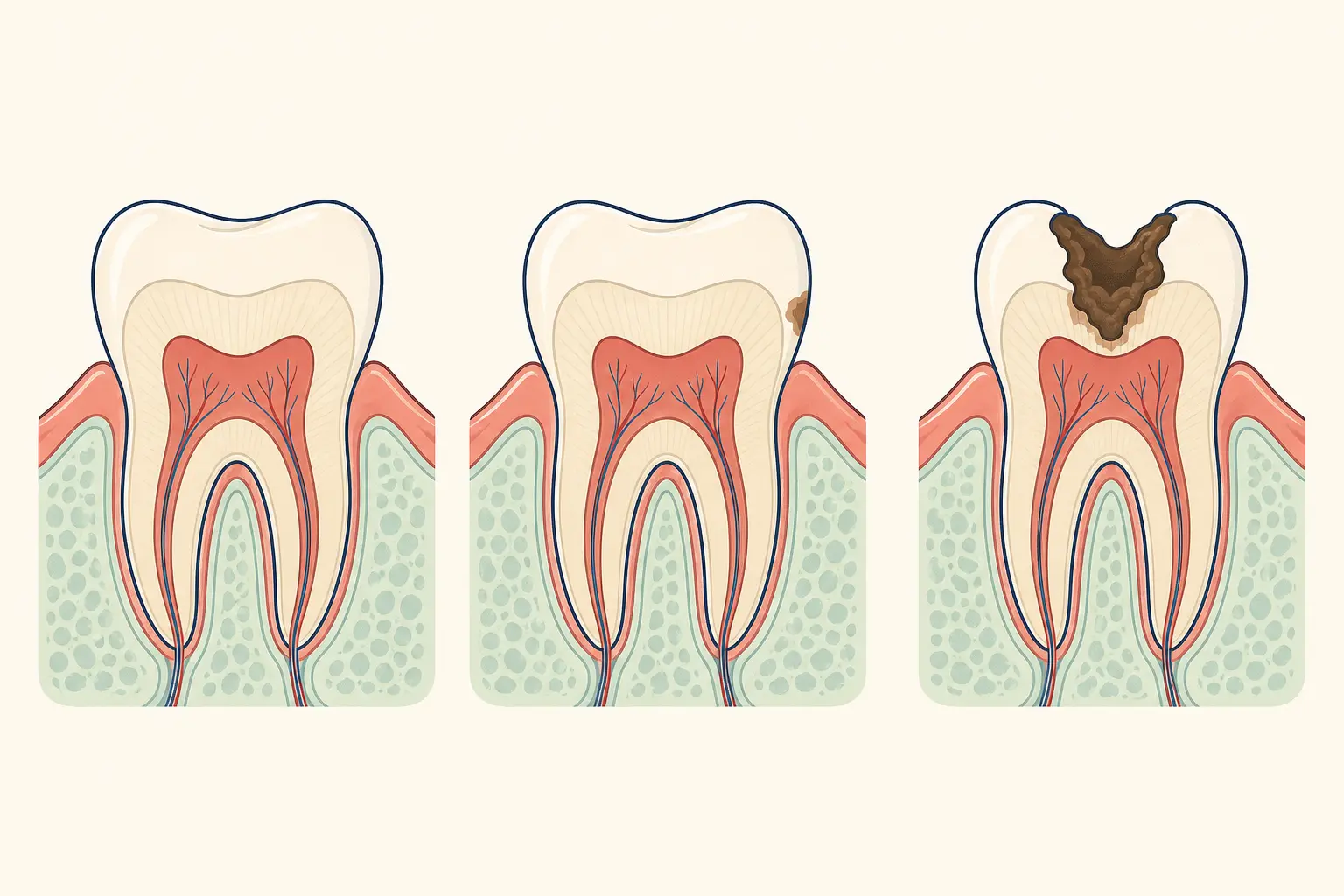
Whitening changes the colour of suitable natural teeth; it does not diagnose or treat cavities, gum disease, or the cause of a dark single tooth.
What is the direct answer?
What does this question mean?
Professional whitening uses a peroxide gel placed on the tooth surfaces, often with barriers protecting the gums. The result depends on the original stain, enamel and dentine, existing restorations, and whether the teeth are healthy enough for treatment.
What can you do next?
Ask who examines your teeth, which product is used, how the gums are protected, and how fillings or crowns will be handled. Treat active decay, gum inflammation, exposed roots, and leaking restorations before pursuing a cosmetic session.
When should you seek dental care?
Seek dental care for pain, bleeding, ulcers, a dark tooth, or sensitivity that persists after whitening. Urgent assessment is needed when swelling, fever, or difficulty swallowing accompanies dental symptoms.
What should you ask the dentist?
Who will check my teeth and gums before the whitening session, and what product will be applied? Ask how the examination will change the treatment recommendation.
Frequently asked questions
Can a studio whitening session remove every stain?
No. Intrinsic discoloration, restorations, decay, and trauma-related colour changes may need another treatment.
Why should I have an examination first?
A check can identify disease, cracks, exposed roots, and restorations that affect comfort and the expected result.