
Dental question about observed-topic:1ac915613
A dental concern that is new, painful, swollen, bleeding, or changing needs an examination to identify its cause.
The short answer
A dental concern that is new, painful, swollen, bleeding, or changing needs an examination to identify its cause. A dentist examines the mouth, teeth, gums, bite, and any affected area because similar symptoms can come from different tissues.
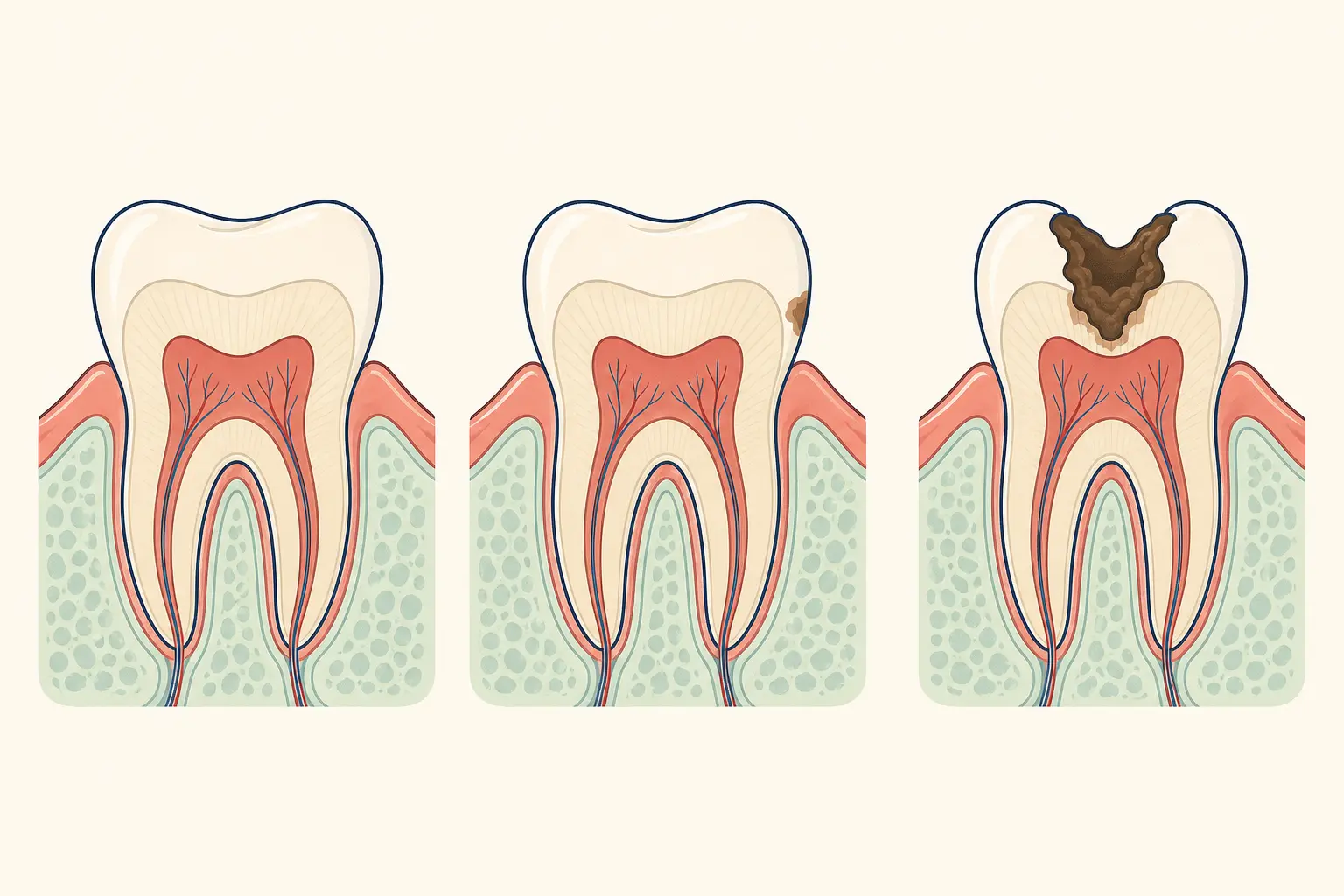
What is the direct answer?
What does this question mean?
A dentist examines the mouth, teeth, gums, bite, and any affected area because similar symptoms can come from different tissues. The examination links the symptom to its underlying anatomy.
What can you do next?
Write down when it began, what triggers it, and any swelling or injury; keep brushing gently and avoid picking at the area. Avoid actions that could further irritate the area.
When should you seek dental care?
Seek prompt care for facial swelling, fever, uncontrolled bleeding, trouble swallowing or breathing, severe pain, or dental trauma. These features can indicate a problem that needs timely treatment.
What should you ask the dentist?
What structures could cause this symptom, and what examination or X-ray would distinguish them? The answers help you understand the diagnosis and available options.
Frequently asked questions
Can the problem improve on its own?
Some mild irritation settles when the trigger is removed, but persistent, recurring, painful, or changing symptoms need an examination.
Will an X-ray always be needed?
No. The dentist chooses imaging when the history and examination suggest that it could show decay, bone, root, impaction, or another hidden problem.