
How to remove black stains from teeth at home
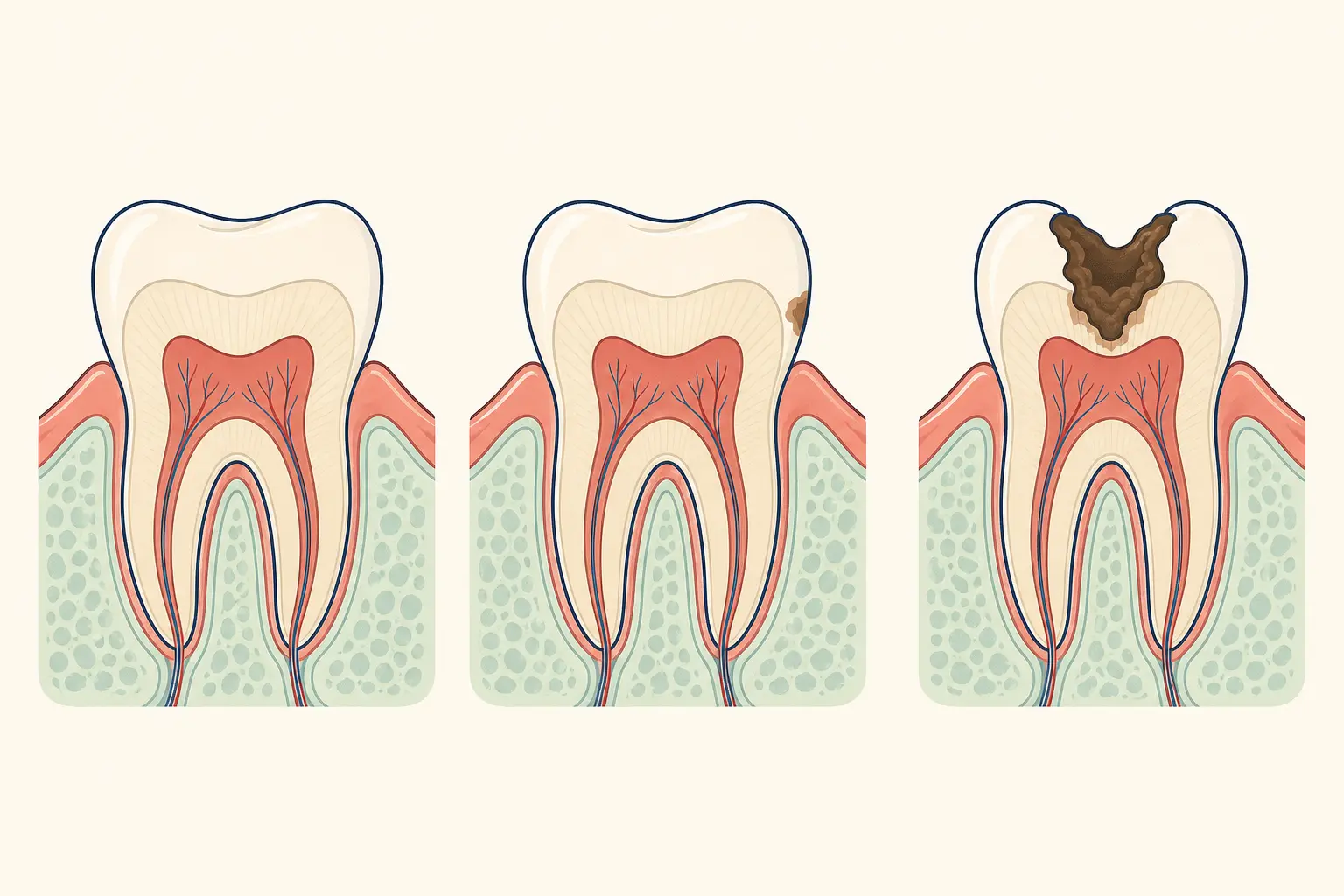
Black marks may be surface stain, calculus, decay, or a damaged restoration, so home brushing cannot safely remove every type.
The short answer
Black stains should be identified before removal because surface stain may polish away, while decay, calculus, and damaged restorations need dental treatment.
What is the direct answer?
What does this question mean?
Pigments from tobacco, coffee, tea, and some foods can attach to plaque or calculus. A black area within a pit, at a contact, or under a filling may instead be caries or a defective restoration.
What can you do next?
Brush with fluoride toothpaste and clean between teeth, but do not aggressively scrub the mark. A dentist or hygienist can inspect it, remove calculus with instruments, polish suitable surface stain, and restore decay when indicated.
When should you seek dental care?
Arrange care promptly for pain, sensitivity, a hole, roughness, bleeding, swelling, bad taste, or a stain that enlarges. A dark tooth after trauma requires assessment even without pain.
What should you ask the dentist?
Is the mark on the surface or inside the tooth? Ask whether it is stain, calculus, decay, or a restoration issue and which removal method preserves enamel.
Frequently asked questions
Can whitening remove black stains?
Whitening changes natural tooth color but does not remove calculus or repair decay, and it may not correct a single dark tooth.
Is baking soda a good stain remover?
Abrasive powders can wear enamel or irritate gums when used aggressively; diagnosis and professional cleaning are preferable.