
Why is blood coming out from my teeth
Blood around a tooth most often comes from inflamed gum tissue, but it can also come from a cut, a loose tooth, an abscess, or a recent dental procedure.
What is the direct answer?
Blood around a tooth most often comes from inflamed gum tissue, but it can also come from a cut, a loose tooth, an abscess, or a recent dental procedure.
What does this question mean?
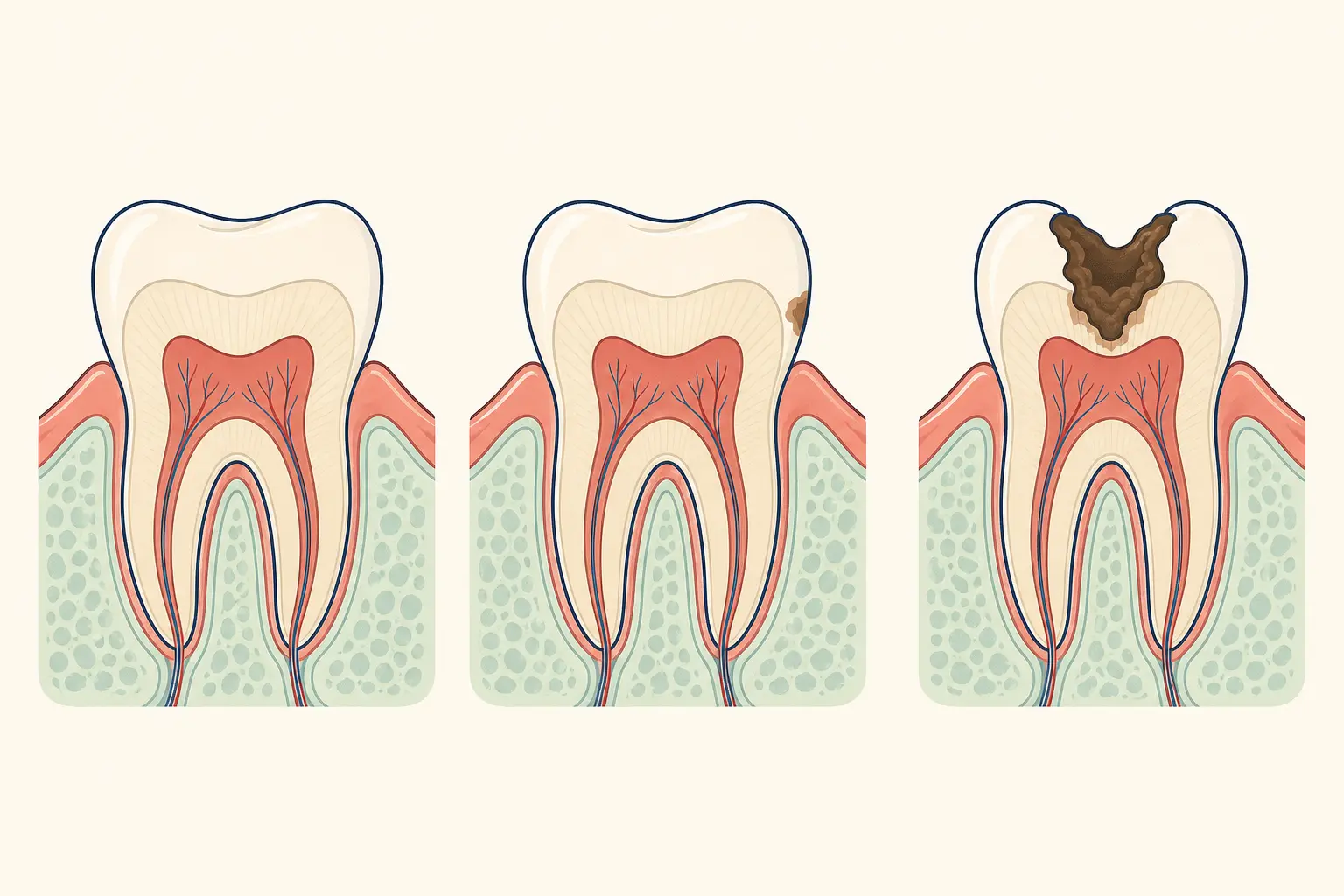
The gum around a tooth contains small blood vessels that become easier to bleed when plaque triggers gingivitis or when calculus irritates the margin. Local trauma from hard brushing, flossing, biting, or an ill-fitting appliance can also injure the tissue.
What can you do next?
Rinse gently with water, apply light pressure with clean gauze if bleeding is active, and continue careful plaque removal without scrubbing. A dentist may measure gum pockets, remove calculus, test the tooth, and take an X-ray when indicated.
When should you seek dental care?
Seek urgent care for uncontrolled bleeding, facial swelling, fever, severe pain, a loose or displaced tooth, or trouble breathing or swallowing. Recurrent bleeding without an obvious injury should be assessed promptly.
What should you ask the dentist?
Ask which tooth and tissue are bleeding and whether the cause is gum inflammation, decay, a crack, or infection. Ask what cleaning, filling, root canal, extraction, or periodontal treatment is indicated.
Frequently asked questions
Why does bleeding happen when I floss?
New flossing can irritate inflamed gums, but persistent bleeding suggests plaque-related inflammation or another problem that needs evaluation.
What should make me seek care sooner?
Seek urgent care for uncontrolled bleeding, facial swelling, fever, severe pain, a loose or displaced tooth, or trouble breathing or swallowing. Recurrent bleeding without an obvious injury should be assessed promptly.