
How to remove brown stains from teeth naturally
Brown tooth stains may be softened by professional cleaning, but the cause must be identified before choosing a home method.
The short answer
Brown stains can come from surface deposits, decay, enamel defects, or internal tooth colour, so removal depends on the cause rather than a natural remedy alone. Brushing with fluoride toothpaste and professional scaling can address removable deposits, but neither repairs a cavity.
What is the direct answer?
What does this question mean?
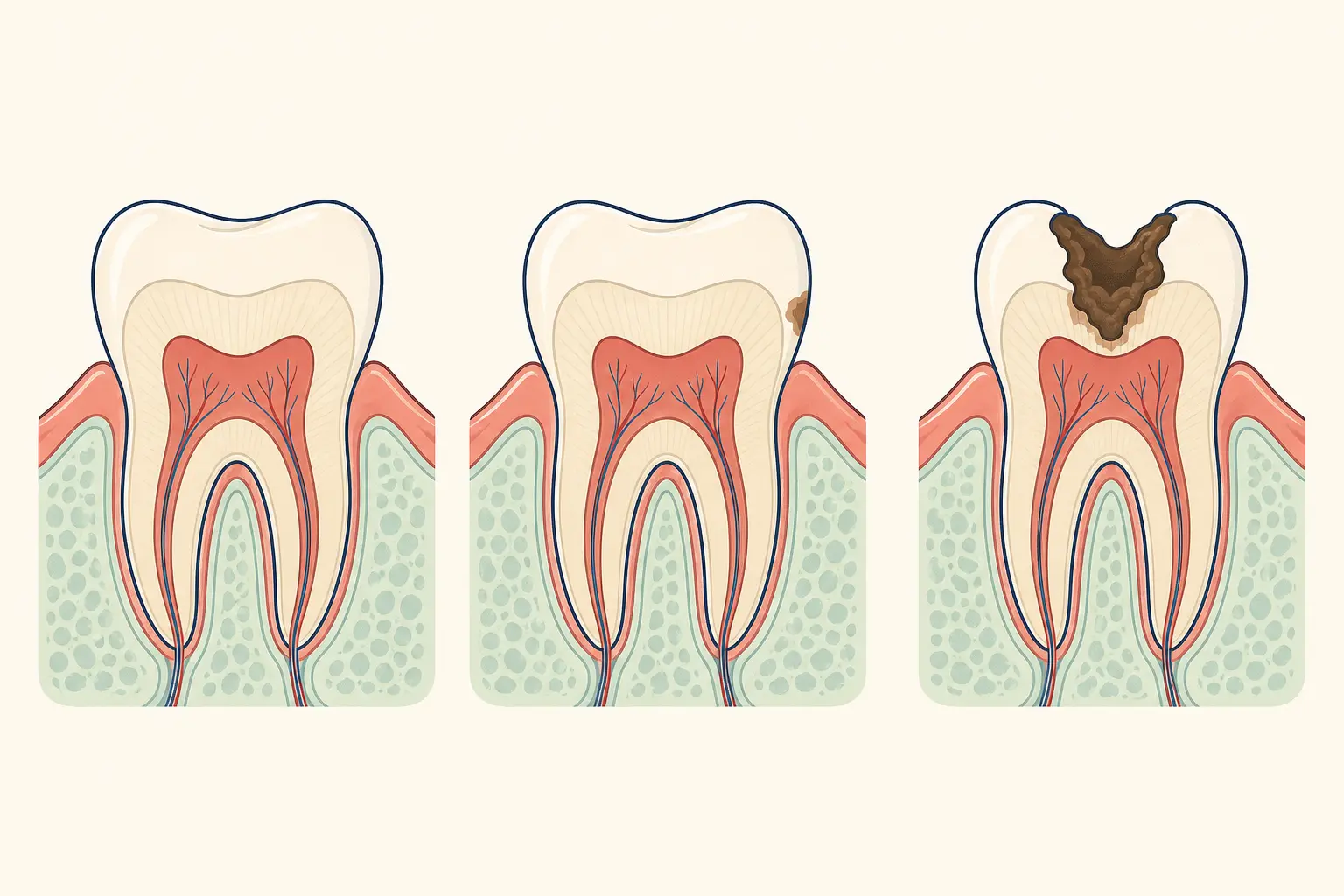
A stain on the outer enamel may be linked to chromogenic plaque, tobacco, tea, coffee, or mineral deposits. A brown spot inside a groove, beside a filling, or on one isolated tooth may instead represent caries, leakage, trauma, or enamel development change.
What can you do next?
Use a soft brush, fluoride toothpaste, and interdental cleaning, and reduce repeated exposure to staining drinks. Do not scrub with lemon, vinegar, charcoal, or abrasive powders because acids and abrasion can remove or weaken enamel.
When should you seek dental care?
Book an examination for a new, enlarging, rough, painful, or isolated brown mark, especially if food catches in it. A dentist may inspect the surface, use radiographs, remove calculus, or restore decayed enamel.
What should you ask the dentist?
Ask whether the colour is external stain, calculus, decay, or an enamel defect, and whether cleaning, polishing, fluoride treatment, whitening, or a filling is appropriate. Ask how to prevent the same deposit returning.
Frequently asked questions
Can baking soda remove every brown mark?
It may polish some surface stain, but it cannot treat decay or an internal colour change.
Can a hygienist remove brown calculus?
Professional scaling can remove calculus when the deposit is above or below the gum margin and suitable for instrumentation.