
How to clean my teeth to be white
Brush with fluoride toothpaste, clean between teeth, remove hardened deposits professionally, and treat the cause of any intrinsic tooth colour change.
The short answer
Daily cleaning removes plaque and surface staining but cannot change the natural internal colour of a tooth or remove hardened calculus with a toothbrush.
What is the direct answer?
What does this question mean?
Use a soft brush with gentle pressure along the gumline, clean between teeth with floss or interdental brushes, and limit repeated exposure to staining drinks and tobacco. A professional cleaning removes calculus and stain, while whitening uses peroxide to change tooth colour after an examination.
What can you do next?
The dentist or hygienist checks for calculus, gum inflammation, decay, fillings, crowns, and enamel wear. Whitening may be discussed after disease is managed, with a shade assessment and a plan for sensitivity or existing restorations.
When should you seek dental care?
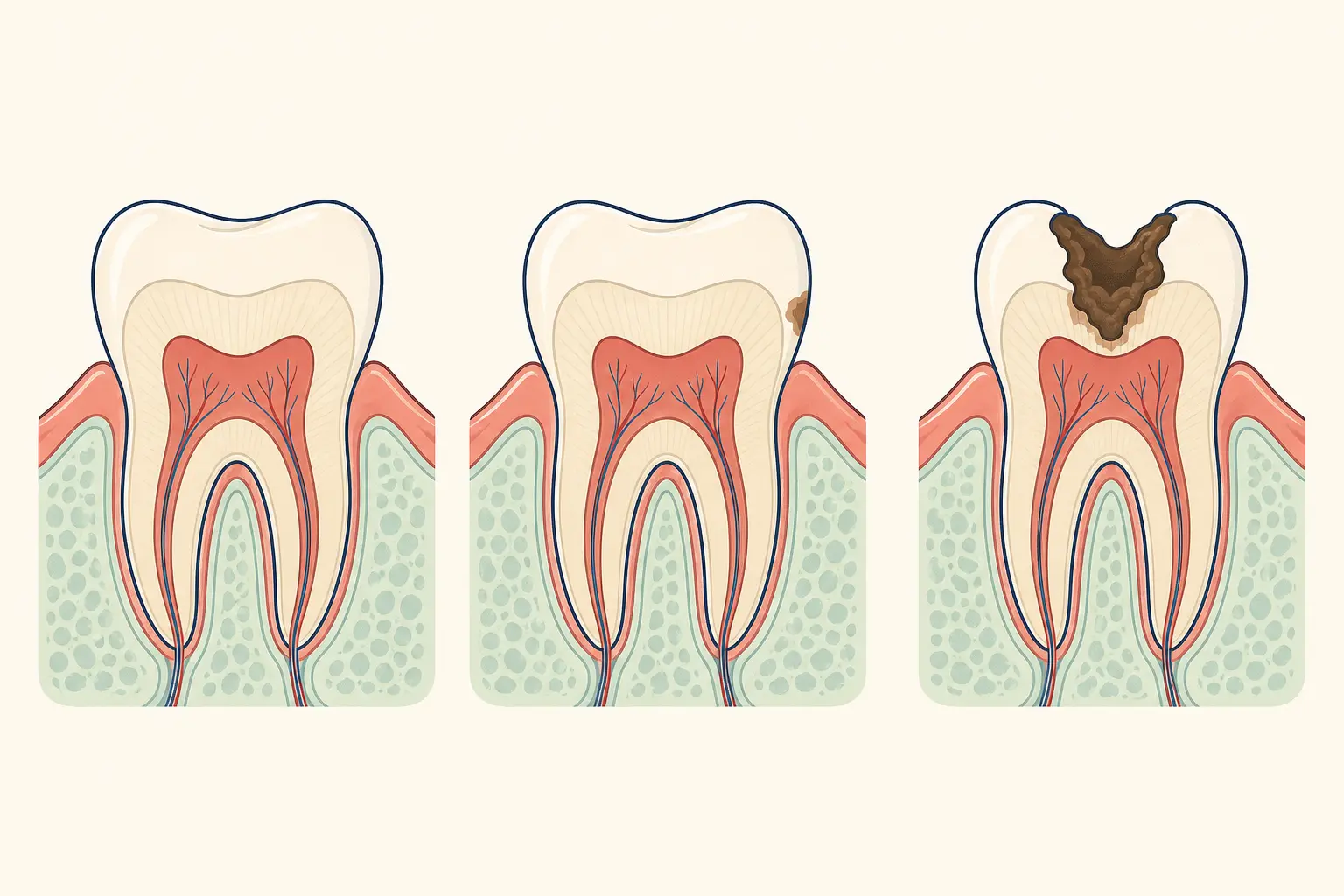
Seek care for bleeding gums that persist, mouth pain, rough deposits, a single darkening tooth, or white patches that do not brush away. A single discoloured tooth can need pulp testing rather than cosmetic cleaning.
What should you ask the dentist?
Ask whether the colour is surface stain or intrinsic, whether whitening is appropriate, how fillings and crowns will respond, and which brushing or interdental method suits your gums.
Frequently asked questions
Does brushing whiten teeth?
It can remove plaque and some surface stain, but it does not bleach the internal tooth colour.
Why do gums bleed when I clean?
Inflamed gums can bleed when plaque remains at the gumline; gentle daily cleaning and a dental assessment address the cause.