
Dental question about observed-topic:6e75c19b5
A dental concern should be identified by its symptom, location, duration, triggers, and visible changes so the examination can target the likely cause.
What is the direct answer?
A dental concern should be identified by its symptom, location, duration, triggers, and visible changes so the examination can target the likely cause.
What does this question mean?
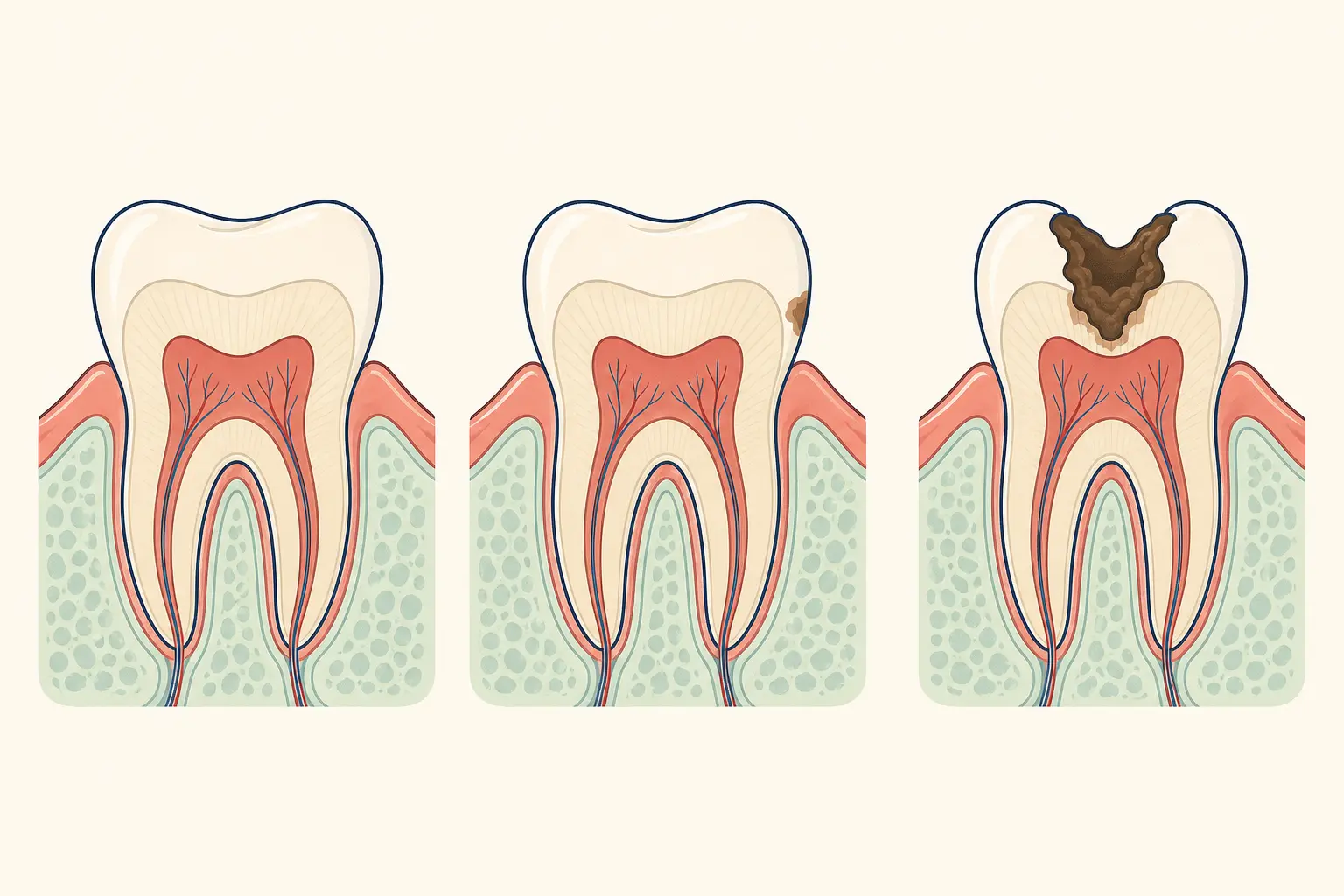
Dental problems can involve enamel, dentine, pulp, gums, periodontal ligament, jawbone, muscles, or the temporomandibular joint. The same symptom can come from different tissues, so the dentist combines history, inspection, palpation, functional tests, and imaging when indicated.
What can you do next?
Write down when it began, what triggers it, whether it is worsening, and any swelling, bleeding, fever, trauma, or change in bite. Bring a list of medicines and describe any recent dental work, because those details can change the examination and treatment sequence.
When should you seek dental care?
Seek dental care when a symptom persists, recurs, affects eating or sleep, or is accompanied by swelling, fever, trauma, or a loose tooth. Urgent medical attention is needed for breathing or swallowing difficulty.
What should you ask the dentist?
Ask which tissue is affected, what findings support the diagnosis, whether imaging or vitality testing is needed, and which treatment options address the cause.
Frequently asked questions
Can this problem be treated without an examination?
Temporary measures may reduce discomfort, but identifying the affected tooth or tissue determines definitive care.
What information should I bring?
Describe the onset, triggers, location, changes over time, medicines, and any recent dental treatment.