
When i floss my gums bleed and smell
Bleeding and odour during flossing often reflect gum inflammation from plaque, but persistent symptoms need a dental examination.
The short answer
Bleeding and odour during flossing commonly indicate inflamed gums with plaque or trapped debris, although gum disease or a local dental problem can also be involved. Gentle daily cleaning should improve mild inflammation, but persistent bleeding needs an examination.
What is the direct answer?
What does this question mean?
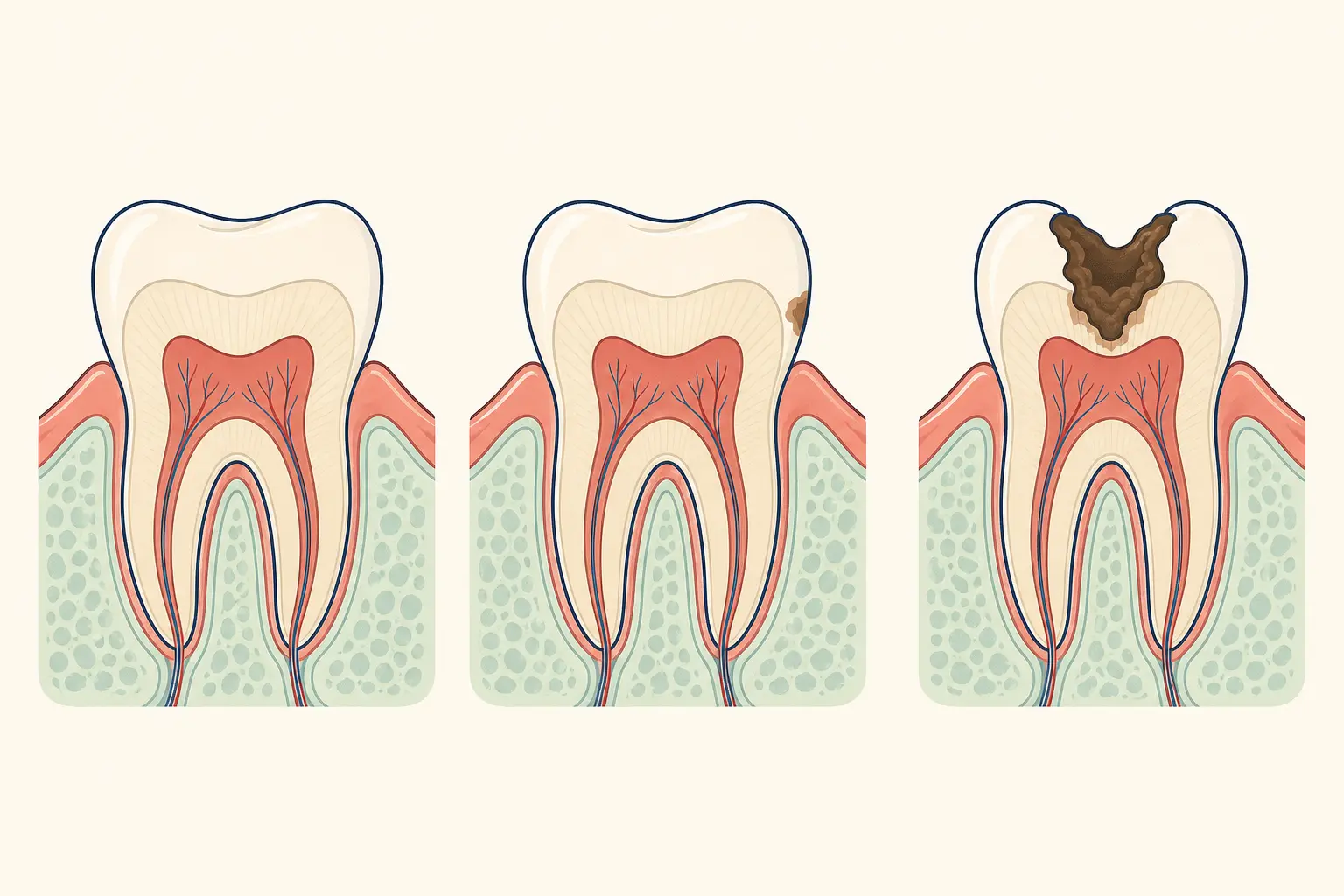
Plaque bacteria irritate the gingival margin and produce volatile compounds that can smell unpleasant. Bleeding can also occur with calculus, a cavity between teeth, an ill-fitting restoration, smoking, or medicines that affect bleeding.
What can you do next?
Use a clean section of floss and curve it around each tooth, sliding below the gum edge without snapping. Brush twice daily with fluoride toothpaste, clean the tongue, and use an interdental brush where the spaces are large enough.
When should you seek dental care?
Book dental care if bleeding or odour continues after careful cleaning, or if gums are swollen, receding, tender, or loose around a tooth. Rapid swelling, pus, or fever warrants prompt assessment.
What should you ask the dentist?
Ask whether the bleeding is gingivitis or periodontitis, whether calculus needs professional removal, and which floss or interdental brush size fits each space.
Frequently asked questions
Can home care replace a dental examination?
No. Home care can reduce irritation or pain temporarily, but examination is needed when the symptom persists or suggests disease.
What makes this urgent?
Rapid swelling, fever, pus, severe worsening pain, or difficulty swallowing or breathing requires prompt dental or emergency assessment.